The coming food price shock: How war, weather and fuel are colliding
Asia’s import-dependent economies are on the front line as fertiliser costs and diesel margins rise
 Add BT as a preferred source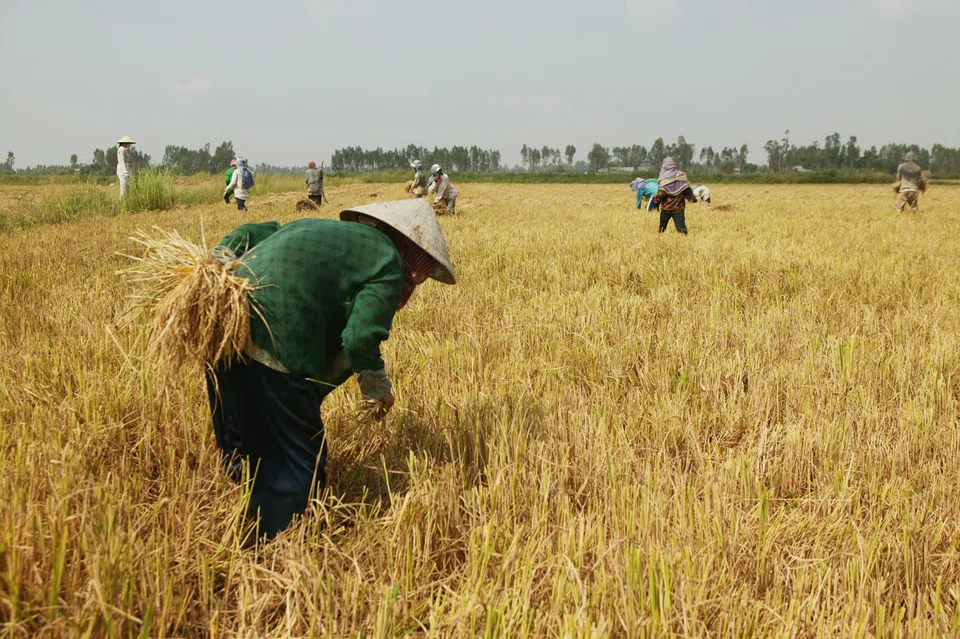
WE HAVE seen wars in Europe and the Middle East before. We have seen energy price shocks before. We have seen extreme weather events batter harvests before. What we rarely see is all of them arriving at once, each amplifying the others rather than playing out in isolation.
That is the situation facing global food markets in the second half of 2026: a war-driven fertiliser shortage, war-driven shortages of fuel and grain, and an intensifying El Nino, converging on a food system that had only just steadied after the shocks of 2022.
The evidence is already in. The Food and Agriculture Organization’s (FAO) Food Price Index, which monitors monthly changes in a basket of internationally traded food commodities, averaged 133.3 points in August, its highest level since November 2022. Global prices for wheat, sugar and vegetable oils all tracked higher.
Those figures are still below the peak reached after Russia’s invasion of Ukraine in March 2022 – so this is not, yet, a crisis of that magnitude.
But the price increases are still working their way through the system, with much of the underlying cost pressures yet to show up on supermarket shelves.
To understand where the situation goes from here, it helps to separate out the three forces driving it, before putting them back together.
Force one: Hormuz and the fertiliser squeeze
The Strait of Hormuz has been effectively closed to shipping since the US-Iran war began on Feb 28.
Roughly a third of global seaborne fertiliser trade normally passes through the strait, including some 21 million tonnes of Gulf urea exports and a further four million tonnes of phosphate fertiliser from Iran, Qatar and Saudi Arabia.
The price response was immediate. Urea, the world’s most widely used nitrogen fertiliser, more than doubled – from around US$400 a tonne before the war to over US$850 a tonne by April – before easing back to about US$450 as some Gulf supply found its way to market via land corridors bypassing the strait.


In its June 2026 Global Economic Prospects report, the World Bank projected that overall, fertiliser prices will rise 38 per cent in 2026 as a whole – a serious shock, though still short of the 2021-2022 spike, when fertiliser prices more than doubled amid the disruption of supplies from Russia and Belarus.
Two things have kept this shock from being worse. Northern Hemisphere farmers had already secured much of their fertiliser ahead of the Iran war, and natural gas prices – the main input cost for nitrogen fertiliser – have not risen as sharply as in 2022.
But those cushions are temporary. If the strait remains closed into the next planting cycle, the buffer built from pre-war inventories will run out.
Force two: The diesel crunch
The second force compounds rather than merely adds to the first. Diesel powers the tractors that plant and harvest crops, the irrigation pumps that water them, and the trucks and ships that carry both fertiliser and grain to market.
And diesel is now the tightest fuel market in the world.
Two disruptions are hitting diesel prices simultaneously. The first is the near-closure of Hormuz, which has squeezed the flow of crude and refined products out of the Gulf.
The second is the sustained campaign of Ukrainian drone strikes on Russian refineries, which has cut Russian crude processing to roughly 60 per cent of capacity – the lowest level in more than two decades – forcing Moscow to ban diesel and petrol exports to protect its domestic market.
There have even been long queues outside Moscow’s filling stations – an odd situation in a country that is an energy superpower.
The price spike has been sharp. US average diesel prices were US$5.60 per gallon for the week ended Aug 31, up more than 50 per cent compared with a year ago.
In the Philippines, Vietnam, Thailand and Singapore, diesel prices have risen since March. For farmers, this shows up directly in harvesting and transport costs, at the same time as fertiliser bills are rising.
These extra costs will inevitably be reflected in the prices of food.
Force three: El Nino
The third force is weather-related rather than geopolitical, but no less consequential. A strong El Nino is forecast to build through the second half of 2026, adding to what has already been one of the hottest periods on record in much of Asia.
Historically, the Asia-Pacific has borne more of the burden from El Nino than almost any other region: The climate phenomenon typically brings drier conditions to rain-fed rice and corn belts across South and South-east Asia, weakens the Indian monsoon, and has previously cut Australian wheat output by more than a third in a single season.
In a comparable past strong El Nino in 2015-2016, South-east Asia lost around 15 million tonnes of rice production, or about 7 per cent of total output.
Force four: Black Sea grain, cut off at both ends
A fourth force compounds the first three. Russia renewed its blockade of Ukraine’s Black Sea ports in mid-2026, and both sides have since escalated attacks on each other’s grain shipping.
The result: The price of wheat – a staple in much of the world – is up roughly 25 per cent since January, as the war chokes off both of the world’s largest wheat exporters simultaneously, not merely raising the cost of growing grain elsewhere, as fertiliser and diesel do, but cutting off much of the grain supply itself.
Why this is a polycrisis
Each of these forces would be manageable on its own.
Fertiliser shortages have happened before without triggering a food crisis; diesel price spikes have come and gone; El Nino arrives every few years and markets have learnt to absorb it.
What makes 2026 different is the clustering – four shocks compounding at once rather than arriving one at a time: a fertiliser shock raises the cost of growing a crop, a fuel shock raises the cost of both growing and moving it, the Ukraine war cuts the supply of grain, and a weather shock threatens to cut the size of harvests.
What we have is multiple simultaneous shocks, not separate shocks spaced out that an economy can substitute its way around one at a time.
And they are arriving with less of a buffer than in 2022: many governments’ fiscal space and grain reserves were only partially rebuilt after the last crisis.
Where Asia is most exposed
The exposure is not uniform. The World Bank’s food security monitoring has flagged Bhutan, Nepal and Sri Lanka as most vulnerable – economies heavily dependent on imported food and fertiliser, with limited capacity to absorb higher costs before they hit retail prices.
The broader rain-fed crop belt running from Pakistan through Myanmar, Cambodia and Vietnam to the Philippines and Indonesia faces the sharpest agronomic risk from El Nino itself.
India, by contrast, looks comparatively well placed: record cereal output in 2025, favourable prospects for the 2026 wheat crop, substantial public stocks and input subsidies give it more room to absorb the shock without major price pass-through.
As a near-total food importer with few domestic buffers of its own, Singapore will be hit.
In the inflation outlook section of its monetary policy statement in July, the Monetary Authority of Singapore noted that “adverse weather conditions in Singapore’s import sources are expected to lower agricultural output and drive up food prices”.
What happens from here
The risk is that things will get worse. A Hormuz disruption that extends beyond the third quarter – as seems likely – continued Ukrainian strikes on Russian refining capacity as well as cutbacks in grain exports from both countries, and the likelihood that El Nino will get more intense, would all push the FAO Food Price Index higher still.
What is clear is that the August FAO reading of 133.3 is a floor, not a ceiling.
Much of the fertiliser and diesel cost increase already locked in has not yet worked its way through to retail food prices, given the usual lags in contracts, inventories and planting cycles.
The real test will come with the fourth quarter of 2026 and early-2027 harvest and planting seasons, when farmers who paid 2026’s fertiliser and fuel prices bring in, or fail to bring in, 2027’s crop.
Wars end. Refineries get rebuilt. El Nino fades. But the crop that was not planted this season does not get a second chance, and for food consumers, the full cost of that has yet to show up. THE STRAITS TIMES
Decoding Asia newsletter: your guide to navigating Asia in a new global order. Sign up here to get Decoding Asia newsletter. Delivered to your inbox. Free.
Share with us your feedback on BT's products and services