



The business of preventing haze demands more from stakeholders
Beyond plantation and forestry players, who can be held to account for the pollution-causing fires?
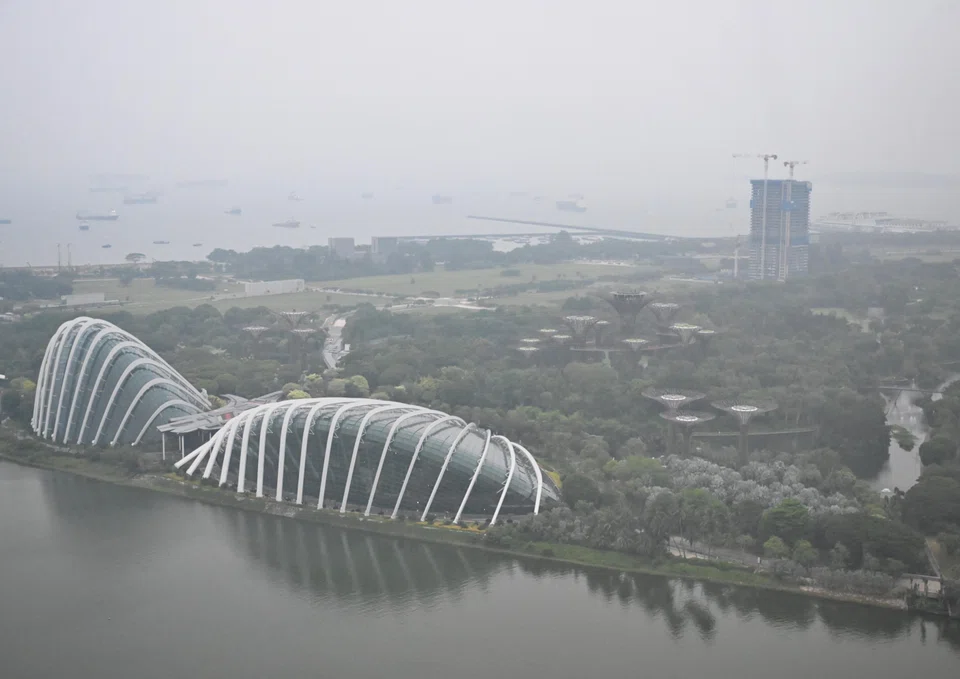
WITH Singapore hosting the Formula 1 race from Oct 9 to 11, the haze problem has come under the international spotlight. But the smog’s return was not unforeseen.
In June, the Singapore Institute of International Affairs warned that the risk of severe transboundary haze was high, with a red rating in its annual Haze Outlook.
The principal concern was exceptionally dry weather associated with El Nino that would exacerbate forest and peatland fires. But this is not simply an act of God. The risk was foreseeable, requiring preparation, investment and effective management.
Haze is often discussed as an environmental and public health problem with economic consequences. But it is also a business risk, implicating not only the plantation and forestry sectors where most fires occur.
The immediate priority is to extinguish the fires and prevent new ones. Yet, the crisis also raises questions about corporate responsibility and potential liabilities, including criminal charges and loss of concessions.
Haze is a business risk
For plantation and forestry companies, fires can damage assets, disrupt operations, and expose them to regulatory investigations and reputational damage.
Financial institutions, commodity traders and businesses in their supply chains also face risks.
Companies’ first responsibility is effective land management, fire prevention and response within their concessions. Indonesian law provides for corporate liability for fires on concession land, even where a company did not start them.
Responsibility does not end at concession boundaries. Indonesian authorities have required major companies to assist with fire prevention and control up to 5 km beyond their concessions.
SEE ALSO
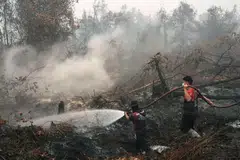
This makes sense. Fires spread across property lines, while large companies possess equipment, trained personnel and knowledge of surrounding landscapes. Their resources can sometimes surpass those of provincial authorities.
Effective fire management requires cooperation with neighbouring communities, concession holders and local authorities in monitoring hot spots and maintaining water levels in vulnerable peatlands.
Prevention may be considerably less costly than fighting major fires.
Enforcing these efforts must primarily depend on Indonesia’s government, given its sovereignty over land concessions. President Prabowo Subianto has clearly taken political ownership of the problem, visiting affected areas, strengthening firefighting and ordering investigations into suspected deliberate burning.
Indonesian authorities have reportedly investigated more than 57 business entities over concession fires, while the police have already arrested nearly 200 individuals suspected of deliberate burning or negligence. Concession parcels have been sealed, operations suspended and permits revoked.
Punishing errant companies is fundamental. But this raises a difficult question about corporate liability.
Imposing strict liability is clear but onerous: Companies could be held liable for fires on their concessions regardless of whether they took strong preventive measures.
The alternative is a reasonable-care standard.
Some companies have invested millions in prevention and rapid response, yet extreme conditions may overwhelm their efforts.
Applying reasonable care may be fairer, recognising that fires cannot always be prevented. But this requires careful investigation of what companies actually did.
The challenge is to distinguish companies genuinely investing in prevention from those neglecting known risks, merely ticking boxes or greenwashing. Enforcement should not be driven by the heat of the moment or selectively target companies.
International market pressures
International market regulations add another, sometimes controversial, dimension.
The EU’s Deforestation Regulation (EUDR) covers seven commodities including palm oil, rubber and wood, requiring traceability and ensuring products entering Europe are not linked to deforestation after 2020.
Fires on established plantations do not necessarily constitute deforestation, but where fires are associated with clearing remaining forests, access to European markets may be affected.
The EUDR requires importers to exercise due diligence; the present fires and haze may prompt some importers to avoid particular producers in South-east Asia.
Consumer boycotts can similarly pressure companies and brands associated with haze, even before legal responsibility is established.
While public anger is understandable, such campaigns should verify their claims. There are bad actors, but entire industries should not be blamed indiscriminately.
Finance, supply chains and boards
Singapore’s financial connection to various Indonesian concession-holders and businesses is substantial.
At least five major palm oil groups with significant business interests and plantation operations in Indonesia, and in some cases Malaysia, are listed on the Singapore Exchange. Several large privately held palm oil and forestry companies with extensive Indonesian operations are also headquartered here.
Add to this commodity trading worth tens of billions of dollars annually, as well as substantial banking exposure and investment relationships.
In parallel to potential legal accountability imposed in Indonesia, Singapore’s Transboundary Haze Pollution Act (THPA) provides for action against concession holders who cause haze that comes into the city-state, whether or not they are based here.
Investigations must primarily be undertaken by Indonesian authorities. However, Singapore’s THPA provides additional avenues for criminal and civil liability, together with powers to demand documents, seek explanations from directors and senior management, and issue preventive-measures notices.
This has implications for company boards, including independent directors. Have they identified vulnerable concessions? Are preventive budgets and emergency-response capabilities adequate? Are companies cooperating with neighbouring communities?
Moreover, the THPA can extend beyond the concession holders to entities participating in management or exercising substantial operational control over them. At a stretch, this could include banks and investment companies, although ordinary lending or shareholding alone would not establish liability.
The critical question is the actual degree of management and control exercised.
Still, even without legal liability, financial institutions should examine whether companies they finance invest adequately in prevention, maintain effective monitoring and exercise proper board oversight.
Financing decisions should encourage genuine improvements rather than reward sustainability commitments on paper.
Independent directors are not expected to manage firefighting operations, but should seek evidence of implementation rather than rely simply on management assurances and sustainability reports.
Gathering evidence across borders remains difficult. Nevertheless, where credible grounds exist, the THPA need not remain dormant.
Even without prosecutions, investigations and information requests can pressure and nudge companies to better practices.
Cooperation, accountability, prevention
Indonesian authorities are making considerable efforts to fight the fires, as dry conditions may persist for weeks. International cooperation can reinforce these efforts.
Japan has already provided firefighting assistance, while Malaysia’s offer of aircraft and personnel awaits deployment arrangements. Singapore’s Minister for Sustainability and the Environment Grace Fu has also offered assistance.
While specific measures are pending, Singapore could contribute satellite monitoring, technical expertise as well as firefighting capabilities to build on existing bilateral and Asean cooperation.
Working together to fight the fires is now the priority. But once the crisis passes, there must be an accounting of what happened.
Were companies prepared? Did the authorities act early? Were known risks adequately managed? What capacities were lacking?
Where legal obligations were breached, enforcement should follow. Such inquiries must go beyond angry finger-pointing to establish facts and responsibilities.
Especially as El Nino conditions can and will return, the larger objective must be to strengthen prevention and risk management before the next dry season.
Holding companies accountable and punishing them afterwards is necessary but cannot be sufficient.
The authorities must enforce rules, companies need to manage risks across wider landscapes, and financial institutions and customers should require responsible conduct. The business of preventing haze demands nothing less.
The writer is chairman of the Singapore Institute of International Affairs and senior consultant at WongPartnership
Decoding Asia newsletter: your guide to navigating Asia in a new global order. Sign up here to get Decoding Asia newsletter. Delivered to your inbox. Free.
Share with us your feedback on BT's products and services
TRENDING NOW

Malaysian king buys stake in Singapore-listed mining firm expanding into rare earths

Grab CEO’s wife Chloe Tong on life with Anthony Tan and finding her purpose

Once staunchly pro-China, Malaysian Chinese businesses are now distancing themselves from Beijing

Longer wait times expected as S’pore healthcare institutions report system disruptions

