Prabowo orders tougher action on Indonesia fires; foreign offers to help tackle haze not discussed
Firefighting operations are to be stepped up, particularly in Central Kalimantan and South Sumatra
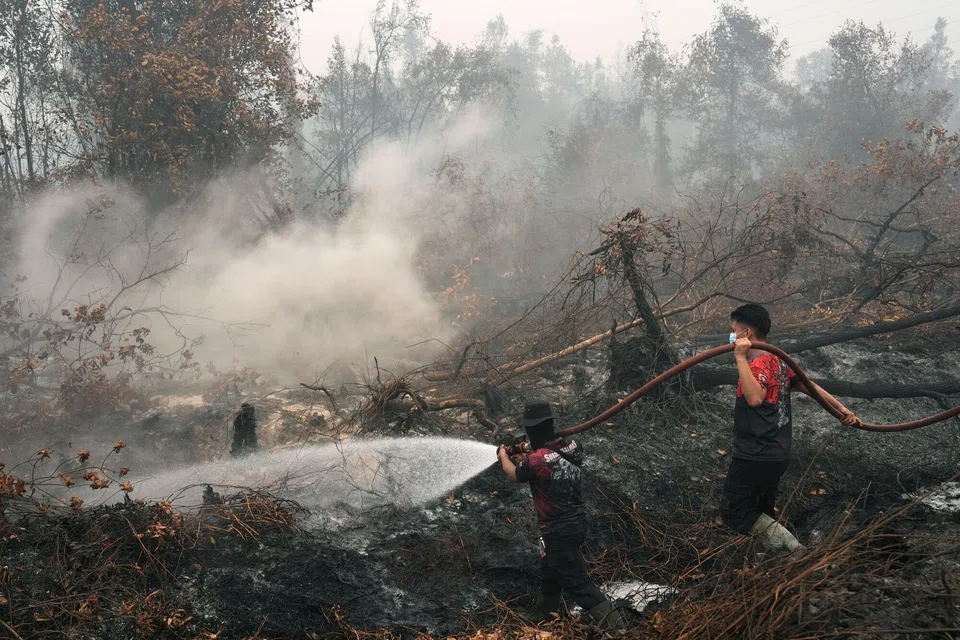
[JAKARTA] Indonesian President Prabowo Subianto has ordered more action to fight forest and land fires that have sent thick haze into Singapore and Malaysia. But offers of help from the two countries were not discussed at a meeting he chaired on Monday (Oct 12).
Asked by reporters after the meeting at the Presidential Palace in Jakarta whether foreign offers of help had been discussed, Coordinating Political and Security Minister Dudung Abdurachman, who attended the meeting, said: “Not yet. That was not discussed earlier.”
Prabowo had instructed the head of the National Disaster Mitigation Agency (BNPB) to step up firefighting operations, particularly in Central Kalimantan and South Sumatra, Dudung said.
His orders come as Indonesia struggles to contain fires that have disrupted flights, forced schools to close and raised health concerns.
Before the meeting, Dudung said that Prabowo was deeply concerned about the impact on neighbouring countries, adding: “The impact is indeed being felt by neighbouring countries. That is why he is very concerned.”
On how quickly the fires could be brought under control, Dudung said: “The president’s target is as soon as possible. He is very, very focused on this forest and land fire problem.”
Dudung also ruled out declaring Indonesia’s fires a national disaster for now. “Not yet, not yet. We are still capable of handling it,” he said.
Singapore, Malaysia offer help
Malaysia has offered aircraft, helicopters and personnel to help fight the fires.
Dudung did not directly address Malaysia’s complaints over transboundary haze or say whether Prabowo had issued specific instructions in response, instead stressing Indonesia’s firefighting efforts.
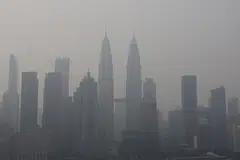
“There have indeed been responses from other countries regarding these forest fires, but we have made every possible effort,” he said.
In Malaysia, Greenpeace activists rallied outside the country’s parliament on Oct 7, demanding greater transparency over those responsible for the haze.
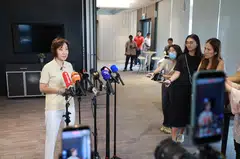
In addition, Singapore’s Minister for Sustainability and the Environment Grace Fu said on Oct 10 that she had contacted Indonesian Environment Minister Jumhur Hidayat to offer support, adding that Singapore stood ready to assist with Indonesia’s firefighting efforts.
Separately, Indonesia’s Forestry Ministry spokesperson Ristianto Pribadi told The Straits Times on Oct 10 that Indonesia appreciated the offers from Singapore and Malaysia, describing them as a sign of friendship and regional cooperation.
The haze has also prompted diplomatic discussions.
Indonesian Foreign Minister Arrmanatha Nasir said on Oct 10 that he had discussed Indonesia’s firefighting efforts with his Malaysian counterpart Mohamad Hasan, following an Oct 8 telephone call between Prabowo and Malaysia’s Prime Minister Anwar Ibrahim.
Battle to contain fires
Indonesia is experiencing an unusually severe fire season, with prolonged heat and dryness exacerbated by a very strong El Nino. The fires have burned large areas of Sumatra and Kalimantan, and sent haze blanketing the region.
More than 60,000 personnel have been deployed across six provinces in Sumatra and Kalimantan, but thick smoke and difficult terrain have hampered firefighting operations.
Helicopters have been deployed, although Dudung said that most firefighting remains ground-based because thick smoke has made aerial operations difficult.
Peatland fires are particularly difficult to extinguish because burning can continue beneath the surface, requiring large volumes of water, Indonesian Home Affairs Minister Tito Karnavian said on Monday.
As part of efforts to tackle these stubborn fires, Indonesia has also tested a Brazilian fire suppressant in South Sumatra, officials told the media recently.
The substance, known as Realiza Anti Chamas, is a powder mixed with water and sprayed onto burning areas to help stop flames from spreading, according to BNPB. A trial was conducted in Banyuasin, South Sumatra, on Oct 9, involving a Brazilian team and Indonesian officials.
A representative of the Brazilian supplier claimed the suppressant was 10 times more effective than water alone, particularly against peatland fires. The claim has not been independently verified.
While putting out the fires remains a challenge, their impact is keenly felt by local communities. The fires have taken a toll on public health. Indonesia’s Health Ministry recorded 174,694 cases of acute respiratory infections in seven affected provinces between Aug 18 and Sep 21.
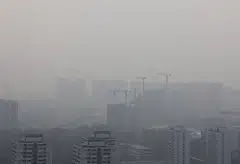
Visibility in South Sumatra fell to between 500 m and 800 m, disrupting flights for a few days recently as aircraft were unable to land in Palembang, Dudung noted.
The haze has also sparked protests in South Sumatra and Jambi, while environmental groups have called for tougher action against those responsible for the fires, local media reported.
Against this backdrop, Prabowo called for closer coordination with local authorities and communities to prevent fires and ordered a nationwide public awareness campaign at the Monday meeting.
The government is also reviewing fire-prevention regulations and strengthening peatland restoration efforts. It is preparing to establish a National Peatland and Mangrove Management Agency, whose leadership could be inaugurated as early as next week, Dudung said.
A similar entity called the Peatland and Mangrove Restoration Agency (BRGM) was formed in 2016 by then-president Joko Widodo, but the agency was dissolved in 2024 and its responsibilities divided among several different ministries.
Tito also urged regional leaders to enforce a ban on land burning down to the village level, warning that fires could spread rapidly in the dry conditions.
“I have issued an instruction to all regional leaders to prohibit burning under any circumstances during an emergency like this,” he said. THE STRAITS TIMES
Decoding Asia newsletter: your guide to navigating Asia in a new global order. Sign up here to get Decoding Asia newsletter. Delivered to your inbox. Free.
Share with us your feedback on BT's products and services