



Nvidia reinstates Jensen Huang as CEO; Trump says move poses no national security risk
The chipmaker’s board is investigating possible foreign intelligence efforts targeting its co-founder
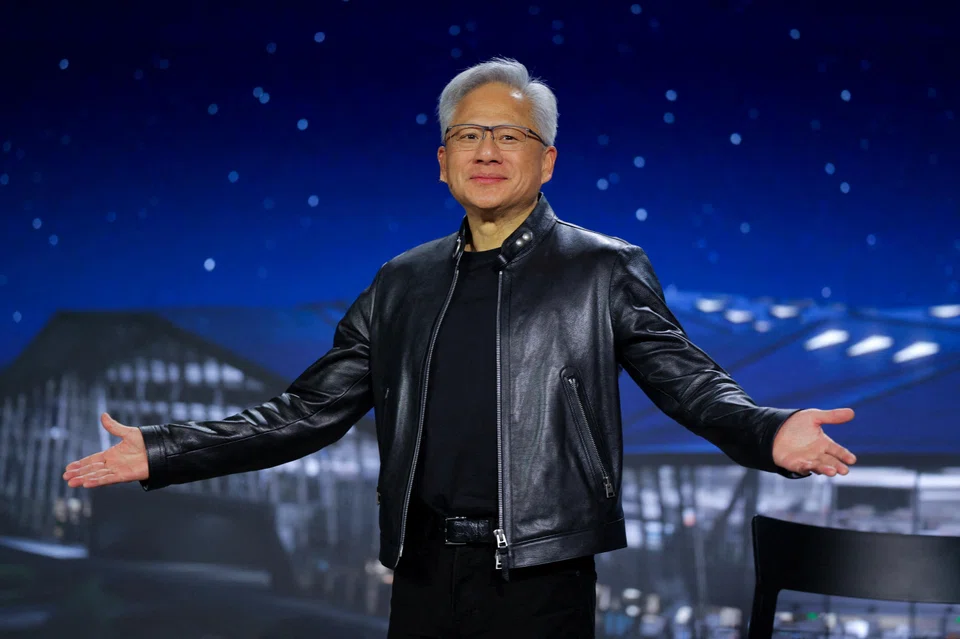
[BENGALURU] Nvidia said on Monday (Nov 23) that it was reinstating Jensen Huang as CEO effective immediately, in an extraordinary reversal that followed calls from US President Donald Trump for his return.
Huang had resigned on Nov 12 over revelations of extramarital affairs, including one with a woman alleged to have spied for China.
The company’s shares soared 33 per cent after the board unanimously approved Huang’s return and said it saw no national security risk, despite allegations that he had also had affairs with at least two Nvidia employees.
The company is facing multiple investigations, including by the US Securities and Exchange Commission and Justice Department, over issues ranging from potential accounting irregularities to alleged chip smuggling.
Trump, who last week urged Nvidia to bring Huang back after its board ruled out his return, praised the reversal as the “correct and proper decision”.
In a post on Truth Social, the US president said the government had no reason to believe Huang’s return posed a national security risk and had no evidence he had engaged in unlawful conduct.

He nevertheless urged Nvidia to continue investigating its compliance with US export controls to ensure it was meeting its obligations to protect national security.
“There were definitely a lot of people who wanted him back,” said Steve Sosnick, chief strategist at Interactive Brokers. “The extent that the administration intervened, the extent that shareholders intervened, it will be impossible to know,” he added.
“But it tells us to some extent that Jensen Huang was too big to be fired.”
SEE ALSO
Board makes surprising reversal
Nvidia said its board voted unanimously on Monday to reinstate Huang after concluding that it was satisfied with his candour and leadership ability.
The board said that after receiving input from senior US government officials, it saw no national security risk from his return.
The reversal underscores Huang’s deep influence over Nvidia and raises questions about how dependent one of the world’s most valuable companies remains on its co-founder.
Just last week, Nvidia chairman Harvey Jones had said that the company would not rehire Huang over disclosure of personal behaviour inconsistent with the company’s code of conduct, standards, and cultural norms.
This was despite a growing campaign for Huang’s return, after the board appointed chief financial officer Colette Kress as interim CEO.
Huang’s resignation dealt a massive blow to the artificial intelligence trade, in which he has emerged as one of the most prominent faces.
His reinstatement sent ripples across the sector, with Nvidia set to add some US$900 billion to its market value. It also lifted broader markets, with the chipmaker’s surge boosting semiconductor and neocloud stocks exposed to the AI boom.
Heavily reliant on Huang
Huang built Nvidia from a video-game chip designer into the dominant supplier of AI processors, playing a central role in its chip road map, major customer relationships and ties with Washington.
“I am honored to return to Nvidia and lead one of the most consequential technology companies in the world at the beginning of a new industrial revolution,” Huang said on Monday.
His departure had reverberated from Silicon Valley to Taipei and Washington. A petition calling for his reinstatement drew more than 180,000 signatures, including one from Elon Musk, underscoring the unusually strong support for an executive who stepped down amid controversy.
Musk said in a post on X that “it is done”, shortly after Huang’s reinstatement was announced, following up in another post that “the mistake has been corrected”.
Huang, 63, ran the chip giant with a hands-on style, overseeing some 60 direct reports and delving into problems across the company.
He also used Nvidia’s growing cash pile to invest across the AI ecosystem, including in cloud providers CoreWeave and Nebius and suppliers Marvell and Corning.
Compliance focus
The Nvidia board has formed a committee to investigate whether foreign intelligence efforts targeted Huang and is also starting a search to name a new chief compliance officer. The company said that Kress would continue as chief financial officer.
The moves come as Nvidia faces heightened scrutiny in Washington over the flow of advanced AI chips to China. US authorities have tightened licensing rules for some chip shipments and overseas data centres serving Chinese companies, while lawmakers are preparing to question Huang, who has pushed for greater access to the Chinese market.
Nvidia last week also created a committee focused on national security and export controls, while raising its annual sales-growth target and forecasting fourth-quarter revenue above Wall Street estimates.
Boost for the company
Huang’s return is sure to boost Nvidia’s value and perhaps restore confidence in the AI boom. He has been the maestro of the technology, describing where the industry is headed.
The company’s board includes early investors and business partners who have been close to him for decades. They had a history of being deferential to him and letting him run the company with limited oversight.
It is unlikely that Huang could have orchestrated a return without Trump’s support. They have become close allies over the past two years, working together to limit AI regulations and encourage the boom that has been driving the economy.
“This is less about Jensen and more about the administration,” said Patrick Moorhead, the founder of Moor Insights & Strategy, a technology analysis firm.
“The speed may have been motivated by the absolute destruction of Wall Street and the tech trade. People had some time to think: What does Jensen’s absence mean to US competitiveness and AI?”
Nvidia’s chips, which have a 90 per cent share of the AI chip market, are essential to building and running AI systems.
“The return of Jensen Huang at the helm of Nvidia is almost as big a shock as his departure,” said Lindsey Stewart, the director of institutional insights at Morningstar in London.
“It’s possible that many investors will conclude this is a good move given his history of value creation at the company. But alongside that sense of relief, there are sure to be questions about who is best placed to provide appropriate governance and oversight of key risks at the now-giant company at the centre of a critically important global AI ecosystem,” he said.
The board’s decision to reappoint Huang, he added, “leaves those questions unanswered”.
It is not the first time a tech industry leader has been fired because of transparency concerns and then quickly rehired after an outpouring of support from staff and investors.
Three years ago, OpenAI co-founder Sam Altman was ousted as CEO after a chaotic power struggle, then reinstated days later after employees revolted. REUTERS, AP, NYTIMES
This is a developing story. Click here to read Nvidia’s statement in full.
Decoding Asia newsletter: your guide to navigating Asia in a new global order. Sign up here to get Decoding Asia newsletter. Delivered to your inbox. Free.
Share with us your feedback on BT's products and services






