

AI bubble enters heady phase of jubilation with improbable Nvidia rally
Generative AI will prove to be the dominant growth theme of the decade, say analysts
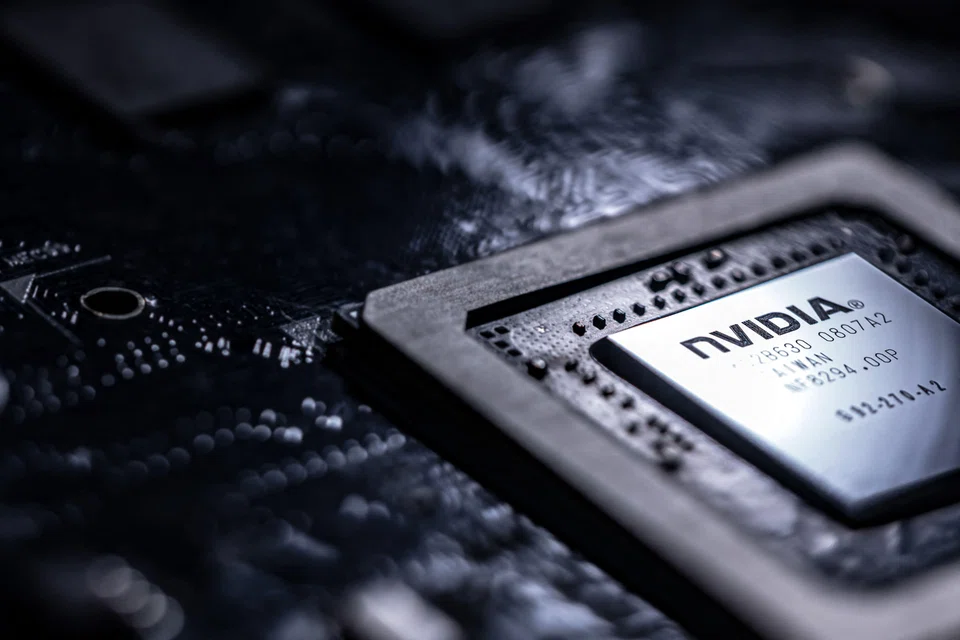
THERE is nothing quite as fun as a financial bubble in its early stages, and the bubble in artificial-intelligence (AI) stocks today is one of the largest ever seen.
At this stage in the game, those with a financial interest in the bubble feel the joy of getting rich quick, while those who have abstained feel a kind of pre-emptive schadenfreude.
Investors lucky enough to have bought into high-end chipmaker Nvidia at any stage in the last two years are likely to be feeling like they have struck first prize in the lottery.
Nvidia’s fourth-quarter earnings, released last week, dwarfed Wall Street’s lofty expectations, with revenue more than tripling from a year earlier to US$22 billion. It’s almost unheard of for a company that measures its revenue in billions to grow it that fast.
Among many other things, AI is almost like a licence to print money these days.
Nvidia’s shares rose a staggering 15 per cent on Thursday (Feb 22) alone in the wake of its earnings report, and are now up 68 per cent for the first eight weeks of the year.
The US$277 billion in added value to Nvidia on Thursday was the most market capitalisation ever by a single company in a single session, “shattering” the record set by Facebook parent Meta Platforms earlier this month.
Unbelievable possibilities
“The possibilities with AI are unbelievable,” said JJ Kinahan, chief executive of IG North America and president of its brokerage tastytrade.
“There were too many people who tried to say the Internet will never be useful. Clearly it is. It’s the same with AI. Really smart people are working on it, and they are going to find ways to improve our lives and our economy. The thing with technology is that it usually takes a little longer to become mass market.”
At this rate, Nvidia will be the world’s biggest company by the middle of the year. Nobody had even heard of the company when it replaced Enron in the S&P 500 back in 2001.
The gains for better-known mega caps are almost as unprecedentedly rapid. The group of mega caps known as the “Magnificent Seven”, all of whom are involved in the AI boom to some extent, more than doubled in value in 2023, adding roughly US$5 trillion in value.
None of that was as exciting for the bulls as the company’s forecast. Nvidia chief executive and founder Jensen Huang spoke with ironclad conviction about the prospects for the company’s profit bonanza continuing.
Usually, board members insist that executives show restraint when speculators pile into their stock, but Huang said last week that a “whole new industry” had been born, suggesting that even the most euphoric prophecies about AI’s profitability would be fulfilled.
“Generative AI has kicked off a whole new investment cycle to build the next US$1 trillion of infrastructure of AI generation factories,” he said. “We believe these two trends will drive a doubling of the world’s data centre infrastructure installed base in the next five years and will represent an annual market opportunity in the hundreds of billions.”
Analysts and tech industry insiders seem to agree with Huang’s assessment.
Growth theme
“Generative AI will prove to be the growth theme of the decade, and without taking a single-name view, we think Nvidia’s earnings report demonstrates the current strength of AI infrastructure spending,” said Solita Marcelli, chief investment officer (Americas) at UBS Global Wealth Management.
One employee of a Magnificent Seven company said the transformative power of AI could not be overstated, as not even the companies themselves have grasped what these software robots are capable of.
Anecdotally, more people are passing on their essay-writing, email-composing and even computer-programming tasks to ChatGPT and other bots.
One veteran strategist said there are more parallels between the current moment and the 1990s Dotcom boom than just stock movement.
Jim Paulsen, a long-time strategist for Wells Fargo’s asset-management arm, said the steady drop in inflation readings bodes well for economic growth, earnings and the stock market.
“Since 1949, the annual average ensuing four-quarter real GDP growth is nearly 50 per cent stronger in the coming year after a past year of disinflation than it is after a year when inflation accelerated,” said Paulsen in his latest newsletter.
So what’s next? The fun stage of the bubble could last months, or it could last years. During this stage, stocks such as Nvidia will create “parabolic” patterns on charts, rising by improbable degrees day after day for no apparent reason.
People will cash in their Nvidia stocks for everything from yachts to sports cars and second homes.
The danger is when the AI bubble dominates conversation and news to such an extent that complacency sets in. There will come a time, as happens with every bubble, when everyone will have the sense that everyone else is getting rich overnight, and they are the only ones missing out.
This is the stage when people, who have carefully husbanded their wealth for years, suddenly feel compelled to apportion large parts of their savings to Nvidia or another AI hot shot. That is when the fun goes out of it, and the inevitable crash brings about economic pain.
For now, just sit back and enjoy the ride, even if you’re not on it.
TRENDING NOW

Two Singapore-listed palm oil firms named in Greenpeace report on Indonesian plantation fires

Singapore Airlines flight returns to San Francisco after ‘unruly’ passenger incident

Singapore looking into which companies responsible for haze-causing fires: PM Wong
Deluge IPO 3.86 times subscribed ahead of SGX debut

