The US 2026 midterms came down to money
Voters have issued their verdict on Trump’s trade and foreign policy. What will the Democrats do next?
FOR most of modern American history, midterm elections have been referendums on the economy and the president. The 2026 midterms broke that pattern.
Two issues that normally sit on the margins – trade and foreign policy – moved close to the centre, largely because voters experienced both at the checkout counter and the petrol station.
On Tuesday (Nov 3), voters handed Democrats control of the House and, with it, a share of power over both.
Start with trade. Tariffs were a defining partisan fight in the 19th century, but in the post-war era, they rarely moved votes.
In 2018, when the first administration of US President Donald Trump launched steel tariffs and a trade war with China, the costs fell mainly on farmers and manufacturers.
The national conversation during the midterms then centred, instead, on healthcare and immigration. Democrats won the House that year, but few attributed their victory to trade issues.
This year was different. In a Cato Institute/Morning Consult survey conducted in September, three in four registered voters said that tariffs would matter to their vote.
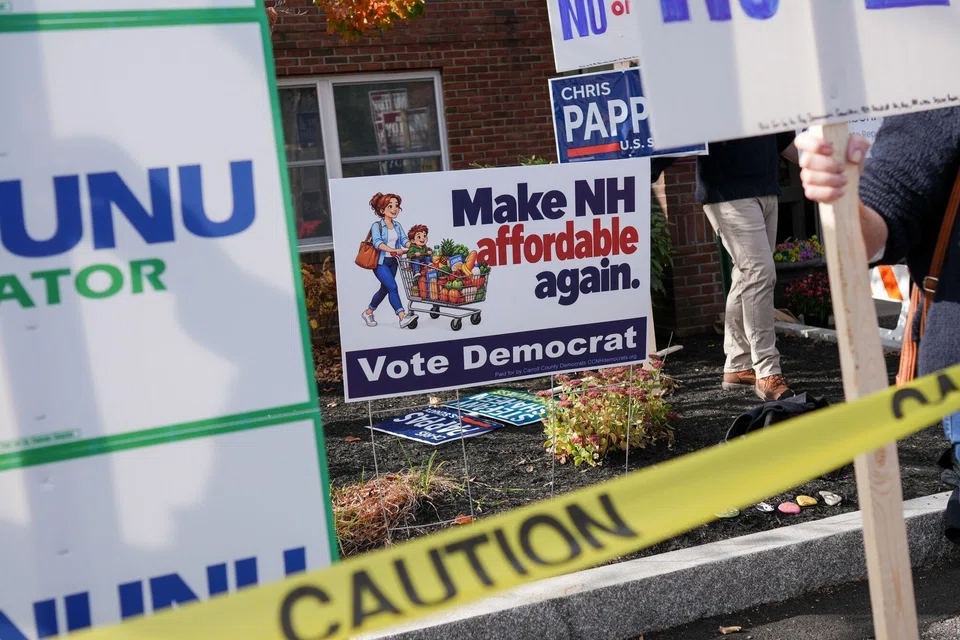
Democrats, who once hesitated to attack protectionism for fear of alienating union households, made tariffs a pillar of their affordability message.
The White House and its allies countered that tariffs were rebuilding domestic manufacturing, raising revenue, and that price effects would prove temporary. That argument did not carry the day.
The Iran factor
Historians usually point to only a few midterms reshaped by war – 1950 (Korea), 1966 (Vietnam) and 2006 (Iraq) – with each a backlash against a protracted, inconclusive conflict.
The nearly eight-month war with Iran now joins that list, but with a twist: Its political weight came less from casualties than from energy prices.
Republican strategists acknowledged that this made some districts Trump won easily in 2024 competitive; several are now in Democratic hands.
An AP-Norc poll found voters in both parties wanted the next Congress to prioritise affordability and ending the war.
Trump argued that the costs were worth paying to keep Iran from a nuclear weapon, a case many Republican voters still accepted.
Yet, other conservatives saw the war as a break with the “America First” promise. Some of them appeared to have stayed home during polling or crossed over.
An election of prices
In 2006, Iraq was argued largely in strategic and moral terms; in 2026, Iran and tariffs were argued as cost-of-living questions. The tariffs and the Iran war have both become wallet issues.
That fusion of foreign and economic policy is why analysts called this a rare foreign policy election, the first of its kind in 20 years, and why its result reads as a rebuke on both fronts.
History offers one caveat. Even when midterm voters reject a president’s foreign policy, a change of course does not automatically follow: After his 2006 defeat, former president George W. Bush escalated military involvement in Iraq.
The new Democratic majority will have its tools to rein in Trump’s agenda, among them the power of the purse, war powers resolutions, oversight hearings and Congress’ constitutional authority over tariffs.
But a president retains wide latitude in trade and war, and a divided government is as likely to produce stand-offs as reversals.
The voters have delivered their verdict. Whether it changes trade and Iran policy will depend on the amount of power the Democrats are willing to assert, and how hard the White House pushes back.