

Global order faces systemic breakdown two years after Ukraine invasion
FEBRUARY 2024 is a landmark moment in the Ukraine war, marking two years since Russia’s invasion. While the outcome of that conflict remains uncertain, what is far surer is that the global order is under growing stress, including in the Asia-Pacific, with economic as well as political impacts.
These issues will be key focal points at the Munich Security Conference (MSC) from Feb 16 to 18. This will be the 60th anniversary of the MSC, which has become the world’s leading defence and international relations forum.
The conference will look at the growing concern that the world may be moving significantly closer to a major tipping point of a wider international war. For instance, with the Ukraine war soon to enter a third year, Nato has announced plans to include 90,000 troops in the largest call-up since the Cold War ended. The exercise, called Steadfast Defender, will run until late May.
Meanwhile, there are growing tensions in the Middle East since last October’s Hamas attack on Israel.
Plus, the subsequent military operation in Gaza and spread of militant groups in Lebanon, Syria, Iraq and Yemen issuing strikes against Western targets.
As tensions grow, one global thinker who perceives that there could be major trouble ahead is Dr Paul Stares at the Council on Foreign Relations. He argues that the world “is confronting many simultaneous crises and it’s not hard to imagine how additional shocks could interact in ways that amplify their overall effects and tip the world into a major systemic breakdown”.
This comes in a wider context of warnings from others, including top politicians such as French President Emmanuel Macron, that the world may be sleepwalking towards another deadly conflict.
In part, this is due to the rise of nationalism and the weakening of the rules-based international order, upheld for decades by the United States, which is being eroded by factors such as trade protectionism, a decline in democracy around the world, great power rivalry, and an increasing drift towards authoritarian, populist rule.
Underlying this is growing stress on the global order being driven, in part, by a significant movement in economic and political power.
Today, this is shifting most rapidly to key developing countries, especially in the Asia-Pacific, with China a primary beneficiary so far. This contrasts with the early 20th century when Germany and the US were among the key rising nations.
And, as a century ago, geopolitical tensions are mounting as “revisionist nations” challenge key elements of the international order. This is partly driven by rising powers resurrecting nationalism and claims for resources.
This underlines that it may be in Asia where most of the tension and insecurity lie in terms of the potential for a great power war. In particular, China’s remarkable rise in recent decades has unsettled the region and beyond, and this will be one of the discussion points at the MSC.
Some Asian politicians and thinkers have drawn parallels between the geopolitical landscape in Asia today and Europe on the eve of the first and second world wars. Former Philippine president Benigno Aquino, for instance, compared what he claimed was Beijing’s track record of belligerent behaviour with German expansionism in the 20th century by openly questioning “at what point do you say, enough is enough?”.
Yet, while the risk of a major war in Asia, or elsewhere in the world, is growing and cannot be dismissed, there have also been significant changes in recent decades that, in the absence of a catastrophic miscalculation, may make a major power war unlikely in the foreseeable future.
This is not least because memories of the two world wars linger powerfully, even today. With justification, the First World War was described as the “greatest seminal catastrophe” of the 20th century by US diplomat George Kennan, who would later become the architect of the US’ Cold War “containment strategy”. This is because, aside from the many millions who died from 1914 to 1918, the war set in motion several developments which blighted the world for decades to come. These include the emergence of communism in Russia and – as numerous historians assert – the rise of Nazi Germany and the seeds of the Second World War.
Another major difference between then and now is the presence of nuclear weapons which, as during the Cold War, generally serve as a brake on major power conflict. It is noteworthy here that key emerging powers, including China and India, as well as established powers – such as the US, France and the United Kingdom – possess nuclear arsenals.
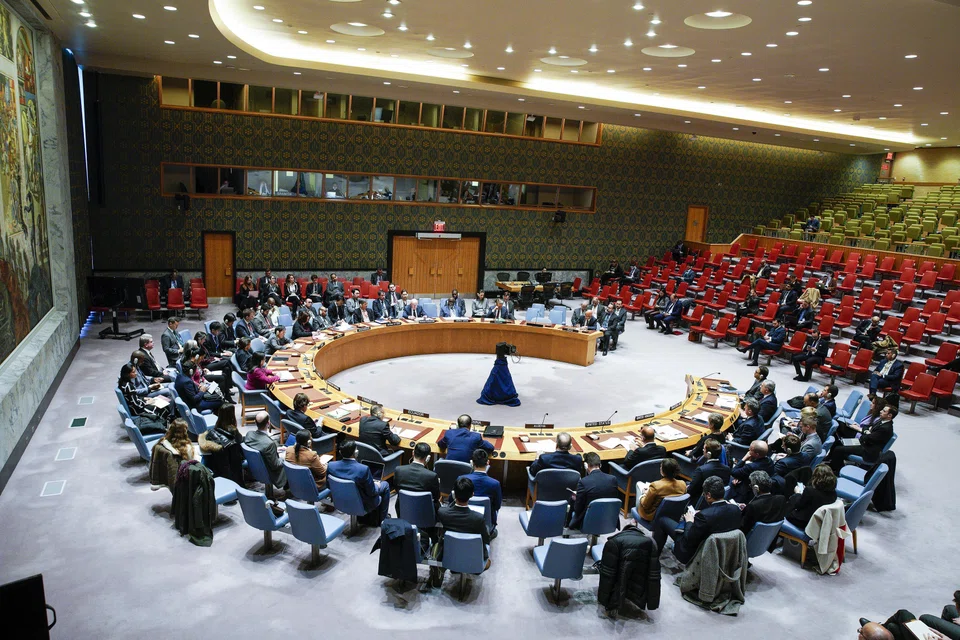
A further fundamental change is that there is now a much denser web of post-war international institutions, especially the United Nations, which continue to have significant resilience and legitimacy decades after their creation. While these bodies are imperfect, and in need of reform, the fact remains that they have generally enabled international security, especially with five of the key powers all on the UN Security Council.
Further still, the relative balance between the two leading powers today is different today than a century ago. That is, the gap between the US and China is greater today than that between Germany and its primary European foes on the eve of the first and second world wars.
Indeed, one of the biggest consequences of the first and second world wars was the so-called ”American Century” in which the US emerged as the world’s most powerful nation. To be sure, the country has undergone relative decline, and China is now the largest economy in the world based on purchasing power parity data. However, the US remains significantly ahead of China on most measures of national strength. This includes military might, and America is likely to enjoy an overall advantage for years.
Indeed, unlike some key adversaries of Germany in the 20th century such as the UK, there are indications that US power will remain resilient potentially for decades to come. The nation’s strengths have been buoyed recently by factors such as the country’s energy revolution, which has potentially far-reaching geopolitical consequences.
Taken together, the prospect of a major power war in the foreseeable future is therefore growing, but is probably not imminent. Nuclear weapons and international institutions, that generally act as a restraining force against major conflict, did not exist before the first and second world wars.
Moreover, the relative global balance of power is different today than then, partly because of the ongoing resilience of US power in the 21st century.
The writer is an associate at LSE IDEAS at the London School of Economics
TRENDING NOW
Chairman’s role in spotlight with raft of proposed new rules for Singapore boards
Director of PR firm sacked for secretly recording internal meeting loses wrongful dismissal claim

Indonesia stocks suffer worst plunge in nearly 30 years as MSCI proposes standalone status

If Europe goes to war, the fallout will be felt in East Asia

