Great Eastern’s big rally – activist investors can be crucial part of market ecosystem
MAS and SGX should seek to make responsible shareholder activism more culturally acceptable in the local market

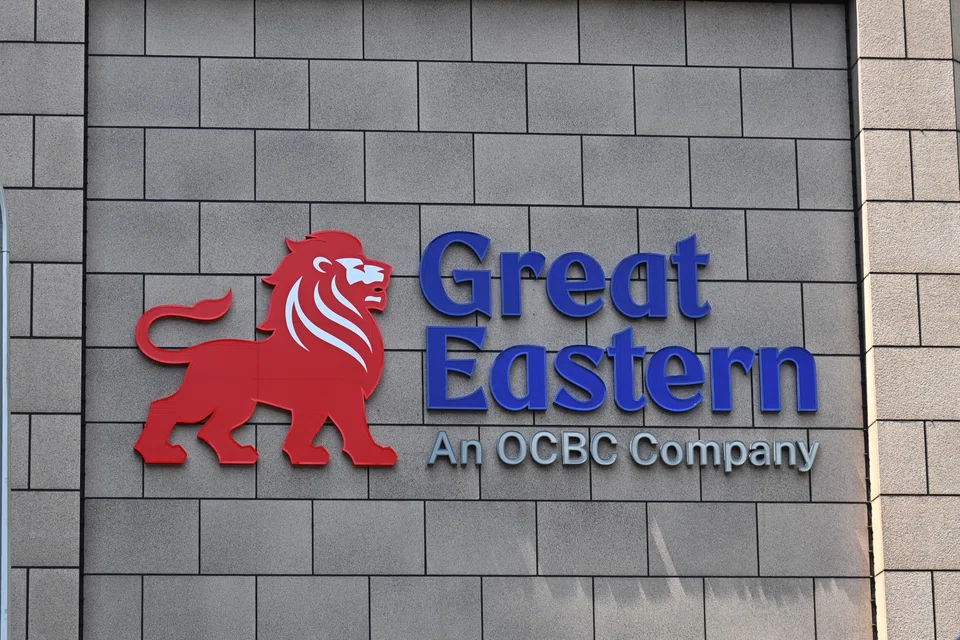
[SINGAPORE] Some shareholders of Great Eastern (GEH) who resisted OCBC’s attempt to fully acquire and delist the insurer two years ago may have felt vindicated by the strong financial numbers it reported last week, and by the big run in its share price over the past month.
Before the market opened on Friday (Jul 31), GEH said its profit attributable to shareholders jumped nearly 103 per cent in Q2 2026 to S$503.2 million. This brought its H1 2026 profit attributable to shareholders to S$849.5 million, up more than 43 per cent versus H1 2025.
Total weighted sales were up 13 per cent to S$411.3 million in Q2 2026, and up 15 per cent to S$813.2 million in H1 2026. New business embedded value increased 25 per cent in Q2 2026 to S$209.9 million, and 28 per cent in H1 2026 to S$405.3 million.
GEH said it will pay an interim dividend of S$0.35 per share. For 2025, it paid an interim dividend of S$0.25 per share, and a final dividend of S$0.30 per share.
GEH’s shares closed on Friday at S$21.78 – up 6.9 per cent for the week, and up 34.6 per cent since the beginning of July.
With this recent surge, GEH shares have delivered a total return of 150.5 per cent since OCBC’s offer back in May 2024. OCBC’s own shares have returned 135.4 per cent during the same period, while the Straits Times Index has returned 90.7 per cent.
With a market capitalisation of S$20.6 billion, GEH is now also among the largest stocks on the Singapore bourse – approximately the same size as Keppel and CapitaLand Integrated Commercial Trust, which have market caps of S$20.7 billion and S$19.2 billion, respectively.
Will GEH keep rising? How much higher can it climb?
Heightened investor interest
One theory for GEH’s run over the past month is that the market was anticipating the strong financial numbers that it reported last week. If GEH’s performance is sustained in H2 2026, it could end the year with a significantly higher embedded value and comprehensive equity – two financial metrics commonly used to value insurers.
GEH reported an embedded value of S$20.1 billion at end-2025, and comprehensive equity of S$15 billion.
An alternative theory is that the heightened investor interest in GEH over the past few weeks was sparked by Allianz’s purchase of HSBC Life Singapore turning the spotlight on the potential value of Singapore-based insurance players.
On Jul 24, Allianz said it will pay a total consideration of two billion euros (US$2.3 billion) or S$2.9 billion to HSBC. Of this, S$2.7 billion is for the acquisition of HSBC Life Singapore, while the remainder is for a 15-year exclusive deal to provide HSBC’s customers in Singapore with protection, health, retirement and wealth solutions.
It added that HSBC Life Singapore generated an operating profit of 80 million euros in 2025, and had comprehensive equity of 1.2 billion euros.
Another theory for GEH’s rally over the past month is that it has benefitted from a rotation towards less-liquid, value-oriented stocks as valuations have become increasingly stretched among other larger cap stocks.
More dividend driven gains?
Whatever the case, GEH could well continue climbing over the next couple of years – as its growing insurance business supports higher dividends, in my view.
GEH has stated that it aims to pay dividends twice a year, with each dividend amount no lower than the preceding one. It noted last week that its latest interim dividend of S$0.35 per share is 17 per cent higher than its final dividend for 2025.
Even if GEH maintains its final dividend for 2026 at S$0.35 per share, that would translate to a full-year dividend of S$0.70 per share – or a yield of 3.2 per cent, based on GEH’s current share price.
However, investors should keep in mind that OCBC treats GEH as an integral part of the group, and it has indicated that it would rather the insurer were not listed. Indeed, GEH has a longstanding practice of remunerating its employees with OCBC shares rather than GEH shares.
Under the circumstances, it seems most unlikely that the value of GEH will ever be crystallised through a sale to a third party, as HSBC is doing with its Singapore insurance business.
GEH’s board is also unlikely to take any steps to widen the insurer’s free float – which stood at 11.8 per cent in March.
Accommodate more activism
To be clear, I am not suggesting that OCBC was wrong for wanting to fully acquire and delist GEH. However, this strategic objective should arguably have been pursued in a manner that gave greater weight to the interests of GEH’s minority shareholders – especially as some of those minority shareholders had begun adopting an activist stance during the weeks leading up to OCBC’s offer in May 2024.
In light of the strong returns GEH shares have delivered, it now appears that those minority shareholders had the right instincts.
The important role that minority investors can play in unlocking shareholder value has not been lost on the architects of the Singapore market’s current revitalisation. Institutional investor participation is being fostered through the S$6.5 billion Equity Market Development Programme (EQDP).
Locally listed companies are also being encouraged to build up their capabilities in corporate strategy, financial management and investor relations through the S$30 million Value Unlock scheme.
Yet, engaging with companies and pushing them to unlock value can be a difficult and disagreeable task for minority investors when their interests are fundamentally misaligned with those of controlling shareholders.
This column suggested last month that part of the solution may lie in providing minority investors with practical ways to seek legal redress. There may also be room for the rules related to general offers, delistings and free floats to be adjusted, in order to reduce the likelihood of lengthy trading suspensions being a factor in minority investors accepting lowball offers.
More importantly, the Monetary Authority of Singapore (MAS) and the Singapore Exchange should seek to make responsible shareholder activism more culturally acceptable in the local market.
For instance, they could require fund managers that have received EQDP funds to publicly disclose their voting record at shareholder meetings. These disclosures might result in fund managers voting more carefully, and influence the thinking of retail investors on matters such as board compositions and interested party transactions.
MAS could also modify its Grant for Equity Market Singapore scheme to specifically allocate funding for research designed to challenge and effect change at the boards and senior management ranks of underperforming companies.
By developing such analyst talent in Singapore, perhaps the day will come when activist investors will not be viewed as a bunch of troublemakers but a crucial part of a well-functioning market ecosystem.