

Interest costs weigh on S-Reit distributions, but not all is doom and gloom for long-term investors

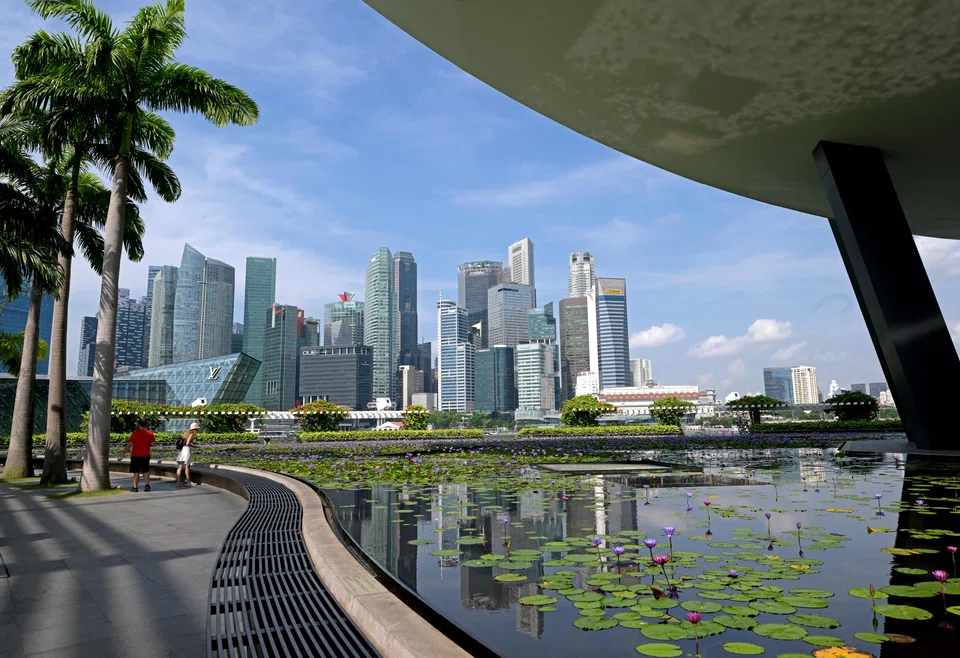
THE latest results from Singapore-listed real estate investment trusts (S-Reits) for the financial period ended December do not appear to give investors too much to cheer about.
Of the 22 S-Reits that have reported distribution figures in their results or business updates so far, 17 reported declines in their distribution per unit (DPU) in the latest reporting period.
Just four S-Reits – Mapletree Logistics Trust, CapitaLand Ascott Trust, CapitaLand Integrated Commercial Trust and Parkway Life Reit – achieved higher DPU.
OUE Reit reported unchanged DPU for its second half ended December.
The weaker performance comes as higher interest rates pushed up net finance costs. It follows a trend seen in previous quarters, where higher gross revenue and net property income (NPI) for most Reits failed to translate into higher distributions.
The latest results reflect the ongoing tougher reality for the rate-sensitive sector, but it may not be all doom and gloom for long-term investors.
Given that markets are expected to be at the peak of the high rate cycle, it may be worth looking at the potential positives in the longer term instead of the near to mid-term headwinds.
Interest rate headwinds
Higher interest costs have contributed to S-Reits’ volatile trading over the past several years.
While markets are currently expecting the US Federal Reserve to cut rates later this year, the full effects of the current high rate environment are still playing through as hedges expire, and debt is refinanced.
For the latest financial period ended December, S-Reits mostly reported higher average interest rates and borrowing costs compared to the same period a year ago.
Of the Reits that have reported DPU figures so far, the median DPU was around 6.5 per cent lower year on year. This came even as most S-Reits turned in higher gross revenue and NPI in the latest reporting period.
Most managers in recent results briefings have also guided for their average all-in interest rates to continue to rise in 2024, building upon the already elevated levels. This would likely continue to weigh on distributions in the coming quarters.
Bright sparks
While the prospect of weaker distributions may not be enticing, there may still be positives for investors to consider in the sector.
The impact of high interest rates has already been known for some time, and would likely be already priced in by most investors.
Indeed, the iEdge S-Reit index fell to a multi-year low last October as the US 10-year treasury yield crossed 5 per cent for the first time since 2007.
But changing interest rate expectations have sent the index soaring in the last two months of 2023, with the sector posting its best-ever monthly performance in December, even before any rate cuts materialised.
While the index continues to face choppy trading as investors adjust expectations on the interest rate environment, an interest rate downcycle would likely be greeted with more enthusiasm.
Apart from a potential improvement in the rate environment, investors may also take comfort from the fact that most S-Reits continued to deliver fairly stable or positive operating metrics.
Of the 22 Reits that have reported their results so far, 17 posted higher gross revenue in their latest financial period, compared to a year earlier.
Rental reversion continued to be strong in 2023, with a number of S-Reits across various sectors reporting double-digit growth. Managers have also been guiding for continued positive reversion in 2024, even though they say that performance may not be in the double digits.
As investor sentiment improves, S-Reits would be able to move away from being defensive to taking more active steps as they seek to tap potential growth opportunities.
Managers have characterised 2023 as a year when safety and survival was the key theme. But they are expressing greater optimism over growth in the coming years as the rate outlook and investor sentiment improve.
Some have pointed to transaction interest returning to the real estate market, after a period of stalemate.
There are also Reits which are expressing plans to make acquisitions grow this year. ESR-Logos Reit, for instance, recently announced a US$70 million investment in an ESR Japan Income Fund, which will invest in stabilised core logistics assets and development logistics assets in Japan.
Investors also appear to have greater appetite for equity fundraisings.
Last month, Frasers Centrepoint Trust raised S$200 million in a private placement that was used to partially fund a stake in retail mall Nex.
The private placement was 2.5 times covered, with “strong participation from new and existing institutional, accredited and other investors”.
Earlier this month, Digital Core Reit also announced a private placement that was upsized to US$120 million from US$100 million, with an issue price of US$0.625 per unit, at the top end of the price range. Part of the proceeds will be used to fund potential acquisitions.
While high interest rates are likely to still weigh on distribution performance for S-Reits in the coming quarters, investors with a long-term horizon would need to weigh this against the prospects of a potential recovery.
All in, the sector would likely continue to face volatile trading as the path of rate hikes becomes more apparent. But those willing to look beyond near-term headwinds may find it compelling to buy on dips to gain exposure at less expensive valuations.
TRENDING NOW

Once staunchly pro-China, Malaysian Chinese businesses are now distancing themselves from Beijing

New launch or resale unit? Here’s a guide for homebuyers
The lesser-known prospects in the Asian chipmaking supply chain

Cliff Tan has 7 million followers and a 4-month waitlist. Why won’t he expand his business?

