

The new EESG playbook: Where energy is an economic imperative
Business decisions are inextricable with sustainability goals in today’s environment
A CHIEF sustainability officer has a meeting with the CEO and the chief financial officer, and proclaims: “We need to invest in a major renewable project to meet our carbon emissions reduction targets.”
Chances are that the proposal will be put on hold.
What if the pitch becomes: “We need a renewable project to hedge our exposure to increasing and volatile energy prices. This will protect our profit margins.”
It is certain that eyes will light up and the reply may be: “Come, tell me more.”
Increased demand for energy – due in no small part to artificial intelligence – and volatile oil supply chains have put this resource as a key economic variable of corporate strategy.
Gone may be the days when sustainability is just a conversation to be had with regulators and ESG rating agencies.
A compelling business playbook today will not be just based on ESG – it needs to be recast as “EESG”, where the first “E” stands for “economics”.
Renewables as a hedge
The Iranian conflict has disrupted the flow of oil and gas, the seizure of Bab el-Mandeb closed yet another key energy transit point, and, most recently strikes on Saudi Arabia have threatened the kingdom’s energy infrastructure.
Just before the Hormuz crisis, crude oil prices were trading around US$60 per barrel. They have risen above US$100 at several points after the conflict began.
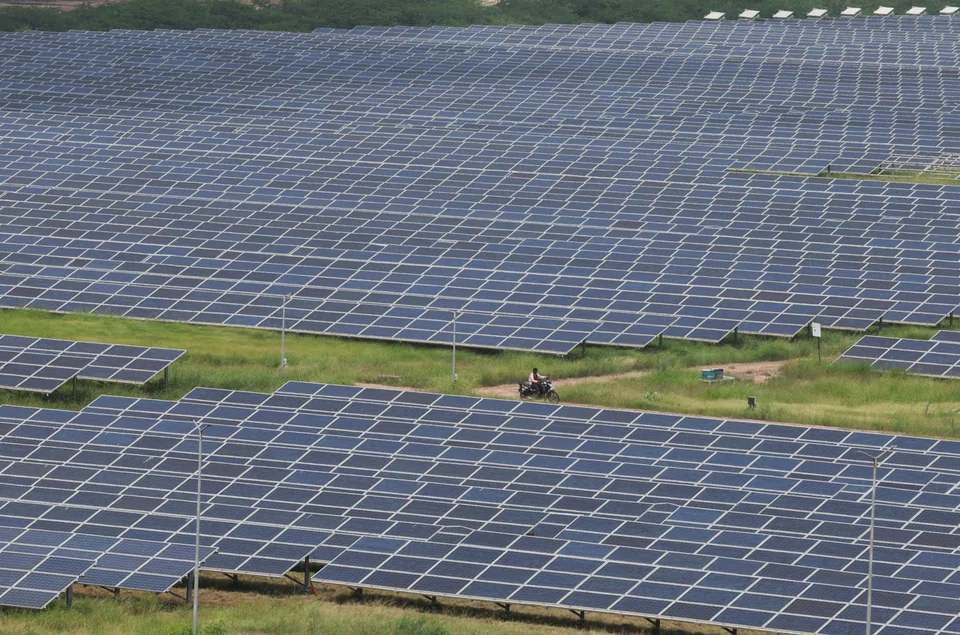
Using full-cost comparisons from the International Renewable Energy Agency and Lazard, renewables such as solar, hydro, onshore wind and geothermal have become even more viable compared to natural gas, which powers most of Singapore’s electricity generation presently.
In this light, renewable energy is not just about getting a “green badge” for reducing emissions – it is also about hedging against energy prices, a key aspect of cost management.
Long-term power purchase agreements, storage investments for renewables or even programmes to improve the efficiency of existing power arrangements should hence deserve the same consideration as regular capital projects.
They serve as fixed-price balance-sheet insurance that locks in energy tariffs to protect a business’ income and value.
The energy demands of AI
On the demand side, businesses are incorporating AI more into workflows, which is driving up energy needs. Accordingly, electricity costs are becoming an even more crucial business strategy parameter than before.
This is regardless of whether these costs are directly incurred at the business end, or locked in through purchases of services from AI providers, making AI, sustainability and corporate strategies intimately intertwined.
Key questions include: Where is the business’ electricity coming from, and at what price? How reliable is the electricity grid, and how exposed is the business to power constraints?
These issues are especially relevant to businesses with overseas operations with less secure power grids.
With increased strains on energy systems due to AI computing needs, grid risk will be a business risk. In bottleneck scenarios, this may necessitate investments in on-site energy generation or even internally owned data centres, including the necessary cooling capabilities.
Managing energy needs is no longer just about “green overheads”, but a critical operational uptime prerequisite that lowers the costs of a technology businesses increasingly rely on.
Bifurcated supply chains
The complications arising from the interaction between energy and AI are further compounded by the broader geo-economic divide in how they are managed.
Under US President Donald Trump, Washington’s energy strategy has shifted away from renewables and back to fossil fuels.
Meanwhile, China’s push for sustainability has gathered momentum, and the country has committed to reducing its coal dependency.
As for AI legislation, the US is more liberal and favours minimal state intervention, while most regions of the world, including China, prefer more balanced but regulated approaches.
However, one quality unites the two policy approaches – both prioritise gaining economic ground, albeit in diverse ways. This is inadvertently creating two different supply chain ecosystems globally.
As a result, businesses will find it difficult to manage their carbon footprints, as different stages of the value chains across the world may have dissimilar requirements.
The issue is complex as it is not about companies finding the path of least resistance, but resolving policy and system incompatibilities.
Businesses may be locked into one side of the geo-economic fence even if they are not aligned with either superpower.
In this respect, corporate decisions about costs and supply chains are necessarily about ESG as well.
They will have to make increasingly fine-grained choices based on industry, business and even supplier levels to decide what makes most economic sense.
The EV case study
With the US and China doubling down on different trajectories, let’s consider an industry setting where this divergence is most real – the electric vehicle sector.
EVs draw from the electricity grid. If the energy they depend on is generated using fossil fuels such as natural gas, EVs will have a diluted effect on reducing carbon emissions.
The sustainability value proposition for EVs is thus rooted in China’s green industrial policy as opposed to a grey one of the US.
China is the world’s largest producer, consumer and possibly innovator in energy storage batteries and solar panels. Its current national five-year industrial road map places next-generation solar and battery technologies as strategic priorities.
Hence, EVs in China principally rely on battery technology and are powered by renewables, particularly solar energy.
As consumer demand worldwide shifts from fossil fuel-powered vehicles to EVs, automotive manufacturers cannot afford to buck the market trend.
The new value-chain mandate is relevant to key Asian localities such as Thailand and Chennai – reputedly the “Detroits of Asia”. It will also affect interrelated multinational automotive distributors, such as Astra International from Indonesia, which is ultimately owned by Hong Kong-based Jardine Matheson.
It would make more business sense for them to embrace the China-led total supply chain for EVs – buying into an ecosystem where clean technology is the foundation of industrial competitiveness.
From virtue to value
With all due respect, the narrative for tackling climate change as an ethical responsibility is probably passe. The new corporate playbook is an economics-driven scorecard that evaluates power concerns amid global policy bifurcations on AI and energy.
The virtue of sustainability – while continuing to be important – will have to be pitched as a value imperative. No amount of moral persuasion will be that effective.
EESG – the extension of ESG – goes beyond buying green, to ensuring that the bottom line stays green.
The writer is director of Centre for Governance and Sustainability at NUS Business School. This commentary is based on his masterclasses delivered in September at this school as well as the Duke-NUS Medical School as part of the NUS Sustainability Connect 2026 festival.
TRENDING NOW

Once staunchly pro-China, Malaysian Chinese businesses are now distancing themselves from Beijing

Singapore’s wealth management success should extend to everyday families

Stocks to watch: Jardine Matheson, Frasers Property, Advanced Systems Automation, Southern Alliance Mining

‘Wasting money, spending tokens’: Companies still in search of AI use cases with worthwhile ROI, says Broadcom’s Hock Tan

