Singapore is fixing its market. Companies still have to fix their story
Investors want to know where the company is going and whether the team can get it there
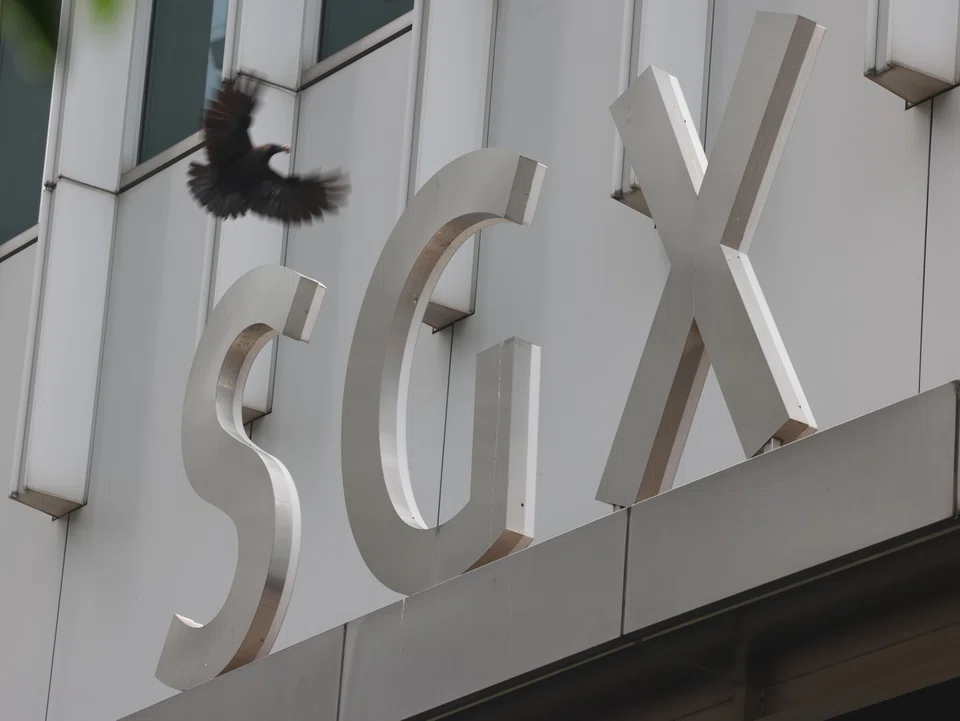
IN MARCH 2026, Monetary Authority of Singapore (MAS) managing director Chia Der Jiun told listed company chairpersons that the work of reviving Singapore’s stock market had reached a critical stage.
“The stage, the lighting, the costumes, the music. We have gotten all of these ready,” said Chia, urging the business leaders to “now play (their) parts”.
By end-September 2026, MAS had placed S$5.4 billion with 14 asset managers under the Equity Market Development Programme, drawing from the S$6.5 billion pool. The Straits Times Index also crossed 5,800 for the first time that month.
This builds on the momentum of the S$30 million Value Unlock programme launched by MAS and the Singapore Exchange (SGX) in late 2025, to fund training and advisory work in strategy, capital and investor relations.
At the Singapore Institute of Directors’ Chairpersons Guild Forum on Oct 1, 2026, SGX chairman Koh Boon Hwee underscored the need for better investor communications.
“If you say that the market misunderstands you, it is your job to make sure that it understands you,” he said. “If the public doesn’t know what you are planning to do over the next three to five years, why would they buy your stock?”
This point deserves more attention than the fund flows have received. The policy machinery can bring investors into the room. It cannot tell them what a company stands for.
What “good” companies may lack
A Straits Times report in December 2025 found that 353 of the 614 companies on SGX, or 57 per cent, were trading below book value.
The gap is wide. Some of those companies have earned less than their cost of capital for years. They need a better business, not just a better narrative.
However, many others, as one investor relations practitioner described in the same report, suffer from “good company, bad stock” syndrome. Those are the companies this argument is about.
When an investor cannot explain a company to their investment committee in plain terms, they do not buy it.
With fewer investors, analysts have little reason to cover the business, and thin coverage keeps the next investor away. At the forum, Koh reinforced this point: “With no liquidity, there is no proper valuation.”
What the evidence says
Finance researchers Brian Bushee and Gregory Miller found that small and mid-cap US companies that hired investor relations firms gained more institutional ownership as well as a stronger analyst following and valuation than comparable firms.
Similarly, a study in the Journal of Accounting and Economics found that individual investors put more money into companies with clear, concise disclosures, and earned better returns from them.
A 2025 Stewardship Asia Centre study found that 95 per cent of institutional investors surveyed would tolerate short-term underperformance if a company communicated a clear and credible long-term strategy.
Clarity is an unfair advantage with customers. It works the same way with investors. People back what they understand.
More than a tagline
By equity story, I do not mean a glossier investor deck.
Building a better narrative must start with the basics: What does the company actually do, for whom, and why do customers choose it over the next option?
Ask five senior executives from the company separately and count how many versions come back.
Then comes an investment case that can be tested. How and why does this business make money? Why will it keep doing so when conditions change?
A claim that the numbers cannot back up is just decoration.
Next is ambition, with a route to get there. SGX’s Koh called for a three to five-year plan, highlighting that a chairperson’s job includes working with management on what the company should look like in 10 to 20 years’ time.
Investors want to know where the company is going, and whether the team can get it there. The narrative must be clear, consistent and coherent.
A company that is clear about its purpose and strategy also makes sharper calls on capital, where to double down, and whom to hire. Staff can explain it over dinner. Managers can use it to turn down a bad idea.
Investors tend to hear the story last, yet they spot its absence early.
Where boards can do more
From the boardrooms, I see how late the narrative question arrives. Boards scrutinise the numbers line by line, while the story behind them is often drafted the week before results by whomever has time.
Value Unlock is designed to change that. Companies taking up its Elevate grant must publish their shareholder value plans, targets and progress.
On paper, that is disclosure. In practice, it is a public test of the story because a plan that does not hang together will be found out. As MAS’ Chia warned, disclosure without real ownership by leadership risks becoming “a box-ticking exercise”.
Crucially, publishing targets is not the same as being believed. Investors read a plan against the governance, culture and track record behind it.
The companies that gain the most will test their equity story as hard as their financials before it goes out. Ultimately, a story is only ever as strong as the business behind it.
This test does not apply only to listed companies. An Oct 26 report by The Business Times highlighted that startups in Singapore are now seeing an SGX listing as a real exit. They will face the same test, with no track record to lean on, so their story carries even more weight.
Singapore has done a great deal to make its market worth watching again. The rest is up to the companies.
As Koh asked the audience in closing the forum: “If you can’t tell the public what is going to happen to your company over the next three to five years, how can they tell?”
The writer is a seasoned board director, co-founder of Narratist and a training partner with The Nutgraf, a panel partner under the SGX-MAS Value Unlock programme