

Why Singapore, Johor and Riau Islands should build a cross-border ecosystem for AI
Cooperation is the best hope to anchor and unlock potential of region’s AI economy
THE prospects of artificial intelligence attract interest and investment, but also concerns and contestation.
Demand for data centres has surged, with some stakeholders competing to attract them and others protesting against them. Can we reap the benefits of this new driver of the global economy while avoiding the pains?
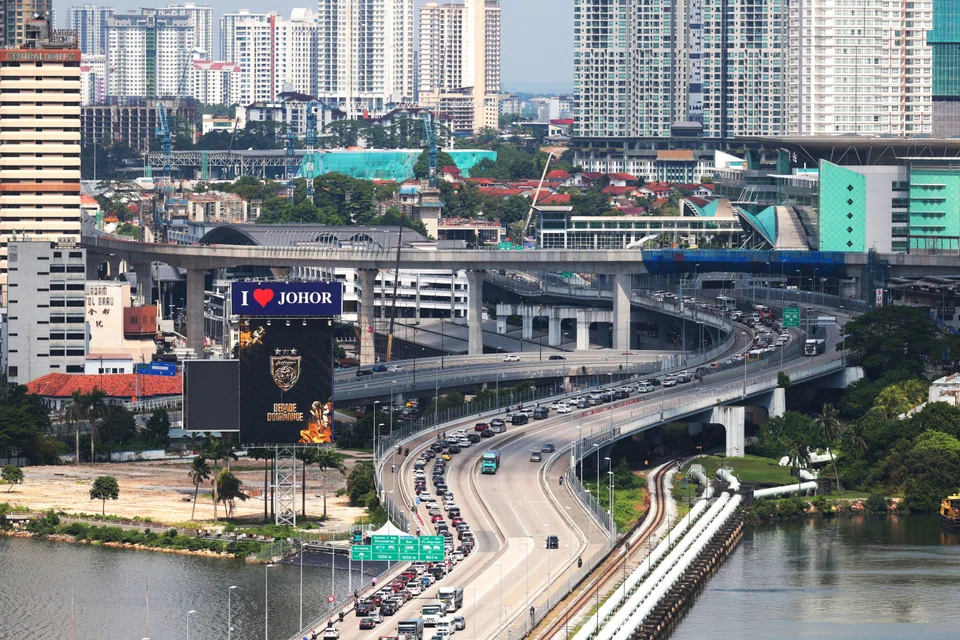
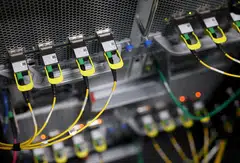
Singapore and its nearest neighbours have a particular advantage in serving not just Asian markets, but also global ones. Submarine data cables connecting Asia and the wider world converge on Singapore, and extend to Johor and Indonesia’s Riau Islands.
This proximity enables low-latency connections for advanced computing and digital services, giving the region a head start in developing an AI economy.
But capturing the opportunity requires more than infrastructure, technology and investment. It needs a cross-border ecosystem that includes people, livelihoods, energy and water, to optimise the benefits and move forward sustainably.
Shared growth across borders
Cross-border economic activities are already considerable; for instance, efforts to create the Sijori Growth Triangle – a partnership between Singapore, Johor and Indonesia’s Riau Islands – date back to the 1990s.

Today’s opportunities are qualitatively different. Unlike the goals of the Sijori scheme, this is no longer simply a question of leveraging more land and labour.
While submarine cable connectivity provides an advantage, the AI economy involves much more than connecting and storing data or computing. It extends to research, software, cloud services and applications in finance, healthcare, manufacturing, logistics and energy.
No single Asean country has all these capabilities at an optimal scale. But Singapore, Johor and the Riau Islands together offer many of them.
SEE ALSO


Singapore is strong in research, technology, finance and professional services. Johor offers manufacturing capabilities, industrial space and expanding computing infrastructure. Batam combines an established industrial base with growing digital infrastructure and access to the wider Indonesian market.
Together, they could support AI engineering, specialised services and advanced industries, creating higher-value activities and skilled employment across all three locations. They could develop industries and services that none can achieve alone.
Resource and sustainability considerations
Growing the AI economy and data centres will require substantial resources, especially energy and water. Unless managed well, these demands could strain existing supplies, affecting other industries and households.
Consider electricity. Singapore already has more than 1.6 gigawatts (GW) of data centre capacity. In Johor, electricity demand from data centres is projected to reach 4.42 GW by 2030. Batam is seeing a surge in investments around Nongsa Digital Park, adding pressure on power generation and grids.
National measurements and estimates differ. Nevertheless, if data centres across the region eventually draw 7 to 8 GW of electricity cumulatively and operate at high utilisation, annual consumption could approach Singapore’s current total electricity use per year.
This would place considerable pressure on existing supplies, even before accounting for other uses. More electricity is therefore essential.
Given climate commitments, green energy must be the priority.
Land-constrained Singapore is pursuing low-carbon electricity imports through regional interconnections, supporting the wider Asean Power Grid. Some electricity can come from Laos and Thailand through Malaysia. Other proposals involve links to Sarawak, Vietnam and even Australia.
But the clear opportunity is to develop new energy sources in Johor and the Riau Islands alongside the AI economy.
There is considerable untapped potential for large-scale solar power. Johor has announced plans for 5 GW of solar capacity by 2031, while studies estimate the Riau Islands have technical potential exceeding 20 GW. Even developing part of this potential could substantially increase regional electricity supplies.
Solar alone, however, cannot provide the constant electricity that data centres require. Energy storage, stronger grids and complementary generation will also be needed.
Bioenergy from palm oil and pulp-and-paper sectors in Sumatra can offer another possibility, such as using palm oil mill effluent to produce biogas and biomethane. These can connect established agricultural industries to the digital economy.
Water is equally important. Singapore already imports water and depends on reservoirs, desalination and water reclamation. Johor has considerable raw water resources, but faces growing demand for treated water.
Batam relies heavily on reservoirs and has recently experienced supply disruptions, particularly in Nongsa, where declining reservoir levels have affected households and raised concerns over the expansion of data centres.
Data centres can be thirsty. In Johor, operating data centres currently consume some 18 million litres daily as at early 2026, but projected demand could reach 384 million litres by 2030.
Data centres should not compete unnecessarily with households for drinking-quality water and electricity.
Innovation in water recycling, desalination and cooling can reduce these demands. Governments must set high standards and encourage companies to do better.
Singapore has developed water-efficiency benchmarks and supplies much of its data centre water through Newater. As the industry expands, water demand must be managed alongside the needs of households and other industries.
Consider Equinix’s new SG6 data centre. It targets a power usage effectiveness of 1.2 and incorporates advanced cooling, Newater and rainwater harvesting.
Cooperation between governments, investors and data centre operators can align growth with resource efficiency and sustainability.
New understandings
Political understanding and cooperation will be critical to working across borders. Trust must be built between Singapore, Malaysia and Indonesia, with each country recognising their counterpart’s ambitions and the prospect of shared benefits.
One signal came from Singapore Senior Minister of State for Digital Development and Information Tan Kiat How, at the opening of Equinix’s SG6 on Nov 6.
He said that Singapore should not compete for every computing workload or megawatt, but seek “maximum value from compute”. This would allow partners to develop their own capabilities while helping the regional system work better.
The region should not be seen simply as a collection of data centres or an expanded industrial zone. It should be an integrated resource-and-technology ecosystem, connecting digital infrastructure, green energy, water, manufacturing, finance, services and people.
This requires planning across sectors and borders. Coordinated investment could increase electricity generation and enable efficient, market-based cross-border supply.
Water capacity in Johor and the Riau Islands could also be expanded, drawing on Singapore’s expertise in treatment, recycling and desalination.
Finance and investment are essential. Working with Malaysian and Indonesian partners, Singapore’s banks, institutional investors and infrastructure companies can mobilise long-term capital for electricity generation, transmission networks, water treatment and recycling.
Expertise in project financing, engineering and green finance can help make these investments commercially viable.
Digital cooperation should extend beyond data centres to AI research, applications and advanced manufacturing. Universities and businesses can collaborate on skills, innovation and technologies that reduce resource consumption.
Sustainability must be integral. Green growth should protect forests and peatlands, reduce pollution and ensure reliable resources for communities. As the recent haze episode in October 2026 has demonstrated, environmental problems also cross borders.
A practical starting point is the Johor-Singapore Special Economic Zone, which seeks to facilitate investment, connectivity and talent development across the border. Although bilateral, it could offer lessons for comparable Singapore-Indonesia cooperation involving Batam and the wider Riau Islands.
Perhaps the key challenge is less about technology than attitudes.
Too often, cross-border development assumes resources are limited and countries must compete for their share.
Electricity, water, investment and talent become matters of national competition, where one country’s gain is another’s loss. A narrow and nervous view of national security and scarcity must change.
The greater opportunity is to increase what is available. Joint investments in renewable energy can expand electricity supplies, while water recycling and desalination can create additional resources.
Cooperation in infrastructure, research and innovation can generate new industries and skilled jobs.
Building a cross-border ecosystem through cooperation is the best hope to anchor and unlock the potential of the AI economy in our region. Rather than compete over what is already available, the three countries can work together to create more.
The writer is chairman of the Singapore Institute of International Affairs (SIIA). This commentary draws on discussions at the SIIA’s Singapore Green Dialogue, held on Nov 3.
Decoding Asia newsletter: your guide to navigating Asia in a new global order. Sign up here to get Decoding Asia newsletter. Delivered to your inbox. Free.
Share with us your feedback on BT's products and services
TRENDING NOW

Singapore bars Alice Huang, woman tied to affair with Nvidia’s Jensen Huang, for misleading police

Nvidia prepares to oust Jensen Huang after news of second affair, with executive: reports

Higher rates, weaker spending: Is the Philippines entering stagflation?

Special dividend for SIA’s 80th anniversary? CEO says extra payout will need board’s nod

