The WTO may be on its last legs
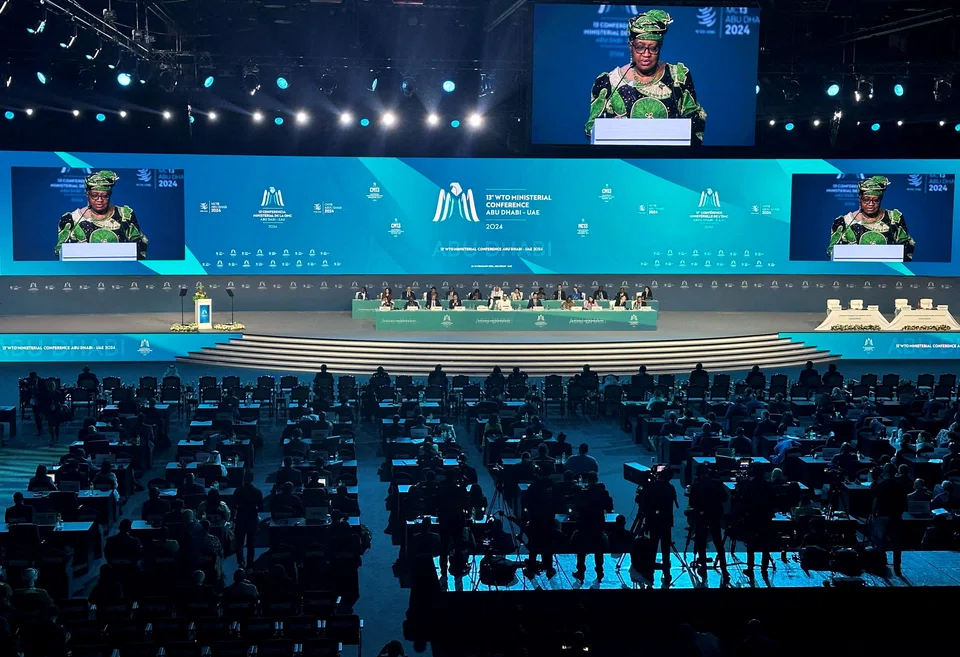
TO DESCRIBE the outcome of the WTO meeting in Abu Dhabi as a mere “failure” would be an understatement. The recent 13th ministerial meeting of the World Trade Organization (WTO) struggled mightily without doing anything of significance, despite going into overtime. Indeed, the delegates wrestled even to agree on the wording of the customary ministerial communique at the end of the meeting. What came forth was a bland statement, practically devoid of content.
Washington used to set the agenda on easing trade restrictions and promoting global trade since the 1947 General Agreement on Tariffs and Trade (GATT), the original treaty that established the rules and principles of international trade among its contracting parties.
So it was emblematic of America’s indifference to the recent proccedings that the US Trade Representative, Katherine Tai, chose to depart even before the meeting ended.
It was downhill from the get-go. One of the items for debate was the huge subsidies that promote unsustainable fishing practices. At the 2022 Geneva meeting, a ban was agreed on for some subsidies, including for illegal fishing and on high-seas fish stocks. But on state subsidies that contribute to overcapacity and consequently the depletion of global fish stocks, no consensus was possible this time.
The proverbial can was kicked down the road for debate at the 2026 meeting.
Other issues fared no better. The 2013 Bali ministerial talks agreed that developing countries should have a permanent solution to prevent legal challenges to subsidised stockpiling of food for anti-hunger programmes. India insisted that this matter be taken up first. Washington wanted market access issues to be given equal priority. The US demanded market access for its farm produce; the EU was opposed. The EU demanded a cut to developing nations’ subsidies for food production. Washington demanded that poor people in rich countries be equated with the poor in poor nations. Beijing wanted a debate on food security and agriculture. In the end, nothing was agreed on.
Then there was debate on the structure of the WTO itself. The past three US administrations have blocked appointments to its appeals court, effectively leaving it hamstrung. This time, everyone agreed that the WTO should be reformed, but they could not agree on the way forward.
As the meeting inched along, it became abundantly clear that getting consensus on anything from 164 countries would be tough. To help move things along, negotiations were conducted through a controversial “green rooms” arrangement. The so-called “double quad” members – the US, UK, EU, and Canada on one side and China, India, South Africa and Brazil on the other – tried to broker outcomes to present to the rest for consideration. That tactic did not work either.
The only agreement was to defer the question of the right to levy tax at the border on transmissions of digitised content such as movies or video games. The issue is now under a moratorium. Developing countries opposed its renewal so they could impose tariffs, both for revenue and to push on with their own digital development. It was finally agreed that the moratorium will now expire in 2026.
Everything that happened in Abu Dhabi suggests that plurilateral agreements – deals among a smaller number of participants – applying only to the participating countries, may be the only way forward. Sadly, that also indicates that the days of the WTO itself may be numbered.