

EU gas cap breakthrough remains on the table
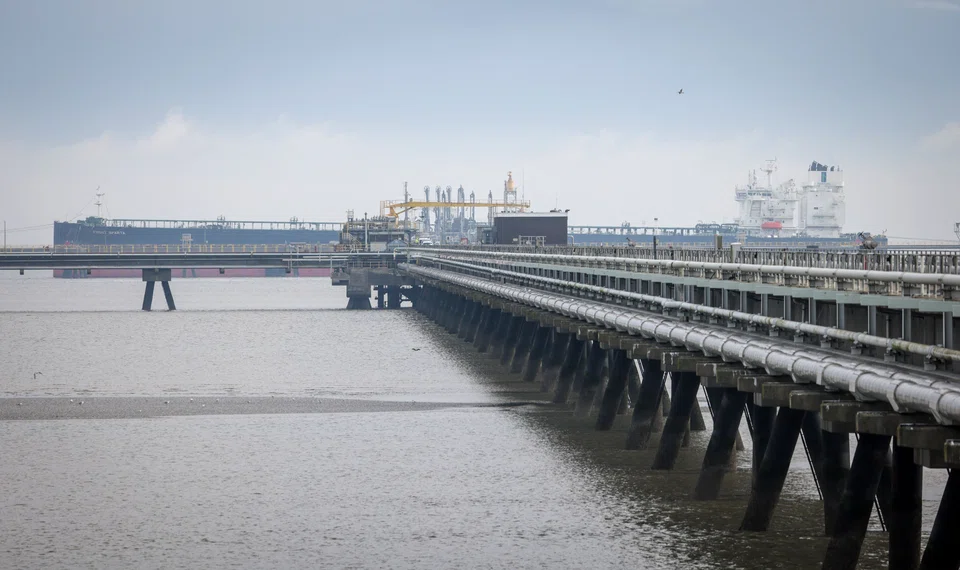
LAST week’s eighth package of European Union (EU) sanctions against Russia, including an oil price cap, surprised some with its ambition. Yet it is unlikely to be the end of Europe’s big retaliatory measures against Moscow, with energy ministers meeting again this Tuesday (Oct 11) to try to move forward a landmark gas price cap too.
Today, gas prices are nearly four times higher across Europe than a year ago, and more than 11-fold the price in 2020. So the political imperative to act is high. Those pushing for a cap, including European Commission President Ursula von der Leyen, hope that this can be agreed at the next summit of 27 presidents and prime ministers on Oct 20 to 21 – though this may prove an over-optimistic timetable.
However, the momentum behind the gas price cap perplexes many, given the challenges involved in implementing one. Elisabetta Cornago at the Centre for European Reform think tank, for instance, has called the gas idea “a kind of a cry for help”, saying: “The bloc has run out of low-hanging fruit to address the energy crisis and is gradually moving away from orthodoxy, despite the potential perils the shift entails. Member states are looking at prices and quantities in isolation and that’s difficult because of economics. Prices are high because of scarcity.”
Cornago’s point highlights that a gas price cap and stronger rationing plan are complementary. The danger is that many people might think the cap is a panacea in and of itself.
A European consensus may not be possible given the wide range of competing proposals in play, especially as some countries, including The Netherlands, are strongly opposed to any such measure.
The key ideas being considered are wide-ranging, including a temporary ceiling on prices combined with targets to reduce consumption; member states jointly purchasing gas to try to avoid outbidding each other and driving up prices further; and lowering gas prices through long term contracts with reliable suppliers like Norway.
One goal of Tuesday’s meeting of energy ministers is therefore to narrow down options, amongst this sea of ideas, for further discussion at the EU leadership summit in a couple of weeks. However, it may take longer than October for any consensus to emerge.
Beyond a price cap, von der Leyen last week laid out a wider gas and electricity roadmap with at least four key elements.
First is taking action to reduce the price of gas imports, while trying to maintain security of supply. Brussels is therefore stepping up negotiations with longstanding suppliers such as Norway, the nation which has replaced Russia as the EU’s biggest supplier of gas and which said in a joint statement with Brussels last week that it wants to help “rethink and reshape Europe’s energy security”.
Von der Leyen also wants to build a more robust “European energy platform” to secure greater access to globally competitive gas supplies, and to coordinate this before the next filling and storage management season in spring. If the initiative works, it could become a template for other sources of energy too, including renewable hydrogen supplies in the future.
Second, she wants to boost investment to accelerate the energy independence transition. She strongly believes that money pumped into infrastructure like pipelines and energy efficiency, such as investing in insulating houses, will reduce energy price shocks in the future, and enable the EU’s political autonomy.
At the EU level, the policy cornerstone of this effort is the REPowerEU programme, which aims to end reliance on Russian fossil fuels before 2030 in response to the invasion of Ukraine. Von der Leyen now wants to see similar reform and investment across EU member states at the national level, to deliver sustainable solutions to the energy crisis.
Third, the European Commission will double down on electricity market structural reform. By Christmas, von der Leyen will present ideas to the European Council and the European Parliament for a reform plan that will make the electricity market more fit for purpose for a decarbonised future.
Fourth, the European Commission is formulating a range of measures to enhance preparedness, stress testing, response, international cooperation and information exchange in the EU’s energy infrastructure. This follows the recent disruption of the Nord Stream pipelines in the continent, which is widely blamed on sabotage.
This debate about the gas and electricity markets builds from last week’s EU agreement on an eighth sanctions package, the cornerstone of which is a new price cap on the seaborne trade of Russian oil. The ban on most crude oil imports from Russia will come into force no later than Dec 5, as agreed in previous EU sanctions. But details such as the cap’s exact pricing range are still not finalised, to be discussed with Western partners such as the United States, Japan and Canada.
Beyond sanctions, the last few days have also been potentially historic with the first meeting of the new European Political Community forum of more than 40 EU and non-EU nations. This forum will now convene twice a year with the next meetings in Moldova (a key EU accession state), then Spain (a key EU member) and the United Kingdom (the only state to have ever left the EU). Key outcomes from Thursday’s initial EPC meeting include the UK likely securing a place in the North Seas Energy Cooperation group once more, after having had to withdraw from it post-Brexit.
The EPC may not be the only historic development in the region this autumn, with a European gas price cap now a growing possibility. While the challenges in reaching a bloc-wide consensus are very significant, the EU-27 has consistently surprised with the scope of its measures against Russia since February, and this should not be ruled out either.
TRENDING NOW
From AI financing to Indonesia outlook: 4 takeaways from Singapore banks’ Q3 results
VinFast, Mitsubishi weigh Philippine EV production as state incentives near
Analysts cut DBS target price on lower 2027 earnings, but see buying opportunity after share price slide

Could Japan trigger the next global financial crisis?

