

AI is about to get a body. How can we be ready?
Singapore has an opportunity to position itself as a critical node in robotics and adjacent industries
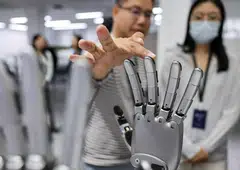
IN MY lab at the National University of Singapore (NUS), we teach machines to feel. We build electronic skins using soft materials that can tell a strawberry from a marble, sense a touch more quickly than human nerves do, and heal themselves when cut.
Earlier in my career, our work felt like science fiction to others. People would marvel at a demonstration for a minute, then move on, unable to see immediate applications.
Now, they jump into action to help scale the technology.
Last September, a single Californian humanoid robot company, Figure AI, raised US$1 billion, at an eye-watering valuation of US$39 billion.
This amounted to more than a fifth of the US$4.6 billion raised by all Singapore startups combined in 2025.
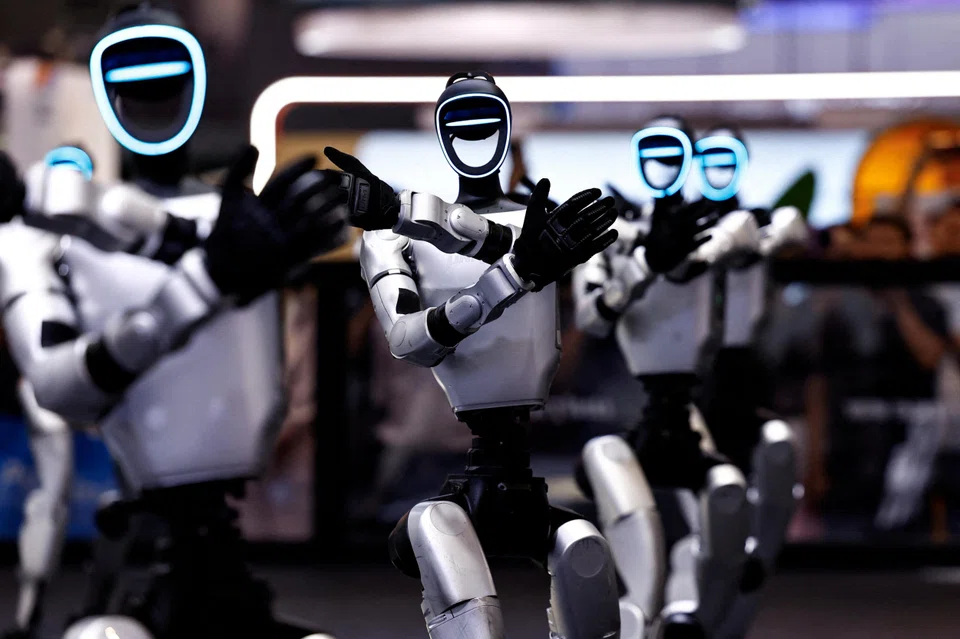
This year, China published national standards for humanoid robots and embodied artificial intelligence, and aims for 10,000 humanoids in commercial use by the end of the year.
A robot that works beside a person needs much more than an AI chip to interact with us and navigate our world. They need skins, sensors, joints, compact power sources and the intricate assembly that folds them all into a functional body.
Large language models will reshape office work within a decade. For economies largely driven by knowledge workers like ours, the looming change is unsettling for many.
Although effective robots that mimic human dexterity are just beyond the horizon, their impact on societal and economic structure will likely be far wider. How can Singapore remain relevant in the age of AI and advanced robotics?
SEE ALSO






Our economic strategy says we should lead in applying AI rather than building frontier models. Yet, mere deployment without proprietary technological and hardware know-how relegates us to being the world’s best customer.
I would rather we were a designer-maker that the world cannot route around. I believe that Singapore has a unique opportunity to position itself as a critical node in robotics and adjacent industries.
Challenging, but not out of reach
Admittedly, our challenges as a tiny nation with limited resources are significant. Six million people will find it nearly impossible to out-build the world’s great manufacturing hubs in quantity and diversity, but we can carve out a niche for ourselves in technology and quality.
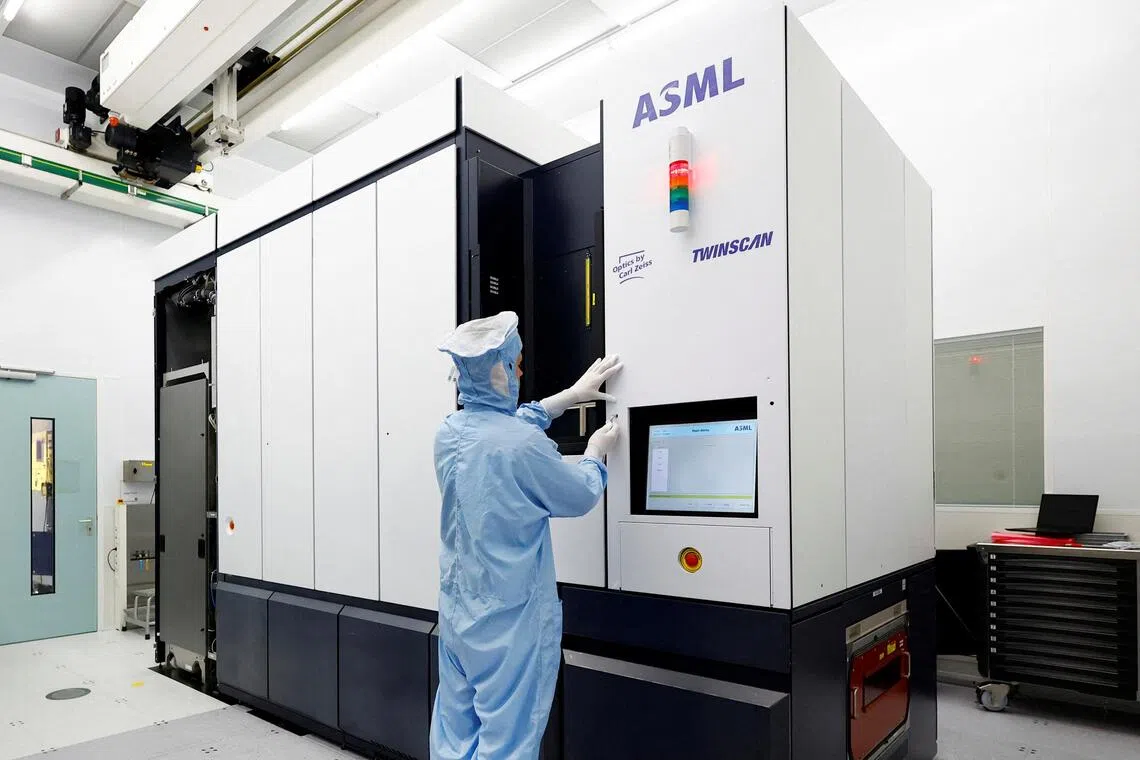
For instance, the Netherlands is a relatively small nation, yet every advanced chipmaker on Earth must wait in line for machines made by one Dutch company.
That is how small nations win: not by making everything, but by owning a step which no one can bypass.
Singapore already produces about a tenth of the world’s chips, and manufacturing is still a fifth of our economy.
The first flagship programme of the 2030 national Research, Innovation and Enterprise (RIE) plan will invest S$800 million to translate semiconductor research into products that will likely be incorporated into the chips in robots and AI data centres.
Sensibly, the investment is narrowly focused on developing the packaging technologies of chips and increasing the speed of the optical links that move data between chips.
But how can we become a critical node, and own a strategic choke point like that of ASML in the Netherlands? After all, we face major constraints in the scale of investment, space and manpower.
We must seek to develop groundbreaking technologies with deep know-how and specialised equipment design, guarded by a large portfolio of trade secrets to prevent copycats.
We must be keenly aware that the pace of technology development will be increased further using AI, and we must stand ready to recalibrate and increase our investment quantum swiftly.
If we succeed in developing such deep-tech proprietary semiconductor technology companies in Singapore, we will increase local high-value jobs relevant in the new AI economy.
ASML is a case in point. It spent more than S$16 billion over two decades to reach high-volume manufacturing of its equipment.
By one estimate, ASML generates 16 per cent more profit per employee than our stalwart financial services giant DBS – with 11 per cent more headcount.
Entrenched critical node deep-tech companies create high-value industries while employing more staff.
Building an ecosystem
From this vantage point, successful RIE investments could drive economic restructuring, provided we are ready to endure the deep-tech ecosystem development marathon.
This is where our universities and education system can step up. Having spent over a decade engaging in our R&D institutes, academia and startup ecosystem, I am encouraged by the growth of groundbreaking deep-tech research across many domains.
However, for translation, we must continue to strengthen our deep-tech ecosystem by attracting and retaining high-quality talent.
Attracting such talent locally is only one part of the equation. The second part of the equation is to mentor and train them well.
My own students have gone on to be faculty members in academia, as engineers in leading firms such as Micron and ASML, and even as deep-tech startup founders.
As our young talents develop their careers, we can begin to leverage this growing global network of alumni to accelerate our ecosystem growth through collaboration projects, advisers or even as co-founders of our deep-tech startups.

Concurrently, we must create a low-friction environment for deep-tech startups to get launched from university research.
The National Graduate Research Innovation Programme, which started in 2025, has taught hundreds of PhD students and postdoctoral researchers to read investment term sheets as fluently as academic papers.
This unique programme has brought together all our local universities’ innovation units and research institutes to collaborate and harmonise translation processes and know-how.
We will work towards a common framework in intellectual property licensing with transparent terms to reduce the friction often faced in such negotiations that are crucial in closing seed investments from sophisticated institutional investors.
A straightforward path to funding will enable our young deep-tech teams to rapidly deploy early pilot scale demonstrations.
Besides accelerating speed to launch and first commercial sales, we also need patient capital to help our startups scale globally.
Deep tech runs on science that could take more than 15 years to mature. For example, Nvidia took 24 years to reach a market capitalisation of US$100 billion; Samsung took 37 years; and Novo Nordisk took nine decades.
At its peak valuation, Novo Nordisk’s market capitalisation even exceeded the gross domestic product of Denmark.
It is nearly impossible to determine what might become the next Nvidia, especially during the early stages, but one thing is certain: That spot is often reserved for the most ambitious founders married with patient capital.
NUS has committed S$150 million for deep-tech investments into spinoffs from research. If we continue to persevere in our ecosystem-building efforts, we might even have more than one startup eventually crossing the S$100 billion market capitalisation mark.
But let’s not chase this number. Instead, in the decades ahead, we can measure our success by how fast we get deep-tech startups funded through consecutively larger rounds of funding and large-scale commercial deployment of deep tech-driven products and services.
In my lab, we judge a material by how it heals after we cut it. Economies deserve the same test, and the coming decade will cut deeper than most.
My son is close to the age I was when a robot’s hand in a Star Wars film inspired me to create deep technologies and translate them for use in society. In a decade, he will begin choosing where to build his life, and I want Singapore to be the clear winner based on his ambition.
The Business Times has spent 50 years recording what this country built. May the next 50 open with the decade Singapore became world-class in the age of AI: the decade we granted machines their senses, deployed patient capital, and gave our most ambitious young people a reason to stay.
The writer is vice-president (ecosystem building) at NUS, a professor of materials science and engineering, and a co-founder of four technology startups. His latest spinoff from NUS is focused on advanced packaging technologies for next-generation high-speed photonic links.
Decoding Asia newsletter: your guide to navigating Asia in a new global order. Sign up here to get Decoding Asia newsletter. Delivered to your inbox. Free.
Share with us your feedback on BT's products and services
TRENDING NOW

Once staunchly pro-China, Malaysian Chinese businesses are now distancing themselves from Beijing

Looking beyond looming CEO succession, should UOB potentially pursue a transformative merger?

Could stablecoins be the future of money?

Grab CEO’s wife Chloe Tong on life with Anthony Tan and finding her purpose

