

Beyond paper tigers: Evolving SGX’s regulations to match Asia’s needs
New rules will have to be pioneered and original best practices must be established
IN 1976, the same year that The Business Times was launched, another very important event took place on the other side of the world.
That year, the US Securities and Exchange Commission (SEC) requested that the New York Stock Exchange (NYSE) amend its listing requirements to include an audit committee composed of independent directors (IDs). Thus, the role of the ID was born as we know it today.
The SEC’s request followed the 1970 bankruptcy of Penn Central, a major railway operator, due to financial troubles that took the company’s directors entirely by surprise – as well as revelations in 1973 that hundreds of companies had made illegal campaign contributions to then president Richard Nixon’s re-election campaign.
These two major scandals, coming in close succession, lent strength to an emerging idea that boards needed to be truly independent to effectively monitor management.
Since then, support for the independent board has grown steadily. Today, it is upheld as a best practice for corporate governance around the world.
The SGX Rulebook requires IDs to constitute at least a third of a listed issuer’s board. In the Code of Corporate Governance, this requirement rises to half if the chairman is not independent, is part of management or also holds the role of CEO. (* See amendment note)
Yet, Singapore – along with many other Asian jurisdictions that have endorsed the need for director independence – continues to grapple with paper tigers: IDs who either cannot or do not effectively challenge controlling shareholders.
This challenge of independence is just one of several that Singapore Exchange Regulation (SGX RegCo) faces in the development of its regulatory framework – particularly the portions that relate to transparency and governance.
As Singapore’s equities market goes through a period of reflection and rejuvenation, it has become clear that we need to relook many of the assumptions that form the foundation of our rules.
SEE ALSO







We have had a long enough runway to realise that some concepts that work in Western developed markets, such as relying on IDs, who are a better check on management than on controlling shareholders, may not work as well here – at least not without some adaptation.
Transplanted systems
The Stock Exchange of Singapore, one of the precursor companies that was combined to form SGX, was founded in 1973, only a few years before BT.
In the grand scheme of things, we are a very young exchange. The world’s oldest, the Amsterdam stock exchange, was founded in 1602. NYSE dates back to 1792 and the London Stock Exchange had its start in 1801.
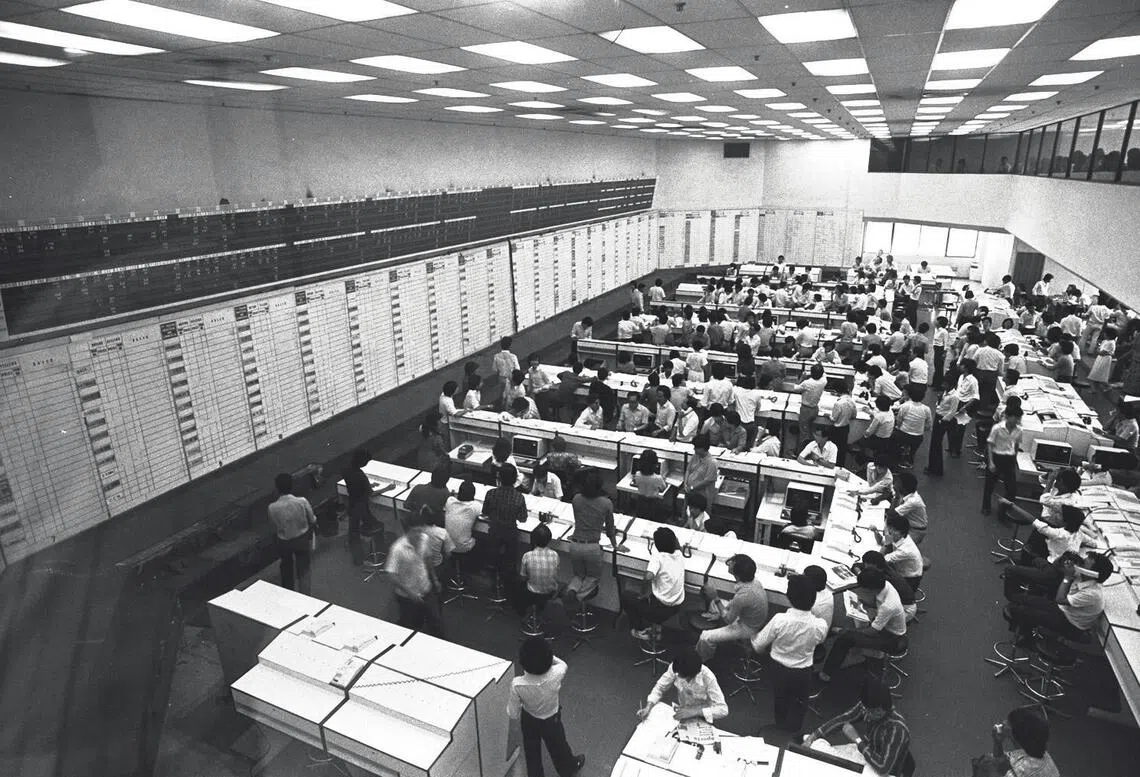
Like many other relatively young Asian exchanges, Singapore has borrowed heavily from older exchanges in establishing its regulatory regime. This was necessary, partly because not doing so would make it tough to attract international investors and partly because established regimes had proven track records.
So far, many of these transplanted systems have worked well. As a member of the International Organization of Securities Commissions, SGX’s listing and trading rules align with various international benchmarks – such as those for accounting standards and market surveillance.
It has become clear, however, that some systems are working better than others. The reliance on board independence as a check is one element that clearly needs improvement.
Another is the very close alignment of our corporate governance code with that of the UK, which is a market where institutional investors actively monitor corporate disclosures and punish poor transparency or bad behaviour by selling down a stock or voting down a resolution.
Other elements of the Singapore regulatory regime that have been singled out for improvement are rules governing how shareholders vote, what issuers disclose, levels of acceptable free floats and the avenues for minority redress.
The way forward
None of this is to say that Singapore should abandon its existing regulatory principles.
We have seen in our market evidence of IDs performing their roles effectively and improving outcomes for shareholders. We have also seen evidence that motivated shareholders can and do agitate for change with success.
As we find our feet as a truly Asian exchange, however, it is necessary for our regulation to be fit for our environment.
The high proportion of individual-controlled and family-controlled companies in our market makes it clear that the conflict of interest between majority and minority shareholders needs to be better addressed.
The low proportion of institutional shareholders focused on our market, meanwhile, makes it clear that market discipline alone may not produce certain desired outcomes.
What does this mean, effectively? The answer remains a work in progress. These are issues that most of the exchanges in Asia are grappling with too, and solutions have yet to be found.
What we can say with certainty is that we should expect to see some deviation from established practices in Western developed markets. SGX RegCo must pioneer some rules and establish our own best practices, rather than transplant them from elsewhere.
Investors would already have seen the first steps in this direction with our introduction of enhanced disclosures on remuneration, investor engagement and dividend policy.
As that announcement indicated, we are also working on a refresh to the Code of Corporate Governance. Some of the changes we are contemplating would be a first worldwide.
As we evolve our regulatory framework to match our Asian nuances, discomfort should be expected. We hope directors, management, shareholders and market professionals will consider well how they respond.
Perhaps, in 50 years, someone somewhere will be writing about a seminal moment when Singapore chose to set its own course on regulation.
The writer is CEO of SGX RegCo
* Amendment note: The article has been edited for clarity
Decoding Asia newsletter: your guide to navigating Asia in a new global order. Sign up here to get Decoding Asia newsletter. Delivered to your inbox. Free.
Share with us your feedback on BT's products and services






