

Heavy EV incentive cut will slow adoption but could ease COE premiums: observers
The reduction to S$15,000 from S$40,000 is aimed at the largest segment of EHVs in the 3,501 to 7,000 kg range

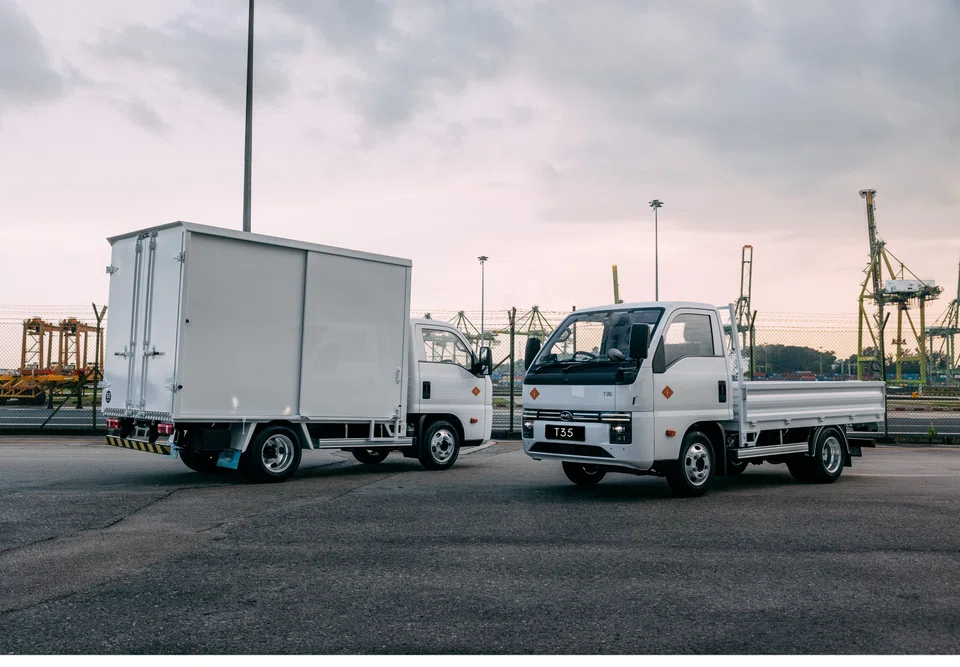
[SINGAPORE] The Land Transport Authority (LTA) announced on Wednesday (Sep 2) that incentives for certain electric heavy vehicles (EHVs) will be sharply reduced as more models of lower-emission models have become available in the market.
The move is likely to slow EHV adoption, but could also ease Certificate of Entitlement (COE) premiums for the commercial vehicle category, said industry observers.
Effective Thursday, incentives for EHVs with a maximum laden weight (MLW) exceeding 3,500 kg and up to 7,000 kg will be reduced to S$15,000 from S$40,000.
Those with a MLW of more than 7,000 kg are not affected, and will still receive the incentive of S$40,000.
Ryan Woon, the CEO of EcoSwift, said: “The adoption of EHVs will be reduced, possibly even quite drastically, as the majority of EHVs now are in the 3,501 to 7,000 kg range.”
EHVs are fully electric versions of heavy commercial vehicles, also known as heavy goods vehicles.
Under LTA classification, these heavy goods vehicles are classified with a MLW of 3,501 to 16,000 kg, and include the likes of prime movers, garbage lorries and so on.
Commenting on the change, the regulator said: “This ensures that the scheme remains fit-for-purpose, as more models of lighter zero-tailpipe emission heavy vehicles are now available in the market, and the cost differentials between these heavy vehicles and their internal combustion engine (ICE) equivalents have narrowed.”
Incentives reduced
Under the Heavy Vehicle Zero Emissions Scheme introduced in January 2026, owners of all EHVs, including electric heavy goods vehicles, buses and goods-cum-passenger vehicles, received S$40,000 each.
SEE ALSO
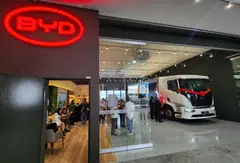
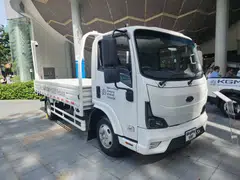
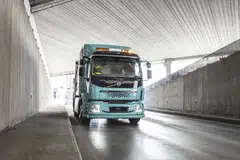
This was meant to encourage the take-up of less polluting, fully electric heavy vehicles by reducing their cost, compared with ICE models.
LTA said that the take-up of EHVs has been “encouraging” since the scheme began, as these vehicles made up 30 per cent of heavy vehicle registrations in July 2026, compared with less than 1 per cent in 2025.
It added that at 55 per cent of registrations, the uptake of EHVs by owners of heavy vehicles, with a MLW from 3,501 to 7,000 kg, was “particularly strong”.
The S$40,000 incentive will still apply to EHVs with a MLW of more than 7,000 kg, as “the cost differential with their ICE equivalents remains significant”, LTA said.
The Heavy Vehicle Zero Emissions Scheme will continue to run until Dec 31, 2028, it added.
The Electric Heavy Vehicle Charger Grant, which also began in January 2026, is not affected by the changes. It co-funds up to 50 per cent of installation costs for EHV chargers, capped at S$30,000.
EHV adoption may slow
Industry players said that EHV adoption could slow down because the incentive reduction is major and may no longer bridge the price gap.
EcoSwift’s Woon said a S$15,000 incentive is unlikely to provide parity for popular models in this segment, which have a MLW of 5,000 kg.
He noted that a 14-foot electric lorry, with a MLW of 15,000 kg, costs around S$90,000 without a COE, while a diesel-powered equivalent costs around S$50,000.
EcoSwift is the distributor of China commercial vehicle brand Sany.
Blunting the adoption of EHVs at this early stage is a shame, and risks sending conflicting signals to the market, Woon added.
Also, the benefits of EHV adoption would likewise be reduced: Singapore’s transport sector, including heavy vehicles that are usually diesel powered, are a key contributor to air and noise pollution.
EHVs have no tailpipe emissions and research has shown that they are less polluting than diesel-powered vehicles, even when charged on a grid powered by natural gas such as Singapore’s.
Industry observers said that the move also equalises light and heavy commercial EV incentives.
Multiple industry observers told The Business Times that before the change, the system was being “gamed” by dealers, who increased the weight of light electric commercial vehicles so they would qualify as EHVs and be eligible for more rebates.
Such vehicles included smaller types of EHVs such as 10-footer lorries and vans, though observers declined to name specific models or brands, citing commercial sensitivities.
Light commercial vehicles, which have a MLW of 3,500 kg or less, fall under the Commercial Vehicle Emission Scheme (CVES).
The cleanest of such vehicles, EVs, have zero tailpipe emissions and qualify for a S$15,000 rebate, while more polluting ones face penalties of up to S$15,000.
But by adding weight to light vehicles that are near 3,500 kg, they could be classified as EHVs and receive S$40,000 of rebates instead.
“When the policy was rolled out, all the heavy vehicle sub-types were classified together. said the sales director of a commercial vehicle brand. “So a light 10-footer lorry near 3.5 tonnes of MLW can be classified as a heavy vehicle by adding some weight. The system was being abused.”
In 2024, BT reported on a similar case where lorries were reclassified as heavy vehicles to avoid CVES pollution penalties.
“There are people who game the system too obviously. So now the whole industry suffers,” added the sales director.
Category C COE to dip?
With the incentive cut looming and sales affected, it may also mean that the commercial vehicle COE category, C, could see its premium drop in the near future.
Ron Lim, head of sales and marketing at Nissan distributor Tan Chong Motor Sales, said there could be a “knee-jerk reaction” in the COE market, given the timing of LTA’s announcement.
“The reality is COE quota for commercial vehicles has gradually been increasing, so by right the premium should be coming down, or at least stabilise,” he added, saying that a premium of around S$80,000 is “quite possible”.
Sector watchers said that EHV incentives and increased demand for the vehicles have contributed to higher Category C premiums, which reached a new record of S$95,000 in July.
This, industry players said, could have major effects, including affecting Singapore’s business competitiveness.
Edward Tan, executive director of Hong Seh Group, said: “I appreciate that the government is trying to reign in the (Category C) premium to a reasonable level. This will help businesses by reducing the total cost of operations in Singapore for business.”
A number of industry sources BT spoke to added that they were surprised by the announcement, and could have helped contribute to shaping the policy.
“It’s too sudden,” said the sales director. “I can fully understand why they are doing it. But our advice would have been to start with a tiered system from the beginning.”
Decoding Asia newsletter: your guide to navigating Asia in a new global order. Sign up here to get Decoding Asia newsletter. Delivered to your inbox. Free.
Copyright SPH Media. All rights reserved.






