Is Qoo10’s latest deal Wish-ful thinking for a turnaround?

Benjamin Cher
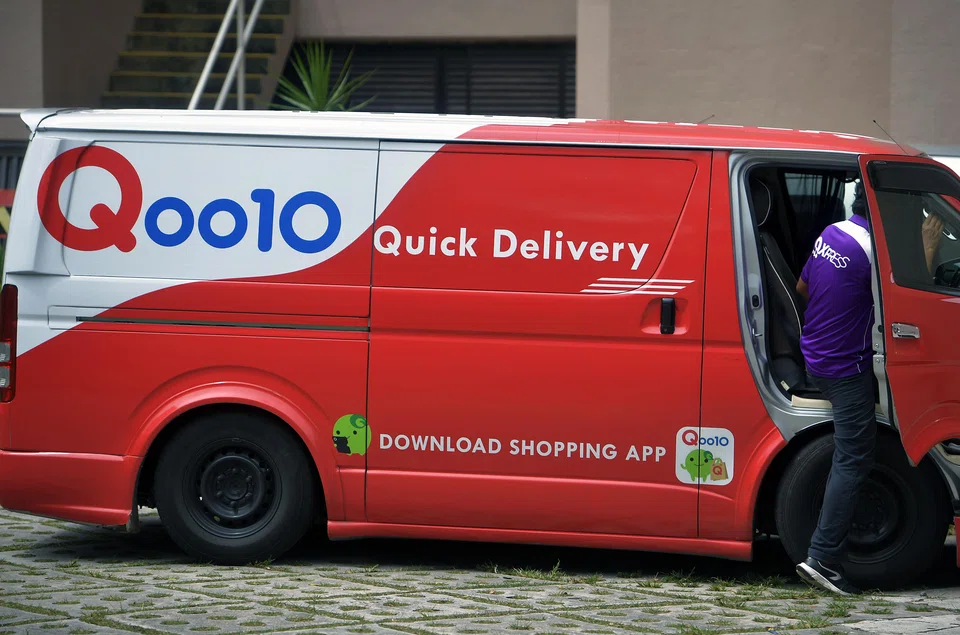
NEWS of e-commerce marketplace Qoo10 acquiring US online shopping platform Wish for US$173 million came as something of a shock to those watching South-east Asian markets.
Despite a headstart in the region’s e-commerce space with its 2010 inception as Gmarket, Qoo10 has lagged far behind the market leaders, Sea’s Shopee and Alibaba’s Lazada.
Competition has only grown even more intense, with ByteDance’s TikTok continuing to bear down, having cleared hurdles to operating in South-east Asia’s largest market, Indonesia.
“Qoo10 has been bleeding cash in South-east Asia, and now with increased competition, it is hard to see how it can turn around,” Li Jianggan, founder of consultancy Momentum Works told The Business Times.
Founded in 2010 as Gmarket in Japan and Singapore, Qoo10 was a product of a joint venture with eBay, before being rebranded to Qoo10 in 2012.
Eventually, eBay would buy out Qoo10’s Japan business in 2018, leaving Qoo10 holding the South-east Asian operations.
Qoo10 lists Malaysia, Thailand, Vietnam and Indonesia as markets in the region that it operates in. However, it no longer figures much on shoppers’ radars in these markets. On Similarweb, a website traffic tracking platform, Qoo10’s Singapore site was ranked eighth, below AliExpress and eBay.
The company’s latest financial statements filed with the Accounting and Corporate Regulatory Authority of Singapore indicated higher revenue for 2021 of S$336 million, compared with S$207 million in 2020. Losses doubled to S$224 million in 2021, from S$114.1 million in 2020.
That it failed to staunch losses during the 2020-2021 pandemic period, when the digital economy boomed, points to Qoo10’s difficulties in slicing out a niche for itself in South-east Asia.
To continue operating here would require even more money pumped into logistics and cross-border sales, where other players have already made significant investments.
Connie Kwok, expert partner at consultancy Bain & Company, notes that South-east Asia continues to be competitive due to the dynamic nature of the market.
“The market in the region is, at the same time, not big enough for a differentiated niche platform to thrive, unlike in the US,” added Li.
In that light, Qoo10’s acquisition of Wish looks like a play to enter the US market rather than a bid to grow its market share in South-east Asia.
With Wish, Qoo10 has an instant foothold in the Americas, having acquired an existing player, its customer base, and direct access to a market that recorded US$1.1 trillion in e-commerce sales in 2023, according to the US Census Bureau.
“The US continues to be one of the most important e-commerce market opportunities globally – with only China larger in size – and growth in 2023 is settling back to the pre-pandemic trajectory,” said Bain’s Kwok.
But it won’t be easy. Today, disruptors with deep pockets such as Temu are currently aggressively grabbing market share through advertising and marketing campaigns. The company aired ads for two consecutive Super Bowls, where viewership hit over 120 million in 2024.
Momentum Works’ Li thinks that Qoo10 could carve a niche in the face of upstarts such as Temu and Shein. The US is a large market where differentiated offerings could still sustain a profitable e-commerce platform such as eBay or Etsy.
“Qoo10 will also face less geopolitical pressure than Temu and Shein,” noted Li.
While the rules of the e-commerce game have not shifted drastically, with scale needed to operate and winners taking most of the market share, Bain’s Kwok reckoned that Qoo10 could still hold some ground against the dominant US player, Amazon.
“In order for players to carve out a defensible slice of the pie, they need to have a truly differentiated customer value proposition, especially in the face of Amazon, which dominates with the ‘everything store’ through significant value and delivery experience,” she pointed out.
Entering a market with an established brand such as Wish could give Qoo10 a leg up.
But Wish’s revenues have been on a decline. Revenue fell 52 per cent for the third quarter of 2023 to US$60 million, from US$125 million a year ago. Monthly active users have also fallen to 11 million in Q3 2023 from 24 million in Q3 2022.
Momentum Works’ Li warns that the road ahead is not going to be easy. “Acquisition into a market can be faster and less risky than direct entry. However, turning around and integration could be a significant challenge. History is full of such examples,” he pointed out.
The move is also unlikely to have any impact on the current competition among e-commerce players in South-east Asia. If anything, Qoo10’s acquisition might validate some investors’ beliefs about the region.
Li explained: “It again validates some global investors’ thesis that South-east Asia might be too small an e-commerce market as far as cross-border is concerned; the real prize is the US market.”