

Who are some of the longest-serving CEOs among Singapore’s blue-chip companies?
SGX chief Loh Boon Chye’s planned departure puts the spotlight on longstanding CEOs at STI firms
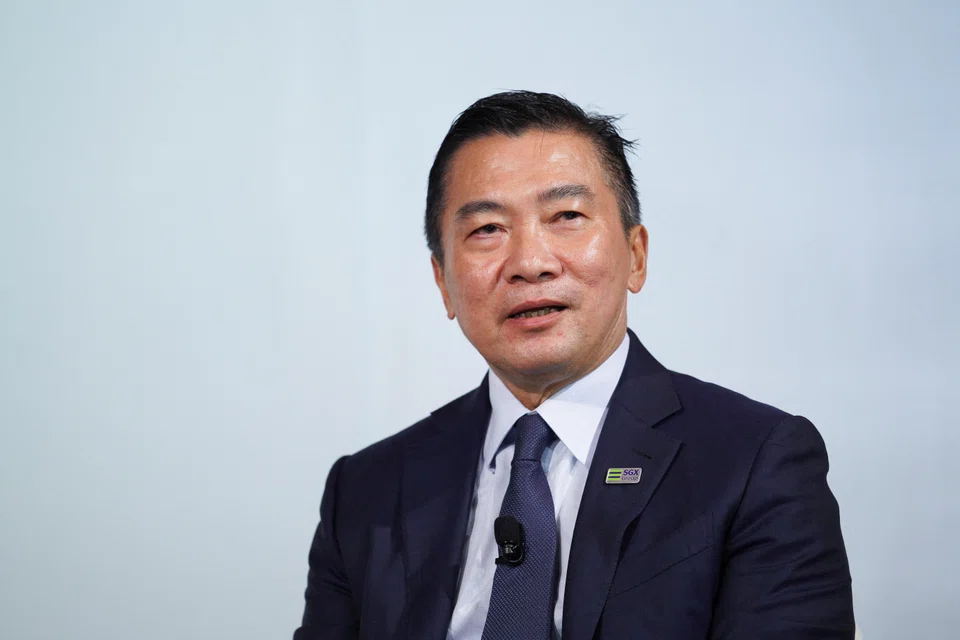
[SINGAPORE] Singapore Exchange (SGX) chief executive Loh Boon Chye is preparing to step down after more than 11 years at the helm, raising questions about succession planning among Singapore’s long-serving corporate leaders.
At the bourse operator’s annual general meeting on Friday (Oct 23), Loh said discussions on an eventual leadership transition were under way, ahead of the expiry of his contract in mid-July 2027. No departure date has been set.
His announcement puts the spotlight on other Straits Times Index (STI) constituents that have been led by the same chief executive for more than a decade.
Among them are UOB’s Wee Ee Cheong, who has been at the helm for nearly two decades, Singapore Airlines’ Goh Choon Phong and Keppel’s Loh Chin Hua.
Here is a look at five long-serving CEOs of STI companies, beginning with Loh, and the developments that have marked their tenures.
1. Loh Boon Chye, Singapore Exchange
Loh, 62, took over SGX in July 2015, following a career in investment banking that included senior roles at Deutsche Bank and Bank of America Merrill Lynch.
He inherited an exchange grappling with concerns over trading disruptions, following two major outages in late 2014.
Under his leadership, SGX strengthened its trading infrastructure and expanded beyond its traditional securities business, building up its derivatives and foreign exchange operations.
The exchange posted record earnings for FY2026, with adjusted net profit rising 24.6 per cent to S$759.5 million and net revenue increasing 13.9 per cent to S$1.48 billion.
Loh’s eventual departure comes as SGX seeks to build on renewed momentum in Singapore’s equities market, while expanding its global reach.
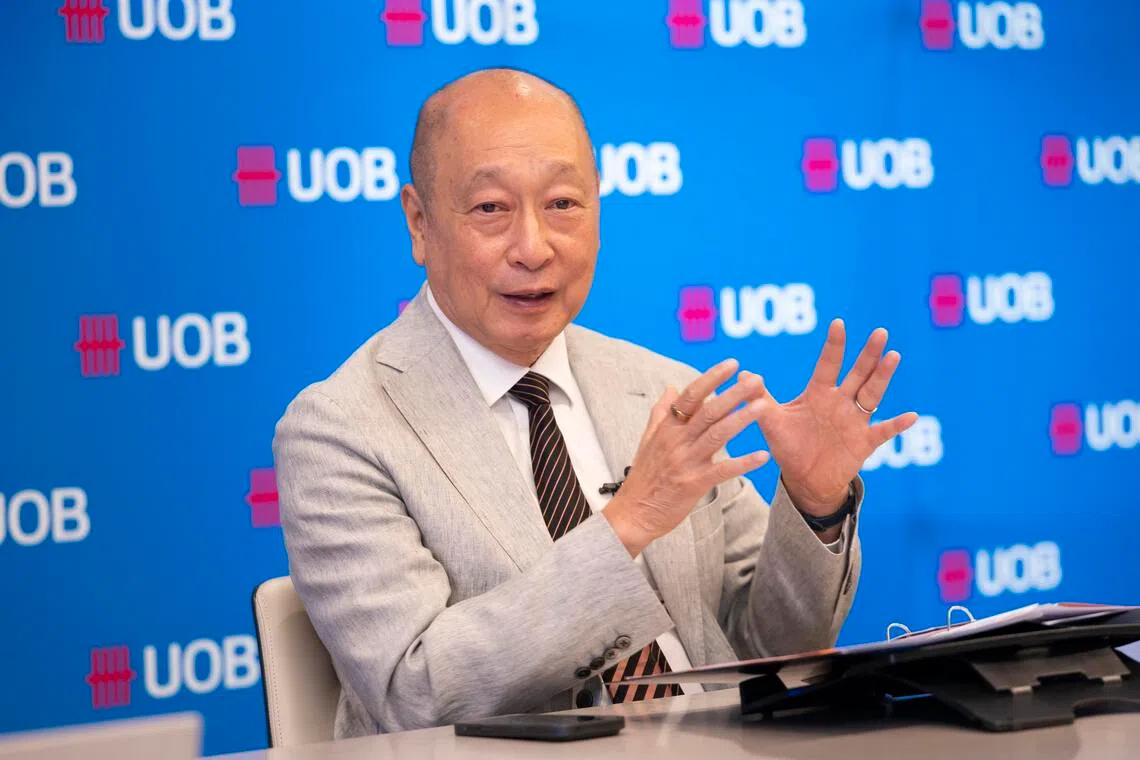
2. Wee Ee Cheong, UOB
Wee Ee Cheong, 73, took over as chief executive of UOB on Apr 27, 2007, succeeding his father, veteran banker Wee Cho Yaw.
Having joined the bank in 1979, he had already spent nearly three decades at UOB before assuming its top executive role. He has held the top job for more than 19 years, making him one of the longest-serving CEOs among Singapore’s blue-chip companies.
Under his leadership, UOB has expanded its regional presence, with a particular focus on South-east Asia.
A major milestone came in 2022, when the lender acquired Citigroup’s consumer banking businesses in Indonesia, Malaysia, Thailand and Vietnam, significantly expanding its retail banking footprint across the region.
Wee oversaw the bank’s digital transformation and efforts to deepen its cross-border banking franchise.
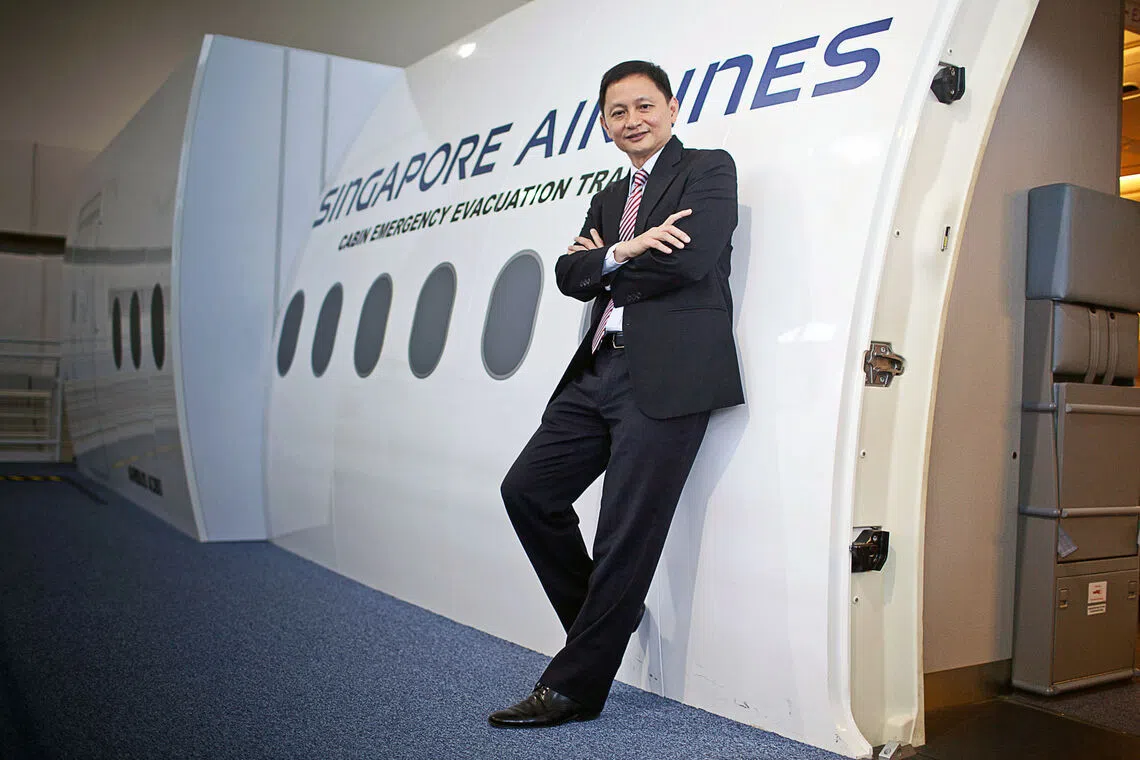
3. Goh Choon Phong, Singapore Airlines
Goh Choon Phong, 64, became chief executive of Singapore Airlines (SIA) on Jan 1, 2011, after holding various senior management positions at the national carrier, which he joined in 1990.
In his tenure of nearly 16 years as CEO, he has seen significant changes in the aviation industry including the rise of budget travel, the Covid-19 pandemic and the subsequent recovery in international air travel.
Under Goh, SIA launched budget carrier Scoot in 2012 and subsequently integrated regional airline SilkAir into its mainline operations.
He also oversaw the group’s expansion into India through its partnership with Tata Sons, including the establishment of Vistara and its eventual merger with Air India in 2024.
SIA now holds a 25.1 per cent stake in Air India, although the investment has faced challenges amid the Indian carrier’s continuing losses.
Goh described the investment as a long-term strategy aimed at strengthening SIA’s presence in one of the world’s largest aviation markets.
4. Loh Chin Hua, Keppel
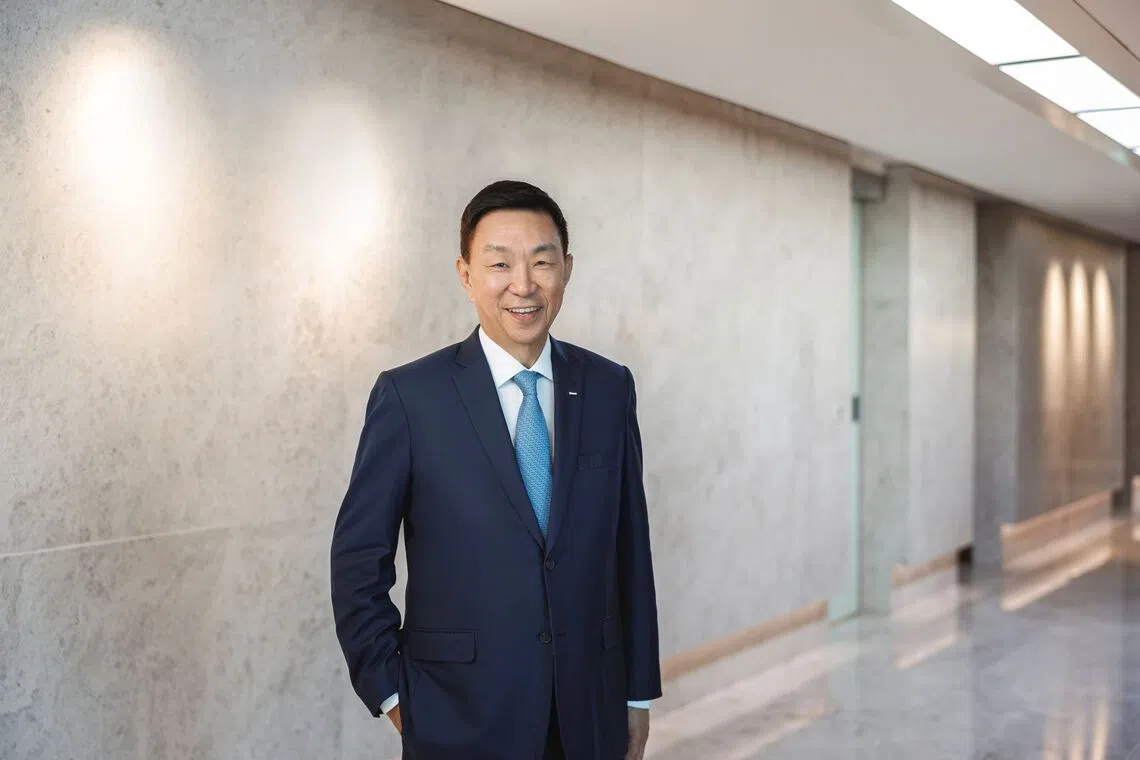
Loh Chin Hua, 64, took over as chief executive of Keppel on Jan 1, 2014, after serving two years as the group’s chief financial officer. He has been at the helm for nearly 13 years.
He joined Keppel in 2002 and previously led its private fund management arm, Alpha Investment Partners.
His tenure has been marked by a sweeping restructuring of the former industrial conglomerate, which had significant interests in offshore and marine engineering, property and infrastructure.
A defining milestone was Keppel’s exit from its offshore and marine business through its merger with Sembcorp Marine in 2023, forming what is now Seatrium.
Loh has since spearheaded Keppel’s transformation into an asset manager and operator, with a focus on infrastructure, real estate and connectivity.
The restructuring has involved asset monetisation, organisational changes and a shift towards recurring income, as Keppel seeks to reduce its reliance on capital-intensive businesses.
5. Vincent Chong, ST Engineering
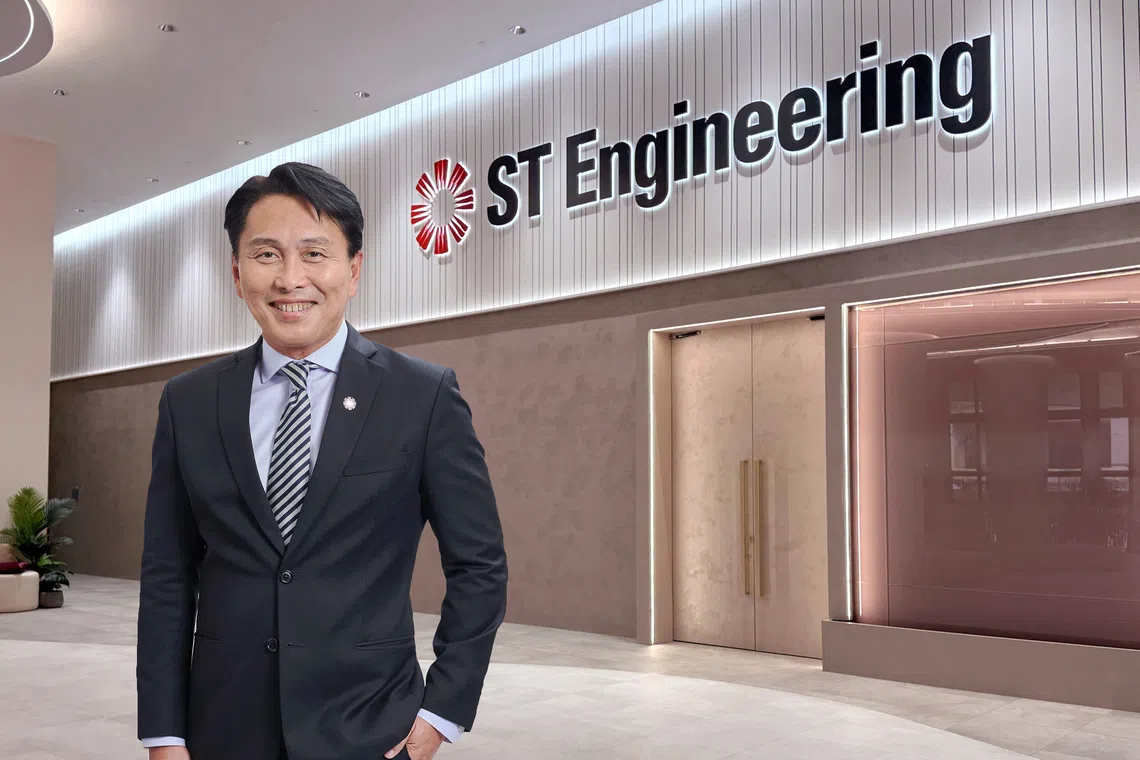
Vincent Chong, 57, became president and chief executive of ST Engineering on Oct 1, 2016, succeeding Tan Pheng Hock. His tenure marked a decade at the helm this October
He took over the defence and engineering group at a time when it was seeking to expand its international presence and diversify beyond its traditional businesses.
Under his leadership, ST Engineering has streamlined its corporate structure and sharpened its focus on commercial aerospace, defence and public security, and urban solutions.
One of its largest acquisitions was the US$2.68 billion purchase of US transport technology company TransCore completed in 2022, strengthening the group’s position in smart mobility and electronic tolling systems.
Chong has also overseen the group’s expansion in international defence and aircraft passenger-to-freighter conversions, while divesting businesses that no longer fit its longer-term strategy.
Decoding Asia newsletter: your guide to navigating Asia in a new global order. Sign up here to get Decoding Asia newsletter. Delivered to your inbox. Free.
Copyright SPH Media. All rights reserved.
TRENDING NOW

If Europe goes to war, the fallout will be felt in East Asia

Indonesia stocks suffer worst plunge in nearly 30 years as MSCI proposes standalone status

China’s market is tougher than ever. Where can Singapore firms still find room to grow?
Nvidia CEO says ties to Singapore firm under spying probe were ‘normal’

