AI demand to support growth in Asean+3 region amid Middle East headwinds: Amro
But strong dependence on tech is a downside risk if the sector hits a slump


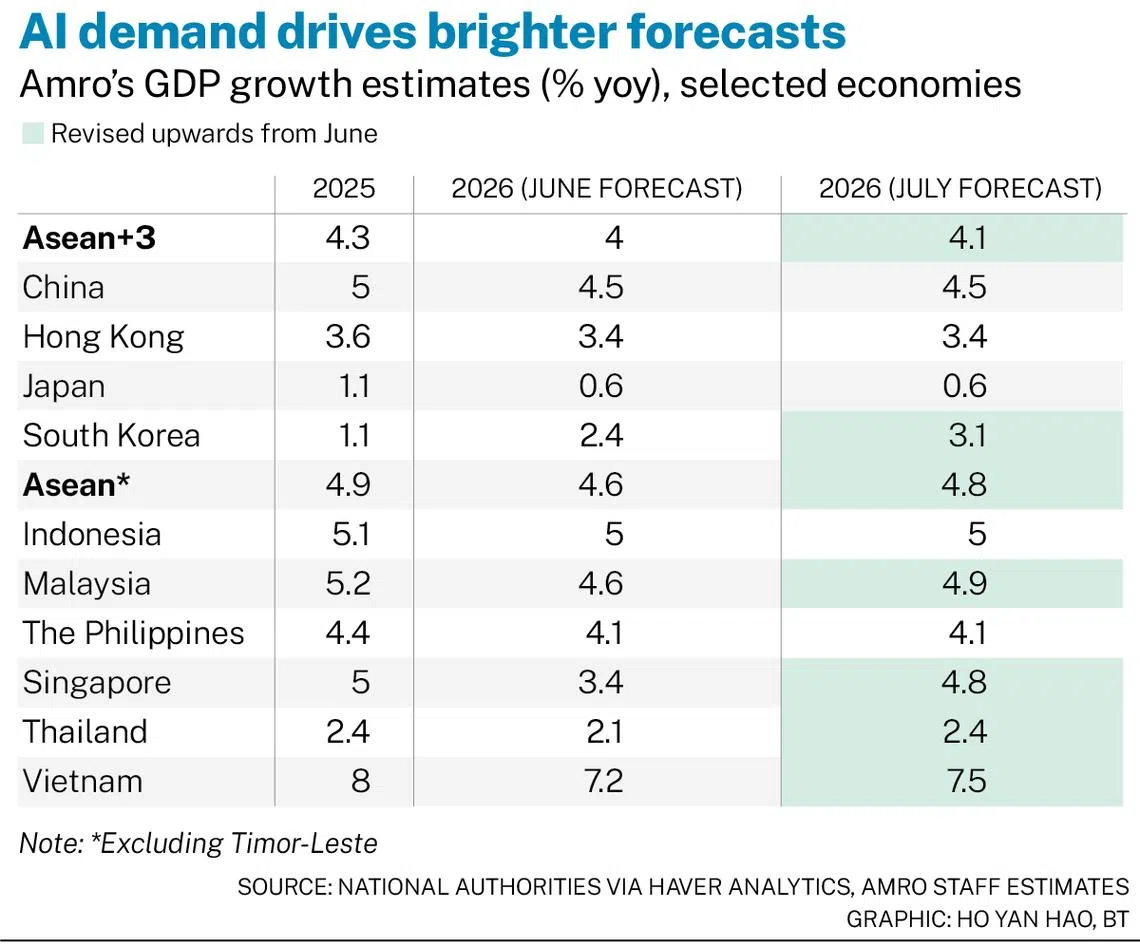
[SINGAPORE] Artificial intelligence-related demand, robust household spending and a weaker-than-expected drag from the Middle East conflict are expected to boost growth in the Asean+3 economies to 4.1 per cent in 2026, a quarterly report showed on Monday (Jul 27).
This is up slightly from the Asean+3 Macroeconomic Research Office’s (Amro) interim forecast in June. It had projected that the grouping of 10 Asean nations, China, Japan and South Korea would post year-on-year expansion of 4 per cent.
Timor-Leste, Asean’s newest member, is yet to be part of Amro.
The research office also forecast that headline inflation in the region would come in at 1.6 per cent this year, down from its previous estimate of 1.8 per cent.
“AI-related demand has been central to the region’s performance this year, and is also one of the key factors that will shape the outlook ahead,” Allen Ng, Amro’s principal economist, told media at the launch of the quarterly economic outlook update.
He noted that the technology sector has supported export growth and investment within Asean+3, and robust domestic demand amid steady labour markets has also driven expansion.
“The impact of the Middle East conflict has also been less severe than initially expected,” added Dr He Dong, Amro’s chief economist.
Much of the boost came on the back of a global AI-related boom, accounting for nearly two-thirds of a 20 per cent rise in regional export growth in the first quarter of 2026.
This was largely due to a surge in memory prices and semiconductor demand as strains in AI-related physical capacity continued to increase, and the wave of global AI-infrastructure investment kept gaining momentum.
SEE ALSO



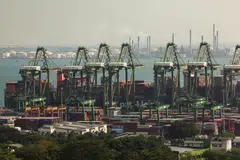
“The region sits at the centre of AI production globally. Asean+3 accounts for about half of global AI-related trade, including raw material in intermediate inputs and equipment,” noted Ng.
He added that the region also captures significant non-trade value from investments in infrastructure such as data centres.
In Asean countries, tech industries also led a surprising expansion in manufacturing activity, despite fears that supply chain disruptions would be severe.
“New orders remained in expansionary territory but eased from pre-conflict levels,” Amro said in its report.
The moderation in manufacturing activity could be attributed to higher input costs following the onset of the Middle East conflict, which has pushed up prices for energy, logistics and industrial input.
But Dr He acknowledged that the boost to South-east Asia’s growth for 2026 would likely remain uneven. Amro revised its full-year GDP expansion forecasts upwards only for Malaysia, Singapore, Thailand and Vietnam.
“This unevenness is a reflection of the degree to which (these countries) are plugged into the AI supply chain,” he said.
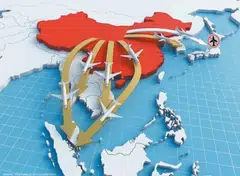
Meanwhile, the return of tourism supported export growth in Asean+3. Chinese visitors, in particular, accounted for more than a third of a 7.5 per cent rise in tourist arrivals in the first quarter.
However, visitors from Europe declined in number as the Iran war sparked widespread airspace closures and higher airfares.
In the weeks since the conflict began, several airlines were forced to cancel flights between Europe and Asia as airspaces in the Gulf were disrupted. European travellers have traditionally relied on several Gulf cities as transfer hubs on their way to Asian destinations.
Amro’s report also noted that inflationary pressures in Asean+3 have remained broadly contained, with headline inflation appearing to have peaked in most economies and core inflation experiencing a relatively modest rise.
“The distribution of price increases across (consumer price index) components suggests pressures are not yet broad-based,” it said.
Significant efforts to cushion the impact of energy shocks through fiscal policy have also enabled several countries in Asean+3 to weather the pass-through inflationary effects, Amro noted.
These include supplementary Budgets in South Korea and Japan, as well as borrowing under an emergency decree in Thailand.
Risks remain
Amro forecasts that AI-related demand will keep bolstering Asean+3’s projected growth of a robust 4.1 per cent this year, before it moderates to 4 per cent in 2027.
But its economists acknowledged that such an outlook remains highly uncertain, as external risks continue to evolve.
One such risk is a prolonged conflict in the Middle East. A new wave of skirmishes between the US and Iran over the past two weeks sent Brent crude oil prices back above US$100 a barrel.
“Renewed escalation in the Middle East could push energy and shipping costs back up, prolong shortages of key industrial inputs, and add to food price pressures,” said Amro.
Given baseline assumptions that Brent crude oil averages between US$75 and US$85 per barrel in 2026, before moderating to US$65 to US$75 in 2027, Amro’s economists forecast a 1.6 per cent rise in inflation this year.
This projection reflects easing transportation and production pressures, while broader inflation remains contained amid moderate wage growth.
But the research office noted that a prolonged disruption in the Strait of Hormuz, in which oil prices could average between US$90 and US$100 a barrel throughout 2027, could push inflation in Asean+3 to as high as 4.6 per cent – the steepest since the 2008 global financial crisis.
Food prices are also susceptible to the lagged impact of elevated fertiliser prices, and agricultural output could take a hit if a severe El Nino event takes place, Amro added.
Tech dependence
Further, the region’s significant reliance on technology-driven demand could prove concerning if the sector underperforms.
Much of the strength in Asean+3’s tech export growth has been driven by rising prices rather than volume, indicated the report.
Such expansion could be dented if AI-related demand moderates. If global tech investment slows to its 2024 pace, Asean+3 growth could plummet to 3.7 per cent in 2026, and 2.5 per cent in 2027, based on Amro’s estimates.
A disorderly correction in AI-related asset valuations could also amplify these effects through financial channels.
Amro noted that volatility in global financial markets remains salient, as elevated equity valuations and tighter credit spreads raise the possibility of corrections.
Meanwhile, geopolitical tensions and renewed uncertainty surrounding the US Federal Reserve’s policy direction could prompt a tightening of global financial conditions, while reinstating volatility in capital flows and exchange rates.
The Fed’s hawkish tilt, weaker-than-expected consumer price data in June, as well as renewed hostilities in the Middle East have muddied the waters as investors await the Fed’s monetary policy decision on Wednesday.
“Heightened volatility could expose underlying vulnerabilities and test macro-financial stability,” Amro said.
Similarly, an escalation of aggressive protectionist import policies from the US could complicate downside risks for the region.
This comes as US President Donald Trump announced a new slate of tariffs on several South-east Asian countries last Friday, including a 12.5 per cent tariff on Singapore’s exports to the US.
But Amro’s economists noted that the latest tariffs are unlikely to have a material impact on the region’s growth forecasts.
“These largely replace, rather than sit on top of, the 10 per cent surcharge that has expired,” said Ng.
Decoding Asia newsletter: your guide to navigating Asia in a new global order. Sign up here to get Decoding Asia newsletter. Delivered to your inbox. Free.
Copyright SPH Media. All rights reserved.