Bank Indonesia raises rates for the second time in eight days to defend rupiah
Analysts say the move reflects policymakers’ determination to stay ahead of the curve

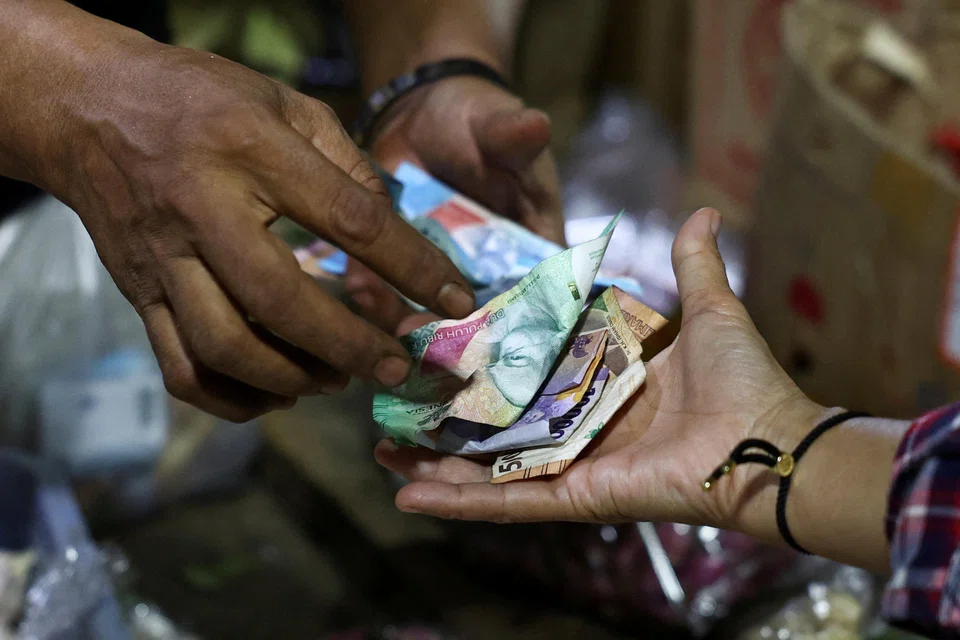
[JAKARTA] Indonesia’s central bank has extended its aggressive defence of the rupiah with a second rate hike in just eight days.
Analysts believe the move by Bank Indonesia (BI) reflects policymakers’ determination to stay ahead of the curve, as they seek to anchor inflation expectations and stabilise financial markets ahead of key global investor assessments.
With inflation still contained and global risks showing tentative signs of easing, authorities are using higher interest rates to reinforce confidence in the country’s assets.
“We expect a cumulative 100 basis points (bps) in rate hikes from BI through to end-2026, taking the policy rate to 6.5 per cent,” said OCBC Group Research.
“This assumes 25 bps in rate hikes almost every meeting, including this week, or larger magnitudes at some meetings,” it added, noting that this would take the policy rate to its “highest since 2015, tightening financial conditions”.
BI raised its benchmark rates by 25 bps to 5.75 per cent on Thursday (Jun 18), in line with most economists’ expectations in a survey by Bloomberg.
The central bank also raised its deposit facility and lending facility rates by the same magnitude to 4.75 per cent and 6.5 per cent, respectively.
Governor Perry Warjiyo said that the move was a pre-emptive step to support rupiah stability, and ensure inflation remains within its target range amid a still-uncertain global backdrop.
“We at BI continue to communicate that we are going all out to maintain the stability of the rupiah and control inflation as part of efforts to mitigate the impacts of global volatility,” he added.
SEE ALSO





DBS senior economist Radhika Rao said the latest development signals that Indonesia policymakers remain in a defensive mode, front-loading rate hikes in quick succession alongside macroprudential measures.
“Beyond stabilising the currency, the central bank’s priorities also include anchoring inflation expectations and restoring investor confidence,” she said.
The tightening reflects a combination of external and domestic risks facing BI.
David Sumual, chief economist at Bank Central Asia, pointed to seasonal factors that could add upward pressure on prices in the coming months.
The onset of the dry season, coupled with the risk of a stronger El Nino, could disrupt agricultural output and tighten food supplies after the harvest period, increasing the risk of higher volatile food inflation.
Inflation edged up to 3.08 per cent in May, but remained within BI’s target range of 1.5 to 3.5 per cent.
The rupiah strengthened slightly by 0.01 per cent to 17,760 per US dollar after the rate hike was announced.
The currency hit a record low of 18,190 on Jun 8 before recovering somewhat after BI’s surprise rate increase a day later.
Even so, the currency remains down 6.5 per cent in the year to date, making it the weakest performer in emerging Asia.
BI is the second central bank in South-east Asia to raise interest rates within a short span, following the Philippines, where policymakers tightened monetary policy in response to persistent inflation pressures.
Middle East deal offers a breather
The central bank’s aggressive tightening has coincided with a broader recovery in domestic assets.
Following last week’s surprise rate hike, Indonesian government bonds have rallied and equities have rebounded sharply, reflecting improved market sentiment.
DBS Group Research said that easing geopolitical tensions in the Middle East and the reopening of the Strait of Hormuz have strengthened Indonesia’s macroeconomic outlook by reducing the risk of a sustained oil-price shock.
While Indonesia previously said it would not raise subsidised fuel prices, prices for certain fuel categories were increased in recent days, triggering a wave of student protests.
BI’s Jun 9 rate has helped anchor investor confidence at a critical juncture, leading to a broad-based recovery across financial markets.
DBS also noted that Indonesian government bonds may still have room to outperform regional peers as geopolitical risk premiums continue to unwind, as valuations remain relatively depressed despite recent gains.
Rating outlook casts shadow
While analysts expect imported inflation pressures to ease following the US-Iran deal, they caution that lingering sentiment risks continue to weigh on the rupiah’s outlook.
Lloyd Chan, senior currency analyst at MUFG Bank, said near-term risks for the rupiah remain elevated ahead of MSCI’s market accessibility and classification reviews due on Jun 23, following earlier concerns about the investability of Indonesian equities.
S&P Global Ratings is also expected to release its annual sovereign rating assessment for Indonesia in July. The firm has currently set the country’s sovereign credit rating at “BBB” with a stable outlook.
The rupiah has come under pressure from several factors that have prompted investor caution, including President Prabowo Subianto’s expansionary spending plans, higher fuel subsidy costs for the state budget, and questions around the central bank’s policy independence.
Indonesian equities have also seen heavy sell-offs; the key index has fallen more than 29 per cent in the year to date.
OCBC said that to sustainably improve market sentiments, the government and BI must carry out further follow-through.
It added that policy support from the government could include scaling back flagship expenditures, extending implementation timelines, and engaging in constructive dialogue over recently announced export policies.
Decoding Asia newsletter: your guide to navigating Asia in a new global order. Sign up here to get Decoding Asia newsletter. Delivered to your inbox. Free.
Copyright SPH Media. All rights reserved.