

No smoke without fire: Smallholders’ view from ground zero of the haze
Despite industry commitments to curb burning, Indonesia’s farmers are still feeling the heat

[SINGAPORE] Every year, Indonesia’s US$36 billion palm oil industry grapples with a dry season that threatens production, pushes up crude palm oil (CPO) prices and draws public scrutiny as haze clouds South-east Asian skies.
Indonesia’s 10 largest palm oil corporate groups control more than three-quarters of the country’s total CPO-refining capacity annually.
Since the severe haze that blanketed the region in 2015, these corporations have invested billions into satellite and drone monitoring, firefighting teams and various programmes to prevent fires around their concessions.
Pressure from civil society has also prompted many to adopt commitments against deforestation, development on peatland and the use of fire to clear vegetation.
But the 10 largest corporations own less than 16 per cent of the planted area in the country, according to supply chain analysis platform Trase.
The remainder of the industry’s raw material is supplied by small and medium-sized plantations and smallholder farmers.
Smallholders, who each control plantations of less than 20 hectares (ha), together make up about 42 per cent of the country’s planted area and supply to larger companies up to 30 per cent of the industry’s palm fruit.
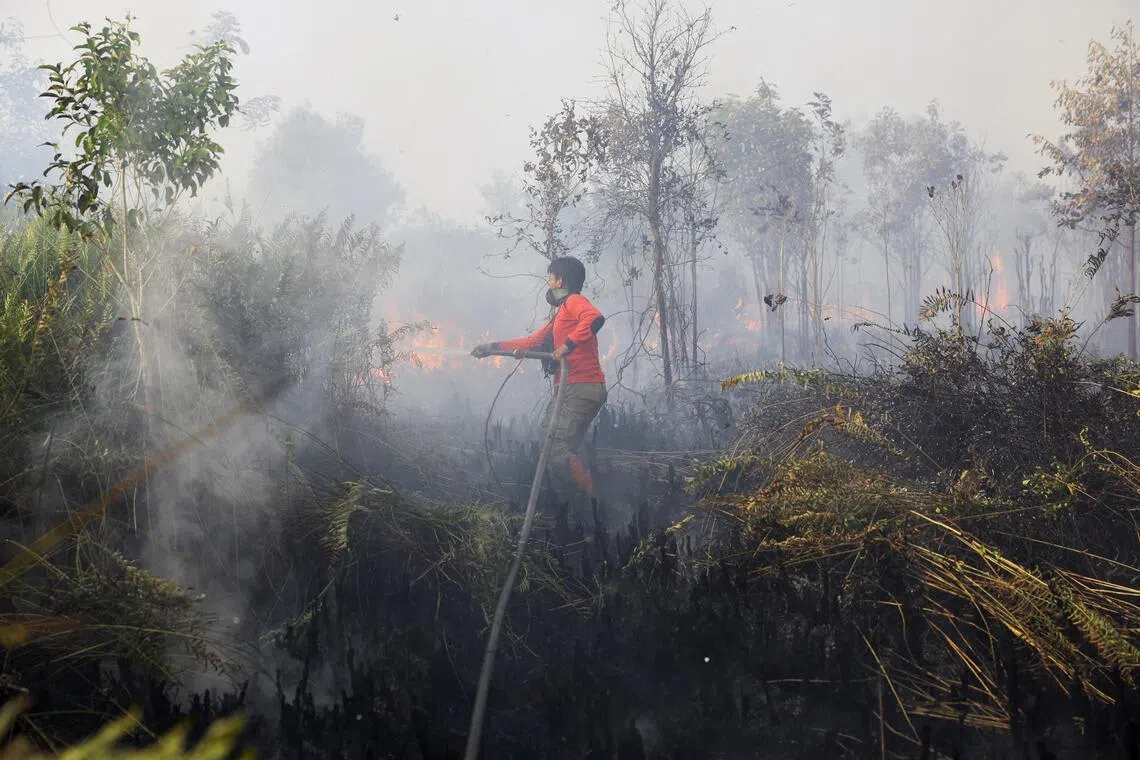
As fire risks increase across Kalimantan and Sumatra amid dry conditions caused by the El Nino weather phenomenon, the palm oil industry is drawing attention over whether larger players are doing enough to support individual smallholders in their fire-prevention efforts.
“Smallholder farmers don’t always have the infrastructure to prevent fires,” notes Mansuetus Darto, chairperson of the Association of Indonesian Oil Palm Farmers’ Organisations.
So, regional haze prevention also turns on whether smallholders can manage their land without fires or respond quickly to outbreaks – without bearing the additional costs.
“The industry has not really figured out how to make the shift to more sustainable ways of farming (that are) profitable for smallholders,” says Dr Helena Varkkey, associate professor of political ecology at Universiti Malaya.
Burning peatlands
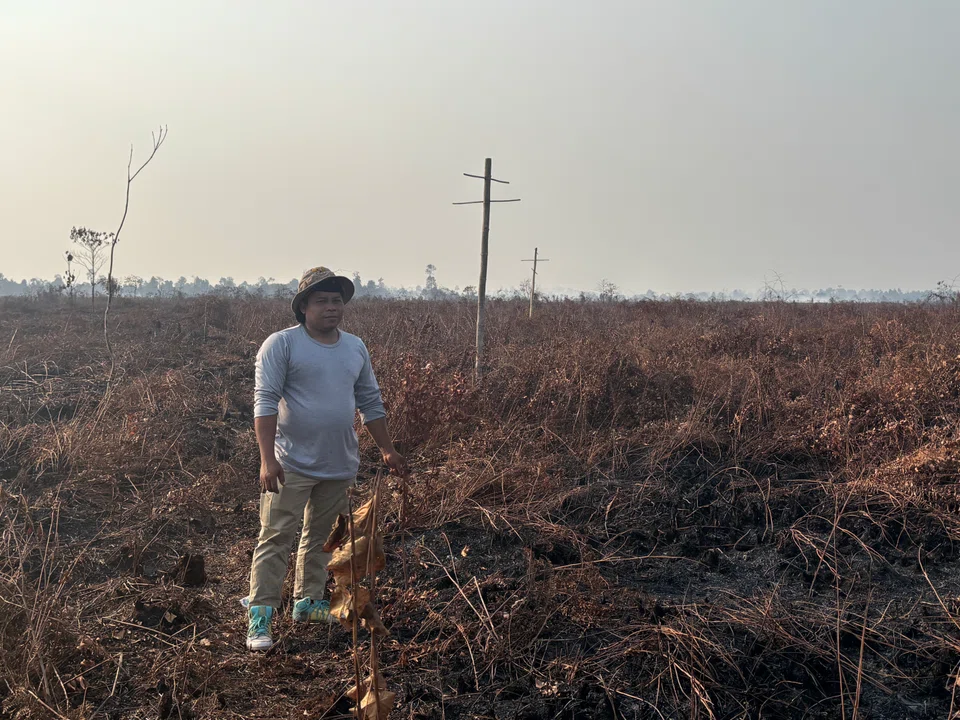
Hayet, a 36-year-old farmer, had been cultivating a 2 ha plot of land for about a month.
He had planted several timber varieties, coffee, ginger and other crops, as part of an effort to restore degraded peatland in his village in Kubu Raya, West Kalimantan.
“I imagined that in 10 years, there would be a forest here,” he says.
But the land was destroyed in August after a blaze at a plot in a neighbouring village spread to the area. Everything on it burned down in just 30 minutes.
The air is thick with smog from peatland fires in the vicinity. Hayet, who like many Indonesians goes by only one name, adds that the fires have been ongoing for weeks.
Air quality has worsened across the region of late, with the Air Pollutant Index in Kuala Lumpur and the Pollutant Standards Index in Singapore both reaching “unhealthy” levels.
And the palm oil industry has long been implicated in haze, in part because of its vast footprint – including on vulnerable peatlands, where fire can spread underground and be difficult to extinguish.
Some fires start accidentally, caused by discarded cigarettes or when they spread from elsewhere, notes Hayet. Others are deliberately lit to prepare agricultural land.
Wildfires in Indonesia burned about 95,000 ha in July alone – about half the total burned from January to June. According to the national authorities, 119 people have been arrested as at Sep 7 on suspicion of deliberately starting forest fires, following investigations into both individuals and corporations.
Indonesia’s President Prabowo Subianto has called for stricter sanctions against offenders, also instructing regional governments to abolish exemptions allowing smallholders to clear small plots of land using fire.
Fire has long offered oil palm farmers a cheap way to prepare land for cultivation, as Hayet tells it. Burning vegetation not only clears old, unproductive trees, but also leaves behind nutrient-rich ash that helps condition soil for replanting.
The alternatives are far more expensive, he points out. Manually clearing old trees can cost about 200,000 rupiah (US$11.30) per worker each day, with a hectare potentially taking around 20 days to clear. For multi-hectare plots, burning can therefore be a much cheaper shortcut.
The majority of smallholders in the area do not rely on burning, as they are well aware of the fire risk and legal restrictions, says Usman, head of the village’s forest management agency, a community-based organisation that conserves state forest land.
“By law, it isn’t allowed,” he notes. “But some farmers might look for ways to reduce costs.”
At other times, farmers may also start a small fire in a controlled area, intending to produce ash.
“But they may be careless. Sometimes the fire is still burning at night and the farmer goes home. Then it spreads.”
Meanwhile, the oil palm has steadily emerged in many such villages as one of the most economically sensible options for smallholder farmers.
Village head Sanhaji estimates that about 90 per cent of the village’s 600 smallholder households grow the oil palm as their main cash crop.
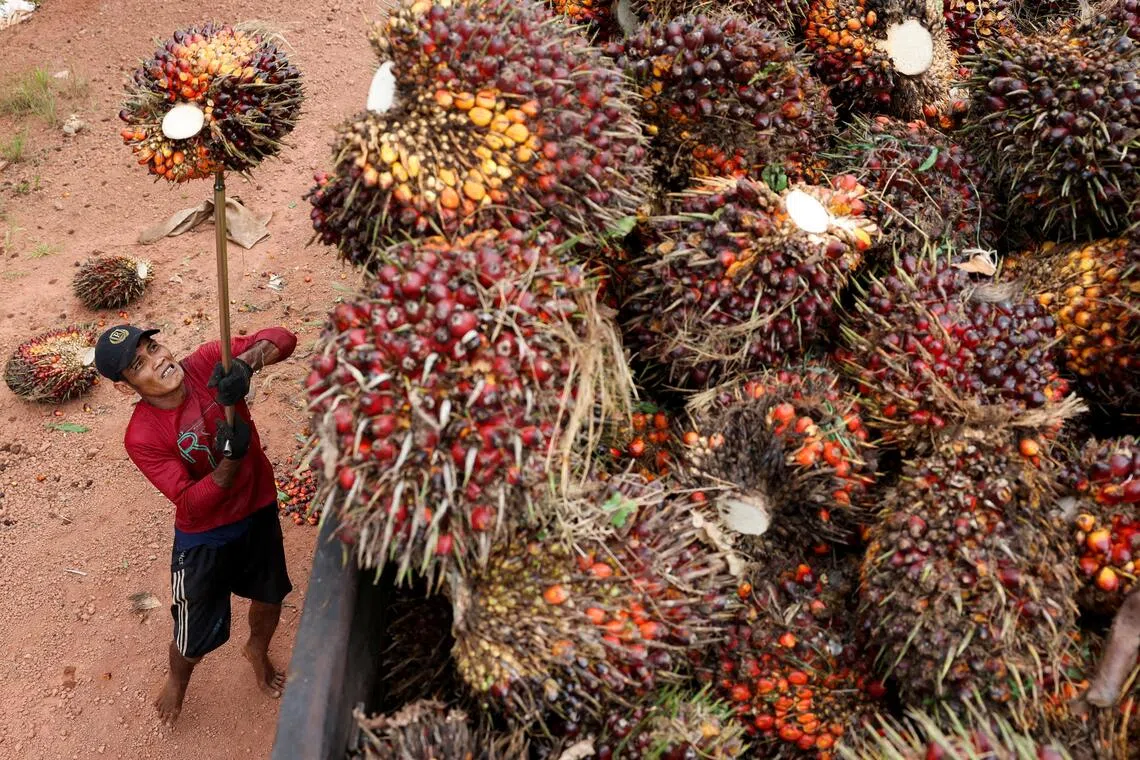
CPO prices have steadily risen in the past two years. Following the blockade of the Strait of Hormuz, the global energy shock accelerated demand for alternative energy sources, including biofuel.
Profit margins on the crop have thus become particularly lucrative among the country’s producers, which account for about 57 per cent of the global output.
Its selling prices are also relatively stable compared with other volatile crops – such as rubber, which Sanhaji notes many villagers have abandoned for oil palm.
Beyond big plantations
Large plantation groups sometimes support smallholders by providing seedlings, firefighting assistance and land preparation, and then purchasing their fruit when harvested.
These “plasma” smallholders – so called because each corporate plantation acts as a “nucleus” – make up about 14 per cent of smallholder land area, according to the Indonesian Oil Palm Farmers Association.
Downstream companies – including larger refineries or corporate groups – have an incentive to help smallholders farm sustainably.
“The companies are supposed to help them improve their sustainability practices so they can take advantage of that supply,” Dr Varkkey explains.
Dr Adelina Chandra, a data scientist at Trase, notes however that the benefits of corporate sustainability commitments can be lost along the supply chain.
Based on research in Aceh and South Sumatra, she has found that capacity-building efforts from downstream actors – such as smallholder financing or market incentives – often do not reach independent farmers.
The number of parties involved – including intermediaries, mills, traders and downstream refineries – can render distribution networks opaque, while available information can also change over time, Dr Chandra tells The Business Times.
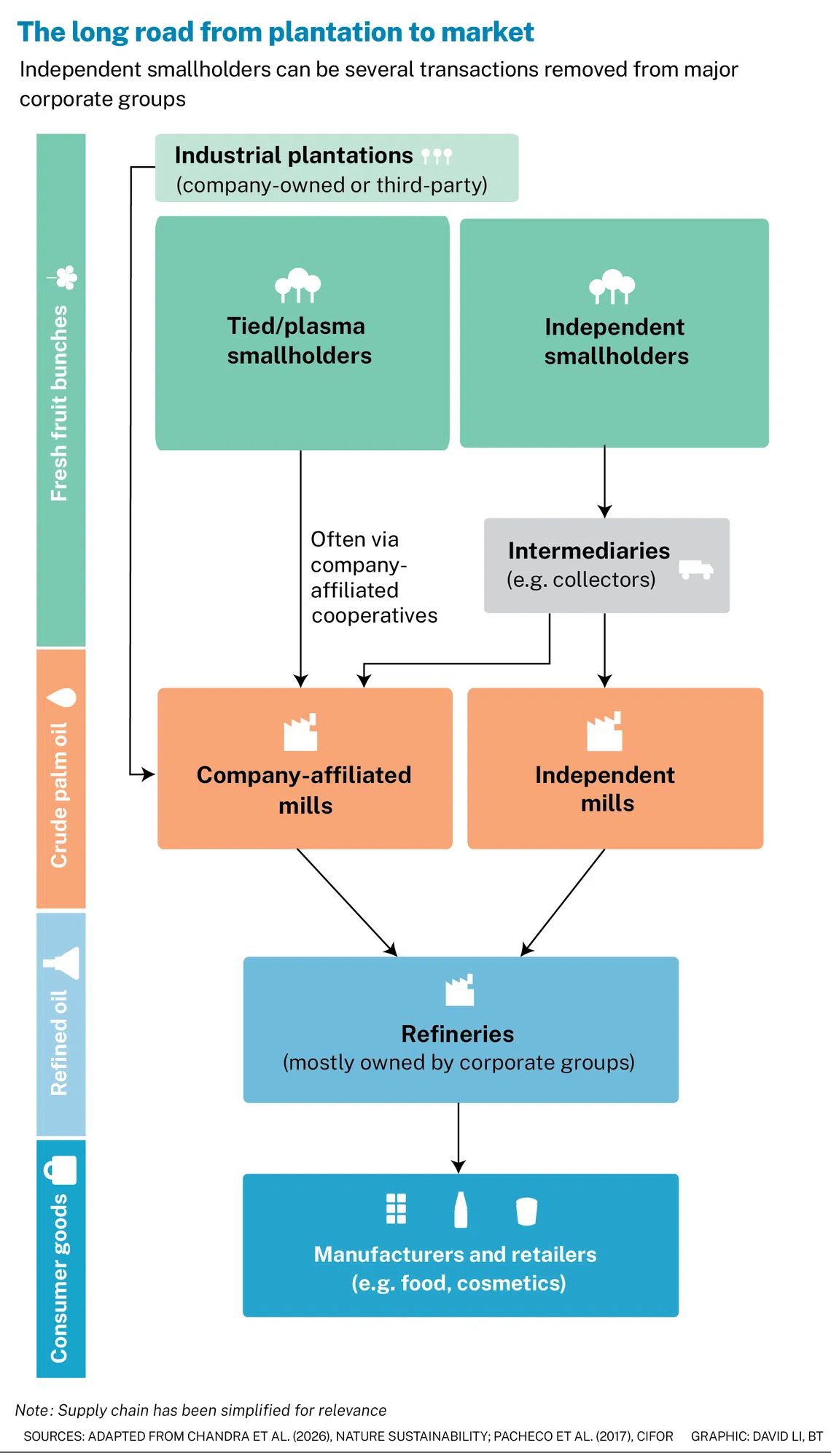
Juliana, an oil palm farmer in Hayet’s village, sells her fruit through an intermediary.
She knows of one local buyer in the area that trains and equips farmers with fire-monitoring tools.
But limited road access means that only a mill located along the nearby river will purchase her fruit.
“We have to transport by the Kapuas River,” Juliana says, referring to the major waterway that runs through West Kalimantan.
The group that eventually purchases the processed oil has not carried out capacity-building for farmers in her area. Neither does she know if it has made any zero-burning commitments.
Additionally, market benefits can be spread thin along the value chain.
Certified suppliers or plantation companies often sell sustainable palm oil products for a premium, particularly through schemes such as the Roundtable on Sustainable Palm Oil.
But this price signal does not necessarily reach independent smallholders – even if certified supply chains begin with the fruit they harvest.
“Generally, there is no price differentiation or price incentives for (smallholders) selling to mills with zero-deforestation commitments,” Dr Chandra observes of the regions she has studied.
Researchers from non-governmental organisation (NGO) Auriga Nusantara tell BT that a key step towards preventing fires on smallholder plantations is to ensure sufficient access to financing, reducing the cost pressure to choose cheaper land-clearing techniques.
The Indonesian government has taken steps to help smallholders bear the costs of replanting through the Indonesian Palm Oil Plantation Fund Management Agency, which offers grants of up to 60 million rupiah per hectare.
But Auriga estimates that replanting a single hectare can cost between 85 million and 100 million rupiah – leaving a significant shortfall that farmers may have to cover with their own savings.
And, even after trees are replanted, farmers must wait several years before the new palms are ready for commercial production.
“The issue is not simply the cost of avoiding fire, but (also) how to enable smallholders to undertake proper replanting while maintaining their livelihoods during the immature period,” says Catherine Ang, manager of sustainability communications and assurance at palm oil group Musim Mas.
Funding fix
Financing pressures have become harder to manage in 2026, as dry weather and rising costs squeeze smallholders further.
In an especially dry and hot season, lower water levels along the Kapuas River have disrupted a transport route used to move CPO from mills, notes Mansuetus.
“Due to the drought, the river has become shallow,” he says. When storage tanks are full, mills may stop accepting fresh fruit bunches from farmers, he adds.
That is a problem for smallholders as harvested palm fruit loses quality if it is not processed soon after picking.
Transport has become more expensive too. Mansuetus says the cost of moving fresh fruit bunches to mills has risen by between 25 and 50 per cent since oil prices spiked following the blockade of the Strait of Hormuz, while fertiliser remains difficult for some smallholders to obtain.
Still, funding sources are already in place to close the gap. Besides the government subsidies for smallholder replanting, banks also provide government-backed credit to farmers, Auriga notes.
The NGO says that these sources would be more effective if they work together, combining public grants with bank lending and private capital, to finance smallholder replanting.
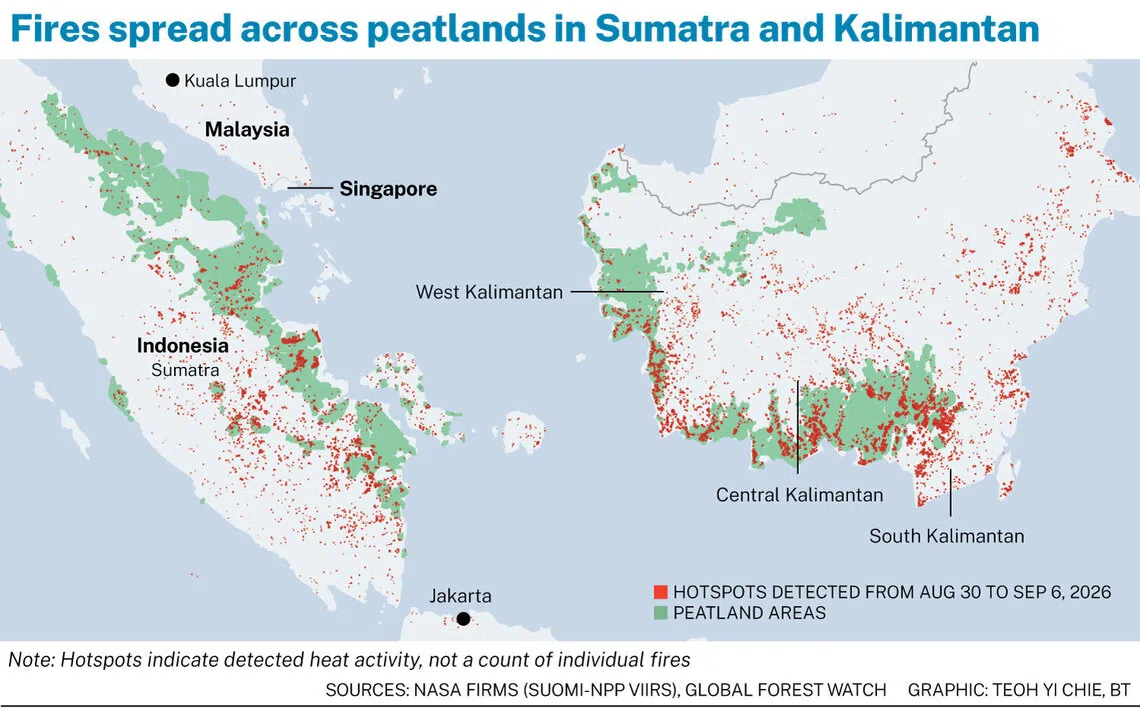
Targeted aid could be crucial for some villages like Usman’s, where up to 75 per cent of land in the area consists of peat.
“Because emissions and haze risk are concentrated, finance can be targeted rather than spread sectorwide,” adds Auriga’s spokesperson.
“Loan contracts should carry explicit zero-burn and no-peat-planting covenants with contract cancellation as the remedy,” the spokesperson argues.
Ecosystem efforts
But financing alone will not solve the problem. Commercial actors along the value chain must be willing to share the burden of protecting peatlands, says Dr Chandra.
Like the fire that destroyed Hayet’s plot, South-east Asia’s haze problem does not respect the boundaries between one smallholder and the next, between concessions, or between countries.
This means responsibility cannot rest only with the farmer when a fire occurs on their land, she adds, but must also involve companies, mills and intermediaries.
“No matter how rigorous (a company’s) sustainability policy is, it needs to reach the ground, and it needs to be implemented,” emphasises Dr Chandra. “These policies need to penetrate to the upstream level and actually influence decision-making on the ground.”
Still, Sanhaji notes that smallholder communities play an important role in keeping the land productive and protected.
“If there are crops there, people will care for the land,” he says. “If the land is empty and unmanaged, if the fire is somewhere far away, people may simply leave it.”
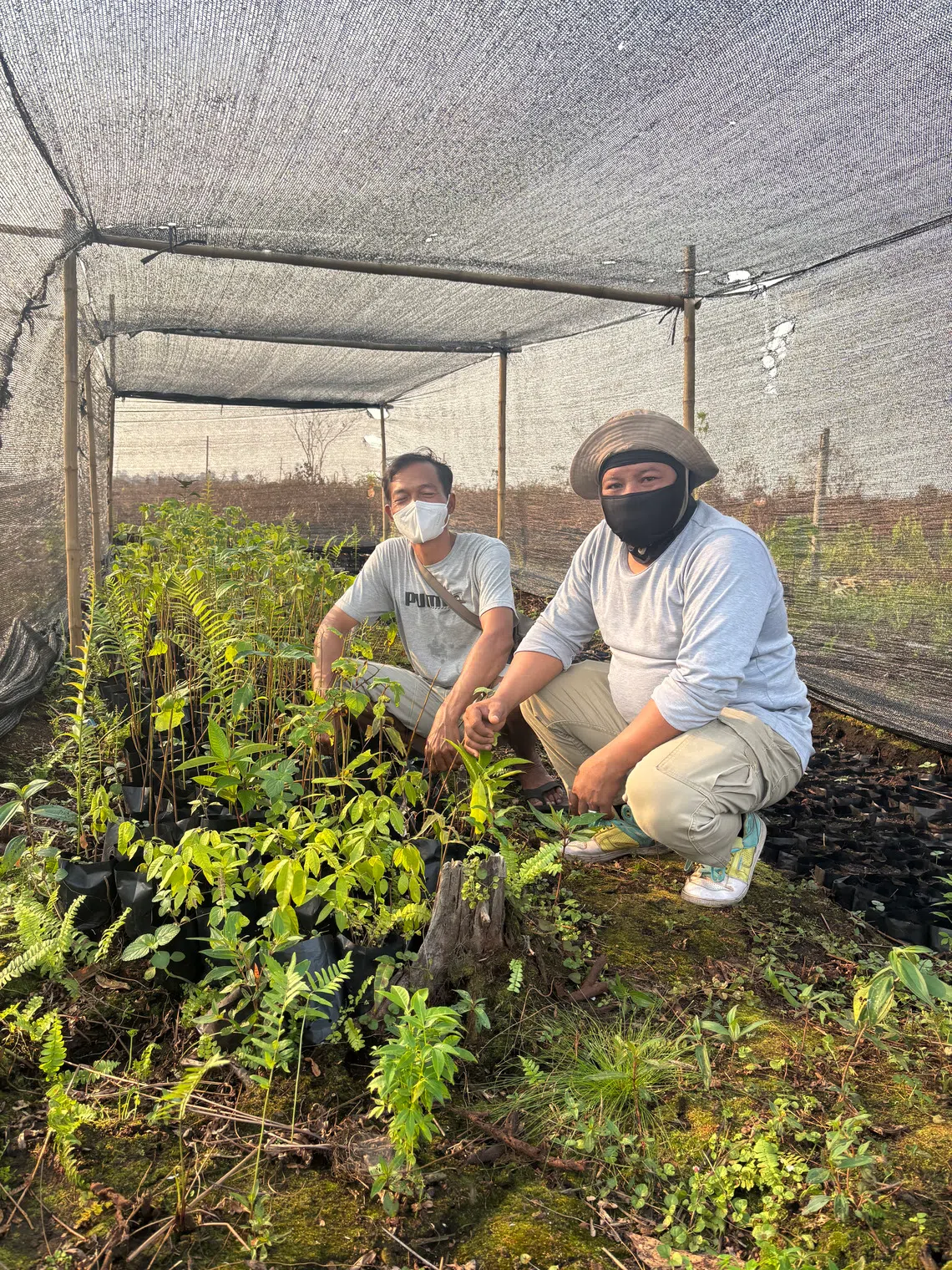
In the meantime, Hayet is not giving up on the burnt land. He has started again with seedlings he is growing in a nursery; and, perhaps in 10 years, he will have grown a forest.
TRENDING NOW

CPIB hauls Multi-Chem CEO, COO in for questioning; stock hits ‘circuit breaker’

Fed hike throws Singapore banks a margin lifeline; UOB likely to benefit more

He built the Vingroup empire. Now South-east Asia’s richest man is handing some key roles to his sons

From Haidilao to Oriental Kopi: How some of Asia’s favourite F&B players are faring in 2026

