

Asean faces outsized risks from the world’s largest economies
More coordinated measures by the group could grow the region’s resilience
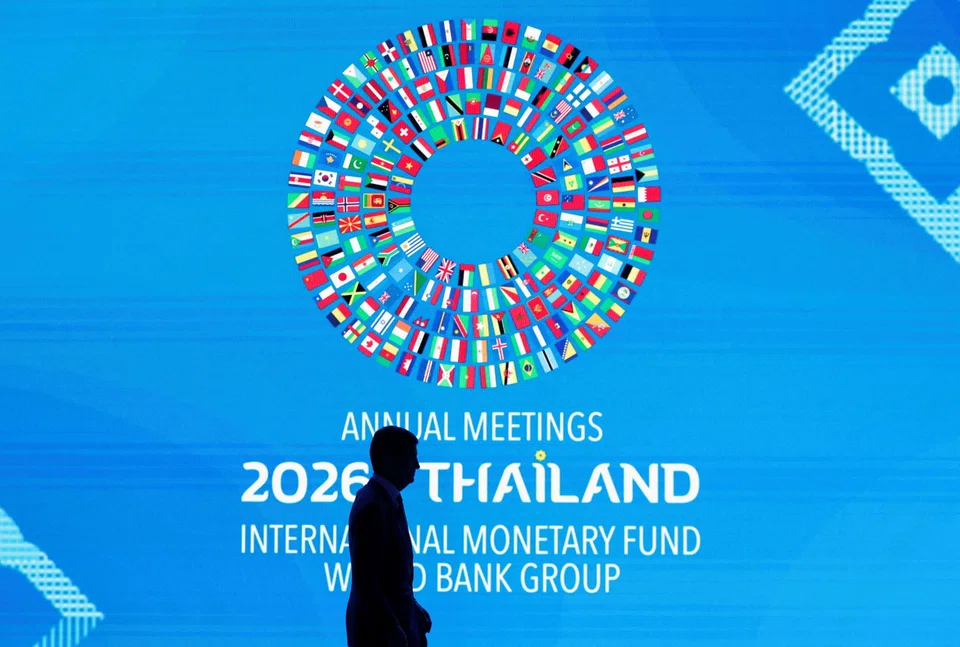
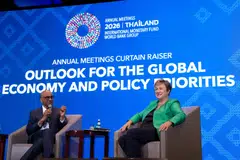
THE International Monetary Fund (IMF) and World Bank meetings in Bangkok did not bring the massive traffic jams that some feared, and the floods from earlier weeks had largely cleared.
Yet the agenda confronting governments remains crowded, with major concerns for businesses and regional economies.
Asean and other Asian governments already contend with slower growth, rising debt and higher energy prices. Now some of the greatest risks arise in the world’s largest economies.
Their financial difficulties could have outsized consequences, to which international institutions may have limited capacity to respond.
Spillover risks
One concern that the IMF meetings highlighted was that public debt levels in the US, Japan and several major European economies remain high.
These economies have considerable strengths and are not necessarily headed for crisis, but serious disruption can still result from their fiscal deficits.
Government bonds underpin borrowing costs and financial transactions worldwide. A sharp rise in yields could spread rapidly through international capital markets, weakening balance sheets, raising financing costs and unsettling currencies.
Another concern is the scale of investment in artificial intelligence and the high expectations of future returns.
Rising bond yields could put pressure on technology valuations, while disappointment over expected returns could trigger a wider market correction. These risks could reinforce financial instability.


Warning signs have come from credit rating agencies, with Fitch downgrading US sovereign debt in 2023 and Moody’s in 2025. Bond yields and other market signals also reflect concerns.
Central banks would be crucial in containing disruption, but many face growing political pressure on their independence and ability to say “No” to national leaders.
The IMF has considerable crisis-management experience, but its resources are limited relative to the scale of the largest economies. It can warn, coordinate and provide financing.
But the IMF cannot compel major economies to undertake fiscal reforms or guarantee sufficient resources to contain a crisis that could happen at the centre of the global financial system.
Different challenges for Asean countries
The consequences of such a financial crisis would reach regional economies through higher borrowing costs, capital outflows, currency pressures and weaker external demand.
These affect countries in different ways. Consider Singapore, Indonesia and Thailand.
Singapore has a strong fiscal position and substantial reserves. But as an international financial centre, it will face volatility from ructions in the global markets.
A sharp repricing of major sovereign bonds could affect banks, institutional investors and asset valuations here. Higher funding costs could also reach businesses, even when their underlying operations remain sound.
Indonesia’s public debt is relatively low compared with many advanced economies, but government revenues remain low relative to gross domestic product and debt-servicing costs absorb substantial fiscal resources. The rupiah is also vulnerable to shifts in foreign portfolio investment and international confidence.
If major sovereign bond yields rise sharply, investors could demand higher returns from Indonesian assets. Currency depreciation would add to foreign-currency obligations, while higher domestic borrowing costs could constrain investment and government spending.
Indonesian President Prabowo Subianto’s ambitious programmes, including state-linked investment initiatives, add to the importance of fiscal discipline and transparency. The challenge is to maintain growth ambitions while preserving investor confidence and room to respond to external shocks.
Thailand has a relatively strong external financial position, but higher public debt, elevated household indebtedness and weak growth. A global financial shock could increase financing costs for the government and across the economy, even as households and businesses are already struggling with debt.
Weaker external demand would compound these pressures, while limited fiscal room could constrain the government’s response. Thailand needs to address household indebtedness and restore investment and productivity, rather than rely on repeated fiscal stimulus.
These examples show why Asean cannot rely on a single prescription. While national policies remain essential, governments also need to understand how global vulnerabilities interact across the region.
A stronger regional role
Could China help? The region’s largest economy faces challenges of its own, concentrated in local government debt, property and state-linked enterprises.
Beijing should be able to cope with that, for now. But prolonged financial weakness and lower growth within China would potentially affect Asean.
Those that do business with China will face weaker demand as well as reduced investment from the world’s second-biggest economy.
Moreover, when domestic demand flags, China’s producers will tend to look abroad and this would increase the fight with Asean companies for market share.
If these developments occur together, moreover, the situation becomes more complex. What if US or Japanese sovereign bond yields rose sharply while China’s growth weakened further? Asean could face capital outflows, higher financing costs and weaker export demand simultaneously.
We can hope for the best. But Asean must also make efforts to grow its resilience against such outsized risks.
One starting point is the Asean+3 Macroeconomic Research Office, or Amro, which monitors Asean, China, Japan and South Korea and supports the Chiang Mai Initiative Multilateralisation (CMIM), the region’s financial safety net.
Amro already undertakes surveillance and risk assessments. Greater emphasis should be given to simultaneous shocks from major economies.
Regional stress-testing could assess their combined effects on banks, currencies, financial markets and government finances, identifying vulnerabilities and potential spillovers.
Such analysis should inform contingency planning by governments, central banks and regulators. Closer cooperation between Amro and the IMF would also help.
The CMIM has a US$240 billion financial safety net but this has never been activated. Preparations and exercises for possible deployment would build confidence.
This could include joint crisis exercises and information-sharing for coordinated responses to financial-market disruptions.
For the longer term, Asean should deepen its financial integration. The Asian Bond Markets Initiative (ABMI) could further develop local-currency bond markets and facilitate cross-border investment, including in regional public goods such as cross-border power grids.
In May this year, Asean+3 finance ministers and central bank governors agreed to expand the ABMI’s scope by evolving it to the Asian Bond and Financial Markets Initiative (ABFMI).
Regional payment systems can support more efficient transactions and settlement, while greater capital-market connectivity and interoperability in digital assets could open further opportunities. This could happen under the Asean Digital Economy Framework Agreement, for example.
Japan – despite its high debt levels – remains an important partner for stability especially in CMIM and ABFMI. Asean should also deepen cooperation with other significant economies, including India, South Korea and Australia.
Diversifying capital sources and expanding local-currency financing could reduce dependence on external financial conditions.
G7 fiscal policies and China’s financial weaknesses cannot be solved by the IMF, let alone Asean. But the regional group can step forward with measures to reduce potential vulnerabilities.
Insofar as American and Chinese private-sector flows and commerce are unaffected by the two countries’ geopolitical rivalries, they will remain a bulwark.
But Asean will do well to take on a “Minus-2 world” perspective – a geopolitical strategy of finding ways forward that do not rely on either the US or China to provide stability and leadership.
That does not mean excluding either power or forming another exclusive bloc, but widening options through cooperation among its members as well as key partners in Asia.
The IMF has left Bangkok but, much like the traffic in that bustling, lively city, a long journey ahead remains.
The writer is chairman of the Singapore Institute of International Affairs
Decoding Asia newsletter: your guide to navigating Asia in a new global order. Sign up here to get Decoding Asia newsletter. Delivered to your inbox. Free.
Share with us your feedback on BT's products and services
TRENDING NOW

Government to bring forward raising of retirement age, give employers more financial support to create flexi-load jobs

Indonesia stocks suffer worst plunge in nearly 30 years as MSCI proposes standalone status

If Europe goes to war, the fallout will be felt in East Asia
Natural gas to stay for the long haul beyond 2050: Singapore International Energy Week panellists

