

Turning AI ambition into sustainable value with trust
Humans must interpret outputs, apply professional judgment and remain accountable for decisions
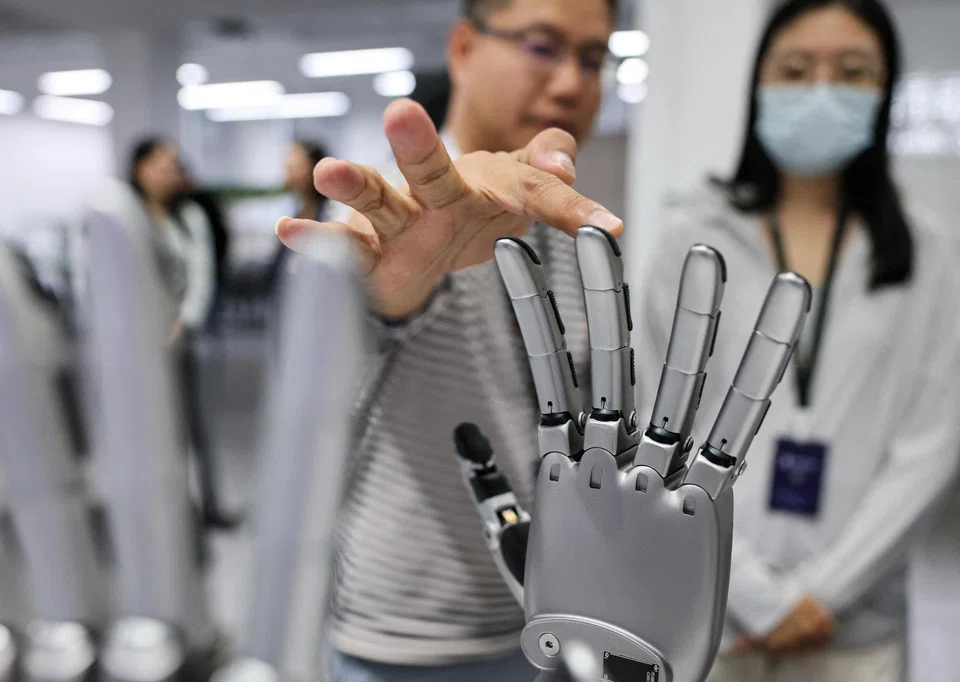
TRUST is a sentiment, earned through years of consistent action and performance, both in good times and bad.
As time passes, changes in the growth equation worldwide, no less in South-east Asia, suggest that efficiency is no longer enough. Increasingly, trust is becoming the differentiator.
We have seen this dynamic play out across major technology waves, and artificial intelligence has reached that point.
Deloitte’s recent work with organisations across government and the private sector in South-east Asia – with Singapore as the region’s business and financial gateway – suggests that it is no longer about experimentation; it is about how to scale AI effectively, responsibly and with clear business value.
Scaling AI depends on trust, which is not built by technology alone. It is built through expertise, context and judgment – qualities that remain deeply human.
AI may generate outputs, surface patterns and accelerate decisions, but it is people who must interpret those outputs, apply professional judgment and remain accountable for the decisions that follow.
Trust is what allows AI to scale
Historically, trust in business organisations and government agencies was anchored in visible relationships, established reputations, clear contracts and predictable policy frameworks.
Those foundations still matter, but are no longer sufficient for an economy in which more decisions are shaped by data, models, platforms, agents and automated workflows that few people fully see or understand.
In Deloitte’s experience, organisations that struggle to scale AI often face the same challenges:
SEE ALSO









- Users do not fully trust the outputs;
- Customers question how decisions are made;
- Regulators seek greater transparency; and
- Leaders become hesitant because they cannot clearly explain how an outcome was reached.
Without trust, even the most sophisticated AI remains trapped in pilot mode.
Building trust starts with clarity. Organisations need clear boundaries between human and machine decision-making. They need transparency over how recommendations are generated, robust audit trails and mechanisms for human oversight when risks increase.
Current AI models are so complex that, more often than not, people are unable to understand every calculation behind the output. Instead, what is required is a disciplined way to test, triangulate and judge where AI can be relied on, where its limitations sit, and where decisions must remain fully human.

As AI becomes integrated into business processes, organisations will increasingly be judged not simply by whether AI works, but by whether it works consistently, cost-efficiently, fairly and in ways that can be explained when challenged.
AI systems are only as effective as the data on which they are grounded. Reliable knowledge sources, strong data governance and fastidious information management therefore become strategic assets, not technical considerations.
At the same time, while organisations resist waiting for perfect data, it is important not to ignore the limitations. Incomplete, outdated or poorly governed data can lead to unreliable outputs or hallucinations.
Ultimately, trust in AI does not come from perfect data or perfect models. It comes from people who know where the limitations lie and how to apply judgment accordingly.
Governance as an innovation accelerator
Too often, governance is viewed as a constraint on innovation. The reality is the opposite.
Across South-east Asia, trust has long been a critical enabler of economic development.
While economies across the region differ in their stages of development and regulatory maturity, those that build confidence through strong institutions, clear rules and consistent standards are often best positioned to attract investment, support innovation and sustain long-term growth.
Singapore’s reputation as a trusted financial and business hub is a prime example. It was not built despite strong oversight and institutional discipline. It was built because of it.
This same principle applies to AI.
Open-weight and open-source models can broaden access to the collective knowledge of a wider ecosystem.
While highly specialised sectors may require more proprietary approaches, for many other organisations, this openness will be an important route to faster innovation, greater adaptability and more transparent AI systems.
As organisations deploy increasingly capable AI agents, governance frameworks must evolve beyond traditional technology controls. Boards and executive teams need visibility into where AI is being used, what decisions are being influenced, what risks are emerging and who remains accountable.
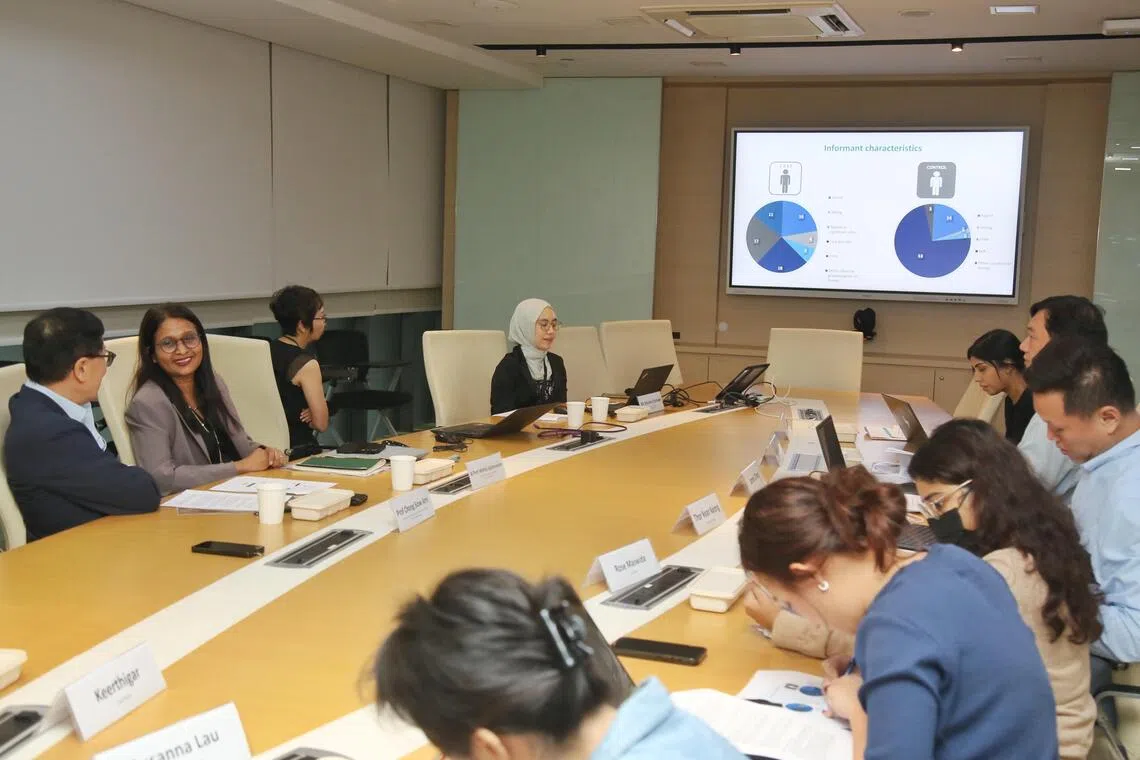
Questions around data quality, tokenomics, model performance, cyber resilience, third-party dependencies and regulatory compliance cannot be addressed in isolation. Trust in AI ultimately depends on leaders being able to demonstrate that these risks are understood, managed and subject to appropriate oversight.
Governance therefore cannot sit solely within the technology function. It must become an enterprise-wide discipline encompassing strategy, risk, operations, legal, compliance and workforce transformation.
This is especially important because agentic AI does not simply automate individual tasks. It increasingly operates within workflows that span multiple functions and systems, influencing approvals, customer interactions, operational decisions and financial processes.
When AI becomes embedded in how work gets done, governance can no longer be treated as an afterthought.
Human judgment increasingly critical
Historically, organisations focused on risks associated with technology failure. With AI, the focus must expand to include incorrect reasoning, bias, unintended action, over-reliance on automated decisions and lack of transparency.
Reliable performance comes from continuous monitoring, testing and refinement. Organisations need to evaluate AI systems not only in ideal conditions but also across messy, real-world scenarios. Human feedback loops and ongoing observation remain essential for maintaining trust over time.
One of the most important lessons emerging from real-world implementations is that autonomy does not diminish the importance of people. In many ways, it increases it. AI may replace or accelerate specific tasks, but it does not replace the full scope of human roles, nor the judgment and context that underpin them.
The future will not be about humans competing with machines. It will be about humans working alongside increasingly capable digital agents. Success depends on clearly defining the role of human judgment and ensuring professional expertise continues to develop alongside automation.
While AI can accelerate the ability of less-experienced employees to contribute, leaders must also ensure that speed does not come at the expense of developing the foundational skills, critical thinking and professional judgment.
There is also a risk of complacency. When AI systems perform consistently well, it becomes tempting to assume they will always get things right. In practice, human oversight becomes more important, not less, particularly when the consequences of decisions are significant.
The confidence to grow
In the age of AI, trust will no longer be the reward for growth. It will be the prerequisite for intelligence at scale.
For business leaders, the path forward is clear.
The focus should move beyond isolated pilots and proofs of concept towards building enterprise-wide foundations – trusted data environments, governance frameworks, risk-management capabilities, workforce readiness and operating models – that allow AI to create sustainable value at scale.
All this has to be balanced with the “token costs” of deploying and running these systems.
For policymakers and regulators, the challenge will be balancing innovation with safeguards. A trusted AI ecosystem, with the appropriate guard rails in place, can become a competitive advantage, attracting investment and accelerating adoption while maintaining public confidence.
Yet, safeguards should not constrain the very qualities that make AI powerful. Part of the beauty of AI lies in its ability to hallucinate. While it is rightly considered a risk when accuracy matters, the same tendency can also spark unexpected ideas and possibilities – much as dreaming can for the human mind.
This is what makes AI a beautiful asset. In the end, the advantage will belong to those who can harness it effectively with the right judgement. They will be the ones leading, managing and guiding others as AI shapes the future.
The writer is CEO, Deloitte Southeast Asia
Decoding Asia newsletter: your guide to navigating Asia in a new global order. Sign up here to get Decoding Asia newsletter. Delivered to your inbox. Free.
Share with us your feedback on BT's products and services
TRENDING NOW

Once staunchly pro-China, Malaysian Chinese businesses are now distancing themselves from Beijing

Looking beyond looming CEO succession, should UOB potentially pursue a transformative merger?

Could stablecoins be the future of money?

Grab CEO’s wife Chloe Tong on life with Anthony Tan and finding her purpose

