US tech stocks stumble, but the AI boom is far from over
For long-term investors, periods like these often offer opportunities rather than reasons for panic
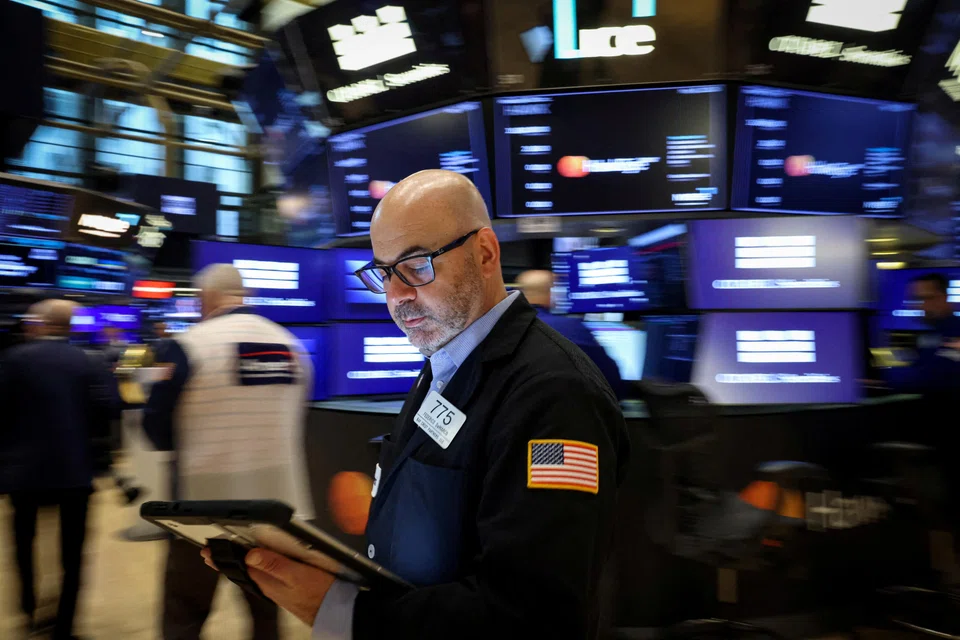
THE recent sell-off in US technology stocks has reignited a familiar question: Has the artificial intelligence bubble finally burst?
The numbers do look unsettling. Between Jun 18 and Jul 2, the tech-heavy Nasdaq-100 index fell more than 3.5 per cent, while the MVIS US Listed Semiconductor 25 Index – a benchmark tracking the 25 largest and most liquid America-listed semiconductor companies – dropped by over 10 per cent.
After months of relentless optimism surrounding AI, investor sentiment has become noticeably more cautious.
Yet, powerful structural investment themes rarely move in a straight line. Rather than signalling the end of the AI story, the latest pullback looks more like a healthy reset of expectations.
What’s behind the sell-off?
One potential trigger was a shift in interest-rate expectations.
At the latest Federal Open Market Committee meeting, half of the policymakers projected at least one interest-rate hike before year-end. Financial markets quickly adjusted, with futures now implying a roughly 77 per cent probability of one hike at the minimum.
Higher interest rates are particularly challenging for high-growth technology companies. They raise financing costs while reducing the present value of future earnings, a key driver of valuations for growth companies.
At the same time, investors have become increasingly sensitive to the enormous capital expenditure required to build AI infrastructure. While technology giants continue to spend hundreds of billions of dollars on data centres and specialised chips, markets have begun asking a reasonable question: When will these investments generate sufficient returns?
That concern intensified after reports that Meta Platforms is exploring ways to sell access to its AI computing power and models. Some investors interpreted the move as evidence that Meta may have overbuilt its infrastructure, and that AI-related capital expenditure across the industry could soon slow.
SEE ALSO





Semiconductor stocks, which have been among the biggest beneficiaries of hyperscaler spending, consequently bore the brunt of the sell-off.
AI investment case is intact
Those concerns deserve attention, but they do not fundamentally alter the long-term outlook.
First, the scale of the preceding rally should not be forgotten. Before the correction, the Nasdaq-100 had gained more than 21 per cent this year at its peak, while semiconductor stocks had surged over 85 per cent.
After such extraordinary advances, some profit-taking was not only expected, but also arguably healthy.
The sharpness of the decline also reflected how crowded investor positioning had become. Semiconductor companies have delivered exceptional earnings growth over the past few years, attracting enormous inflows from investors eager to gain exposure to the AI theme.
When expectations become so elevated, even modest uncertainty can trigger disproportionately large price swings as investors rush to reduce exposure simultaneously.
More importantly, there is little evidence that demand for AI infrastructure is weakening.
Reports that Meta may lease computing capacity should not automatically be interpreted as a sign that the company has overspent. Meta has recently committed to additional data centre capacity through agreements with providers including Nebius, CoreWeave and Crusoe.
Those commitments would appear inconsistent with a company preparing to significantly scale back AI investment.
A more plausible explanation is that Meta is seeking to monetise idle computing resources in a market where demand remains exceptionally strong.
The company may simply be leasing older-generation hardware that no longer fits its evolving AI requirements while redirecting resources towards more advanced infrastructure.
Even if Meta were found to have excess capacity, that would not necessarily indicate an industry-wide oversupply. The broader AI ecosystem continues to face significant computing constraints.
Google recently reported that its cloud backlog nearly doubled quarter on quarter to US$462 billion, highlighting continued customer demand. Amazon chief executive Andy Jassy has similarly remarked that demand for AI infrastructure still exceeds available capacity.
Meanwhile, Micron Technology recently said that tight memory supply conditions will persist beyond 2027, reflecting the industry’s limited ability to keep pace with AI-driven demand.
These are not signs of an industry suffering from excess investment.
Next area of focus
Although we remain constructive on semiconductors over the long run, the recent rally had already priced in much of the near-term optimism.
Even after the recent pullback, US semiconductor stocks continue to trade at demanding valuations, leaving less room for disappointment.
While we remain constructive on the industry’s long-term outlook, we see more attractive risk-reward opportunities in Asia, where many semiconductor companies offer similar – and in some cases stronger – earnings growth prospects at significantly lower valuations.
The MVIS US Listed Semiconductor 25 Index trades at about 34 times forward 2026 earnings, compared with around 15 times for the FactSet Asia Semiconductor Index. That valuation gap provides investors with a larger margin of safety while maintaining meaningful exposure to the long-term AI investment theme.
Beyond chipmakers, Internet companies also deserve attention.
Hyperscalers such as Amazon and Alphabet continue to benefit from rising AI adoption.
As AI agents become more capable, enterprises are likely to deploy them across a wider range of business functions. That should increase demand for AI inference, driving higher token consumption on cloud platforms.
At the same time, the cost of generating AI responses continues to decline rapidly. Lower costs combined with higher usage should support margin expansion, even as capital expenditure remains elevated.
Perhaps most importantly, investors may be underestimating how quickly AI investments are beginning to generate returns.
Across the major hyperscalers, the ratio of cloud revenue to capital expenditure has been steadily improving, suggesting that revenue growth is increasingly catching up with the massive infrastructure investments made over the past two years.
Corrections create opportunities
Financial markets often swing between excessive optimism and excessive pessimism.
The latest technology sell-off appears to be driven more by changing sentiment than by any meaningful deterioration in the underlying AI investment thesis.
While volatility may persist as markets reassess valuations and interest-rate expectations, the fundamental drivers of AI adoption remain firmly in place.
For long-term investors, periods like these often offer opportunities rather than reasons for panic. The AI revolution was never likely to unfold in a straight line. Neither should investors expect the stocks leading that transformation to do so.
The writer is a research analyst with the research and portfolio management team of FSMOne Singapore, the business-to-consumer division of iFast Financial
Decoding Asia newsletter: your guide to navigating Asia in a new global order. Sign up here to get Decoding Asia newsletter. Delivered to your inbox. Free.
Share with us your feedback on BT's products and services