Convergence of energy security and climate action is ‘fragile’: Ravi Menon
Three forces make it so: that the move to greener energy takes time, Asian states’ use of subsidies, and coal being dug in

[SINGAPORE] With energy prices soaring as a result of the Iran war, energy security and climate action are increasingly converging priorities.
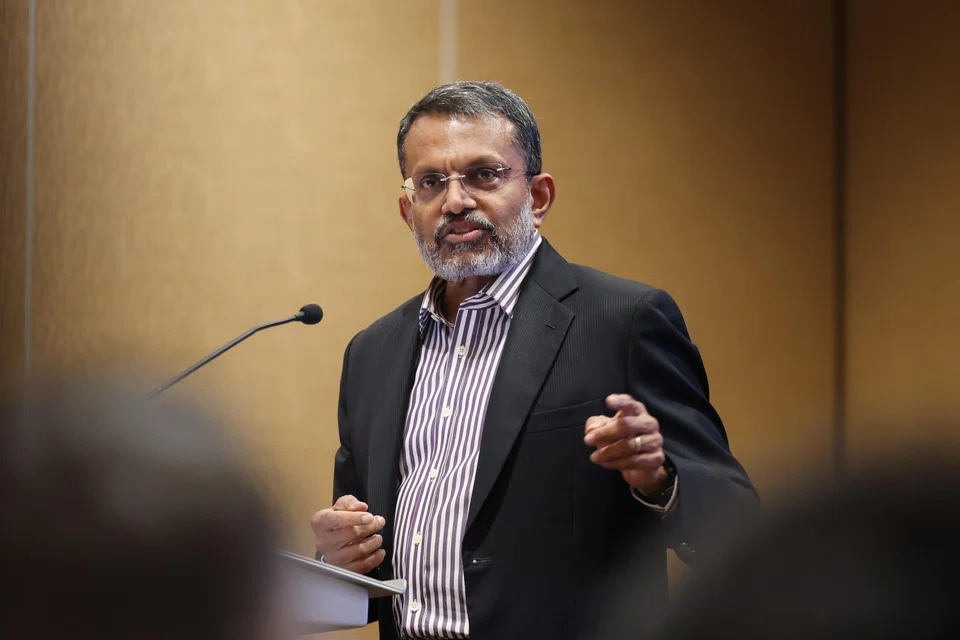
But that convergence is fragile, said Singapore’s ambassador for climate action Ravi Menon on Wednesday (May 20). He highlighted three forces that could weaken it.
The first is that it takes time to make the transition to renewable energy sources.
The conflict in the Middle East has made governments realise the need to shore up energy security through a large-scale expansion of renewable energy deployment, but the process is one that cannot be hurried.
Menon said: “Solar panels and wind turbines take years to procure, finance, permit and install. Grids take decades to transform.”
He was speaking at an event on Singapore’s blended finance initiative, known as Financing Asia’s Transition Partnership (Fast-P), held on the sidelines of Ecosperity Week, Temasek’s flagship sustainability conference.
The second force that could weaken the convergence between energy security and climate action is that some Asian governments have responded to the spike in fuel prices by giving subsidies for petrol and diesel.
While the need to protect consumers is understandable, subsidies have the effect of suppressing price signals that make domestic solar energy or electric vehicles more attractive to consumers and investors.
“The higher fossil fuel subsidies, coupled with limited fiscal buffers and high public debt, have squeezed the government budgets needed to fund grid investment and concessional financing for green infrastructure,” he said.

The third force – and also the biggest source of the fragility – is the extent coal is entrenched in Asia; its use as a source of energy has accelerated with the Iran war.
However, there are also genuine areas of convergence, such as the expansion of renewables in the power sector.
Not only are solar and wind energy good for the environment, they are cheaper than fossil-fuel generation in most Asian markets as well. That they are also domestically sourced also mitigates exposure to foreign-supply risk.
Electric vehicles are also increasingly seen as an alternative to petrol and diesel, as consumers in some countries are facing severe fuel shortages.
Asean countries are also looking to strengthen regional energy cooperation through the Asean Power Grid, given its potential to improve energy security and resilience in the region.
Menon said: “Asia is being pulled by two opposing forces – coal as a short-term backstop, and renewables as a medium-term strategy. It is not clear which force will dominate.”
Likening the current price shocks in Asia to the experiences of Europe after Russian gas pipelines were cut following the invasion of Ukraine, he said that some will make progress on their energy transition, while other will forget the lessons when oil prices drop.
What has changed from previous energy crises, such as the oil embargo in 1973, is the existence of clean-energy solutions and innovative financing solutions today, said Menon.
He added that policy reforms and financing solutions are needed to ensure that the convergence between energy security and sustainability becomes durable.
Blended finance mechanisms such as the Fast-P programme are one financing solution. The Fast-P office announced that one of its three funds has achieved its second close of US$800 million.
Menon acknowledged that even if the full sum of US$5 billion was raised through the blended-finance initiative, it is not going to move the needle in Asia’s transition.
However, the initiative is about demonstrating whether this can be the way forward in financing Asia’s energy transition, and if so, to develop more Fast-P-like structures and make them an investable asset.
“We also need to look at how to make this systemic, and we’ve got to think of several more blended-finance structures coming up,” he added.
Decoding Asia newsletter: your guide to navigating Asia in a new global order. Sign up here to get Decoding Asia newsletter. Delivered to your inbox. Free.
Copyright SPH Media. All rights reserved.