

Asia has less to fear from the AI correction than you might think
Threats to the technology’s infrastructure build-out should be put into perspective
IN THE semiconductor manufacturing hubs of Taiwan and South Korea, financial regulators are worried about the mounting risks of the artificial-intelligence boom.
On Nov 19, Taiwan’s Financial Supervisory Commission tightened curbs on short selling to help stabilise the stock market, after its benchmark index suffered its sharpest weekly decline since 1991.
Meanwhile, South Korean policymakers are considering activating a 10.7 trillion won (US$8 billion) stock market stabilisation fund. The Kospi has lost a staggering 48 per cent since hitting a record high on Jun 22.
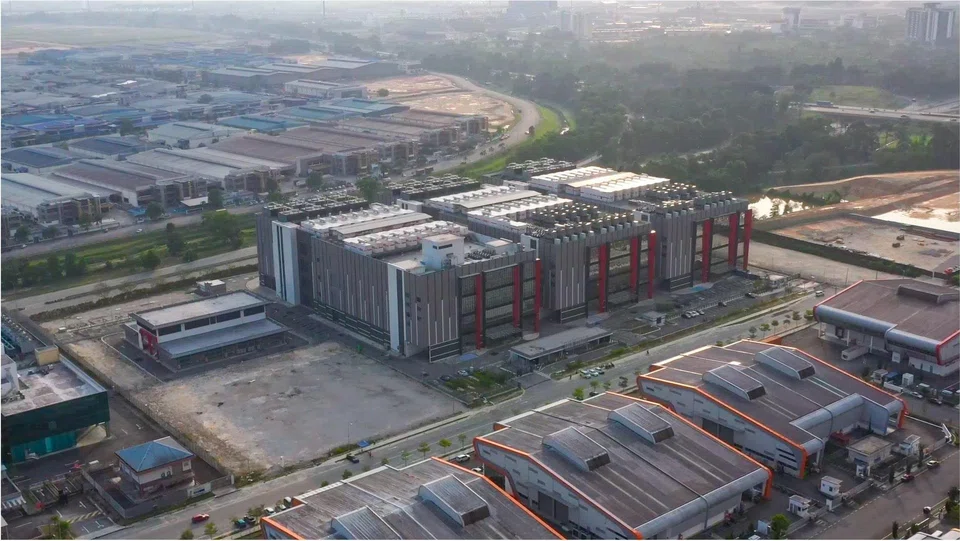
It is hard to overstate the impact of the AI infrastructure build-out on Asia’s economies. In 2024, seven of the top 10 exporters of AI-enabling goods were in Asia, including Singapore and Malaysia, the only South-east Asian economies with front-end chip manufacturing capabilities.
The Asia-Pacific’s share of global data centre capacity is expected to exceed 40 per cent by 2030. Within the region, South-east Asia accounts for the largest proportion of capacity under construction, led by Malaysia and Thailand.
Gone are the days when the technology-heavy US stock market had the highest AI concentration risk.
In the MSCI Asia Pacific ex-Japan index, the information technology and communication services sectors have a combined 46 per cent weighting. Taiwan and South Korea alone account for nearly 50 per cent of the entire emerging market equity index.
Asia under scrutiny
The dramatic unravelling of the AI trade across global markets since early October has put Asia under intense scrutiny. A succession of shocks has fanned fears over the financing, regulation and geopolitics of the AI build-out.
The plunge in US tech shares, the angst over the scale of AI-related debt issuance, and the threat of a clampdown on US data centre construction following the decisive victory of the Democrats in the midterm elections have undermined confidence in the AI narrative.
Moreover, the spying scandal engulfing Nvidia has ensnared South-east Asia, as US authorities scrutinise alleged chip diversion to China through the region.
New rules unveiled by the US Commerce Department seek to close a loophole that allowed Chinese companies to access Nvidia’s cutting-edge AI chips remotely by renting computing power from South-east Asian data centres and cloud providers.
The Institute for Progress, a US think tank, estimates remote access will account for nearly one-third of China’s AI chip stock by the end of next year, with South-east Asia expected to comprise 72 per cent of China’s overseas AI compute.
HSBC says “efforts to restrict mainland China’s access to advanced technology could become a broader investment and demand shock for (South-east Asia).”
Not so fast. While Asia is acutely vulnerable to a slowdown in the AI investment cycle, the region foreshadowed the financial and regulatory risks of the boom, helping blunt the impact of the recent turmoil in the US tech sector.
South Korea’s equity market was the canary in the coal mine for the AI trade. Foreign funds had already dumped US$130 billion of the country’s stocks in 2026 prior to the sell-off in the US, contributing to steep declines in Asian tech shares over the summer.
This has made the region’s equity markets look increasingly undervalued, especially given the enduring strength of corporate earnings.
In a sign of the degree to which AI demand remains exceptionally buoyant, Goldman Sachs expects profit growth for the Asia-Pacific ex-Japan index in 2027 to reach 26 per cent, driven by the tech hardware and chip sectors in South Korea and Taiwan.
Regulatory realities
Furthermore, fears about the impact of tougher regulatory scrutiny of the AI build-out on South-east Asia’s economies are overdone.
While the new US-export licensing rules will test regional operators in the near term, the region has benefited from restrictions on data centre development designed to ensure the boom does not turn to bust.
Singapore’s full-blown moratorium on new construction in 2019 to 2022 was a catalyst for the surge in investment in the Malaysian state of Johor, currently the largest data centre market in the Asia-Pacific when combining operational and planned capacity.
It was also the precursor to the imposition of regulations across South-east Asia designed to balance sustainability requirements with digital infrastructure needs, creating a more resilient data centre market.
The region’s neutrality, moreover, cuts both ways.
While many anchor tenants of data centres in Malaysia and Thailand are Chinese, a large portion are American. This “could divert more incremental demand towards (Malaysia) if (data centre) regulations tighten in the US”, notes Citigroup.
Lastly, it is important to put the threats to the AI build-out into perspective.
First, non-AI workloads – traditional compute and cloud services – accounted for nearly half of global data centre demand in 2025, according to McKinsey.
In Asia, where digital infrastructure is at an earlier stage of the growth cycle, the share was much higher. Strong domestic and regional demand provide a buffer against a slowdown in the AI capital expenditure cycle.
Second, anti-data centre politicians’ bark is worse than their bite. In the US, Gina Hinojosa, the Democratic governor-elect of Texas – which accounts for one quarter of the nation’s planned data centre capacity – said construction of facilities with permits will be allowed to proceed.
In fact, stricter rules for approving new data centres should help ease concern over the financing of the AI boom. A slower, more expensive, and more selective build-out will increase the value of existing AI data centres as the mismatch between strong demand and supply constraints intensifies.
Third, portfolio diversification in the age of AI is easier said than done, particularly in Asia.
While India is touted as the “anti-AI trade” because of its limited exposure to tech hardware, many fund managers see this as a liability and believe AI capital expenditure and monetisation will continue to drive returns in Asian equity markets.
The AI narrative remains compelling.
That Nvidia, under pressure from US President Donald Trump, reinstated the scandal-tainted Jensen Huang as its chief executive shows that the build-out has a strong political backstop – one that limits how far lawmakers can let the AI trade unwind without hurting tens of trillions of dollars in American retirement savings.
Asia’s crucial role in the AI supply chain makes it a key gauge of investor sentiment. More volatility is inevitable. All the more reason not to lose sight of the powerful drivers of the region’s digital infrastructure boom.
The writer is an independent adviser and columnist
TRENDING NOW
‘Very disappointed’: Singapore disagrees with US tariff rationale, to seek lower levies

US proposes new tariffs on 14 trading partners, including rate of up to 20% for Singapore

Should Keppel swoop in to snare Mapletree Investments?

OCBC opens 100-tonne gold vaulting facility to meet growing institutional demand

