

Is it lights out for Singapore’s night-time economy?
More after-dark activities could convince homebodies to paint the town red


[SINGAPORE] Singapore does well in attracting visitors for major events, from Formula 1 and concerts to conferences and exhibitions.
Liu Dongjie, who is pursuing a Master of Business Administration at Nanyang Technological University (NTU), recounts that pop star Taylor Swift’s six sold-out shows in 2024 were a “trigger” for his overseas friends to visit the city-state.
But when they went to Clarke Quay – Singapore’s iconic riverside nightlife enclave – after the concert, most restaurants were already closed. The group found the late-night options limited.
“They just came for the event,” he says. “There is no retention for Singapore.”
By all accounts, the Republic’s nightlife sector has turned moribund.
The operating revenue of pubs, nightclubs, discotheques, dance clubs and karaoke lounges fell by more than half in the last decade, from S$674.7 million in 2015 to S$284.7 million in 2022, based on a white paper released by the Singapore Nighttime Business Association (SNBA) in September this year.
The night-time economy “is struggling, if I’ll be honest”, says SNBA president Danny Loong. “I think we are trying to adjust to the new realities.”
No place like home
Singapore’s nights used to be livelier. From the 1980s to the 2000s, nightclubs and supper spots kept people out well past midnight. But the city’s club scene has since thinned.
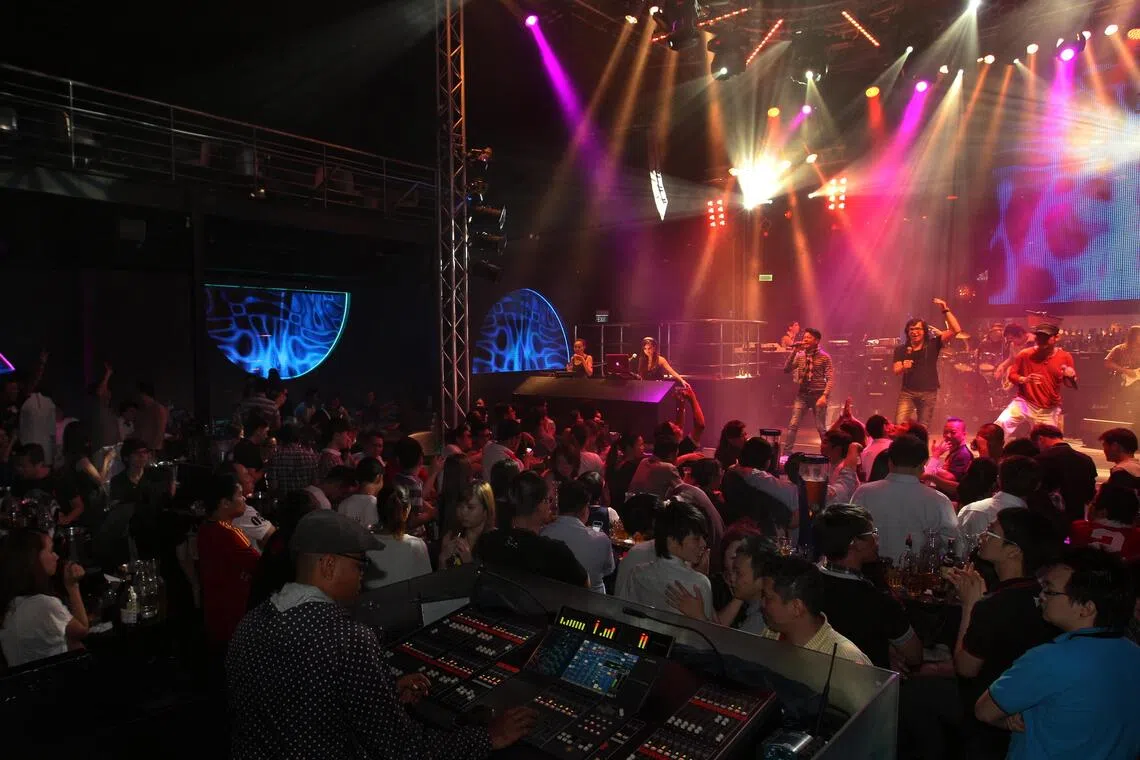
The iconic Zouk remains, albeit at a different location, but several other well-known venues – such as The Butter Factory, St James Power Station and Shanghai Dolly – have closed down.
Most malls close by 10 pm, limiting after-work shopping options, while drinking establishments must stop serving alcohol before midnight.
At the same time, any night-time buzz needs people who are willing to head out.
Liu and his classmates learnt from interviews with NTU students that some prefer gathering in their dormitories – where they can drink more cheaply, play their own music, and avoid the transport costs of getting home after public buses and trains have stopped operating.
Businesses are “competing with a behavioural default of staying at home”, notes Dr Tan Kim Lim, head of James Cook University Singapore’s Centre for International Trade and Business in Asia.
He adds that the Covid-19 pandemic reinforced this habit, while digital technology makes at-home entertainment options more attractive and convenient.
Another hurdle that SNBA identified is the expense of getting home after a night out. The consumer price index for point-to-point transport services was 45 per cent higher in September 2026 than in September 2021.
This increased cost adds to the price of an after-dark jaunt – making it less appealing to some to head out late.
Rethinking nightlife
One bright spot is that dining out remains popular with Singapore residents. In a 2025 Knight Frank-Ipsos survey, 66 per cent of local respondents selected dining as a preferred leisure activity, compared with 10 per cent who chose clubbing and nightlife.
The F&B industry is thus a stalwart propping up late-night pastimes. But more eateries may not be enough to sustain the sector.
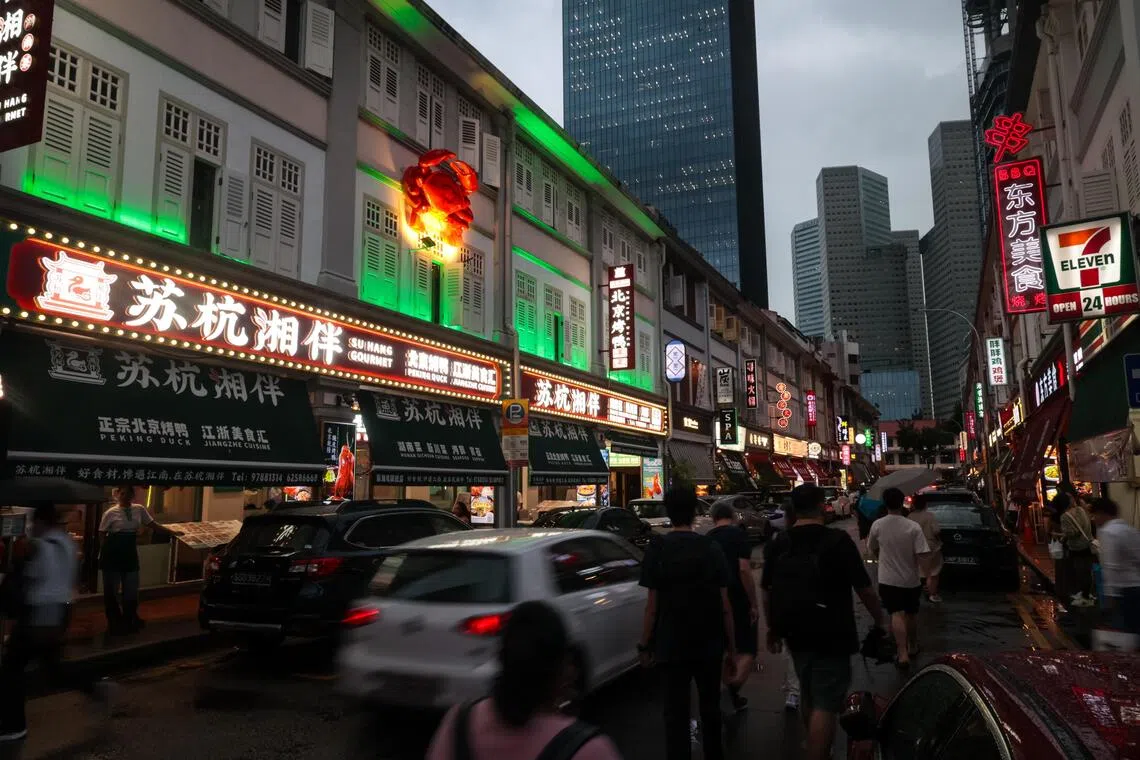
Kent Teo, CEO of events firm Invade, describes F&B as a “super red ocean” – a loss-making segment, with home-grown businesses struggling to compete in a market saturated with foreign brands.
For Loong, the solution is not simply to bring back clubs and bars. “These days, it’s about building experience, placemaking, place management and combining all these different parts together to make it more vibrant,” he says.
That broader remit is reflected in SNBA’s recent rebrand – until August, it was called the Singapore Nightlife Business Association – and its recommendations.
Against this backdrop, SNBA’s precinct approach aims to draw people out by bringing local businesses, cultural activities and public spaces together.
Lewis Lim, associate professor of marketing practice at NTU’s Nanyang Business School, supervised Liu and several other MBA students on a project conducted in collaboration with SNBA.
Informed in part by the students’ research, the SNBA white paper proposes broadening the night economy beyond bars and clubs to include shopping, creative industries and cultural activities, among others.
It also calls for better late-night transport, a “night pass” offering credits for transport and ticketed experiences, a national night-time economy office, as well as distinctive precincts including Holland Village, Clarke Quay, Orchard Road and Kampong Glam.
These proposals would complement other efforts to enliven Singapore’s precincts after dark.
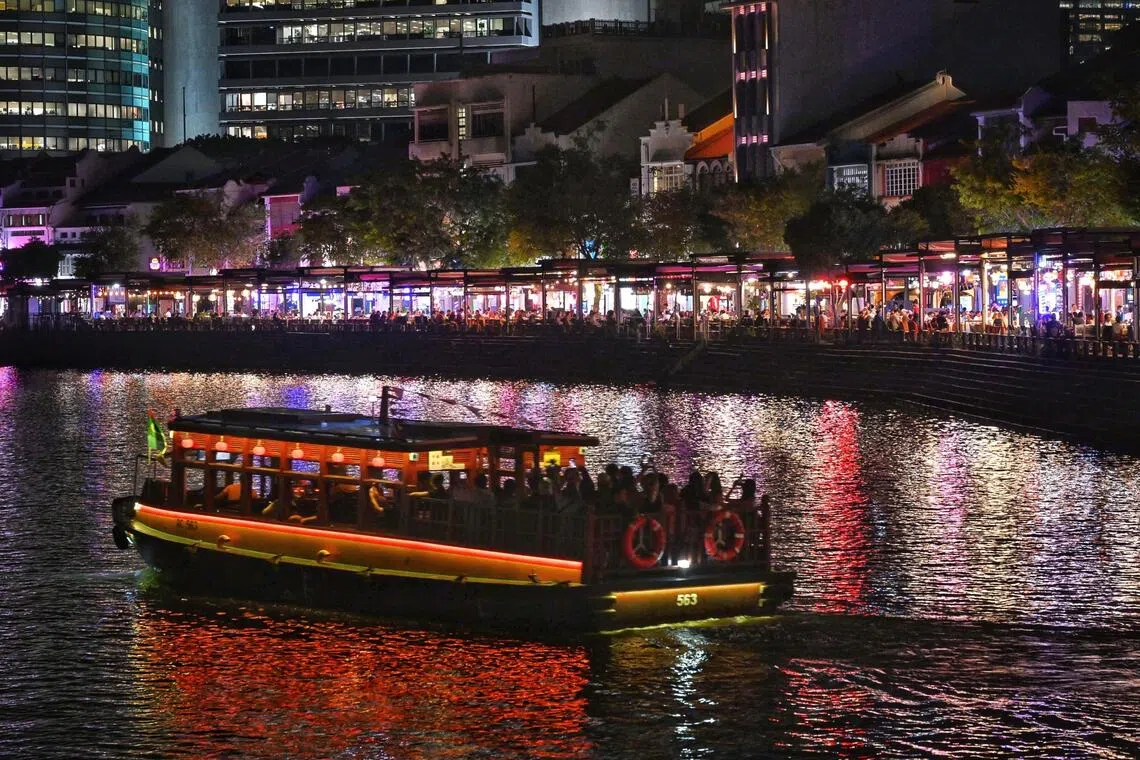
In August, the government formalised such measures trialled for a year in Boat Quay, Clarke Quay and Upper Circular Road, including later alcohol trading hours and the resumption of Circular Road closures for events.
The Singapore Tourism Board’s Orchard Road Rejuvenation Initiative, which was unveiled in May, similarly supports industry-led night programming, including curated markets and extended operating hours tied to events.
Loong, the SNBA president, thinks transport and precinct development are among the proposals that can realistically be pursued. Talks with the authorities on transport are under way, he says, declining to elaborate beyond describing them as “constructive”.
Precincts as multipliers
The precinct proposal is central to SNBA’s case that Singapore can compete for the night-time dollar on unique offerings rather than price.
Home-grown brands and creative talent, the white paper says, can become “destination assets” that help define what experiencing Singapore after dark means.
The organisation argues that neighbourhoods should be places for Singaporeans to enjoy and identify with, which will draw visitors seeking to experience what locals do.
According to the white paper, successful precincts need strong identities, which can be built through coordinated programming, attractive public spaces, cultural activity and collaboration among government, communities and businesses.
That identity would come from a mix of local restaurants, bars, cafes, entertainment concepts, music venues, cultural businesses, retailers and lifestyle operators.
The NTU researchers describe what that mix should offer visitors: places to eat, listen to music and stay late, alongside hotels, transport and safe waiting spaces.
A walkable precinct would let people move between them without taking a private-hire ride to continue their night elsewhere, easing some concerns about transport costs.
This mix can also make it less risky for businesses to extend their hours.
NTU’s Prof Lim says one operator may hesitate to stay open late alone, but if nearby businesses do the same, their combined offerings can give people more reason to visit.
“There’s an ecosystem there. One kind of business makes another more attractive. It’s a multiplier effect.”
Home-grown businesses can anchor precincts with offerings and experiences that overseas visitors are less likely to find in their home countries, notes Musa Fazal, chief policy and operating officer of the Singapore Business Federation (SBF).
Supporting local businesses
SNBA’s Loong also hopes landlords will consider the tenant mix.
“Everybody plays a part in building up our culture and creating space for something more uniquely Singapore,” he says. “If we are going to be uniquely Singapore, then we have to have Singapore brands.”
But these may struggle in a crowded real estate market where foreign brands, such as restaurant chains from mainland China, can pay record rents and crowd out smaller players.
Noting that “shopping malls have become ‘copy-and-paste’, because whoever can pay stays”, Invade’s Teo suggests building lifestyle destinations out of empty school compounds in the Singapore Land Authority’s land bank.
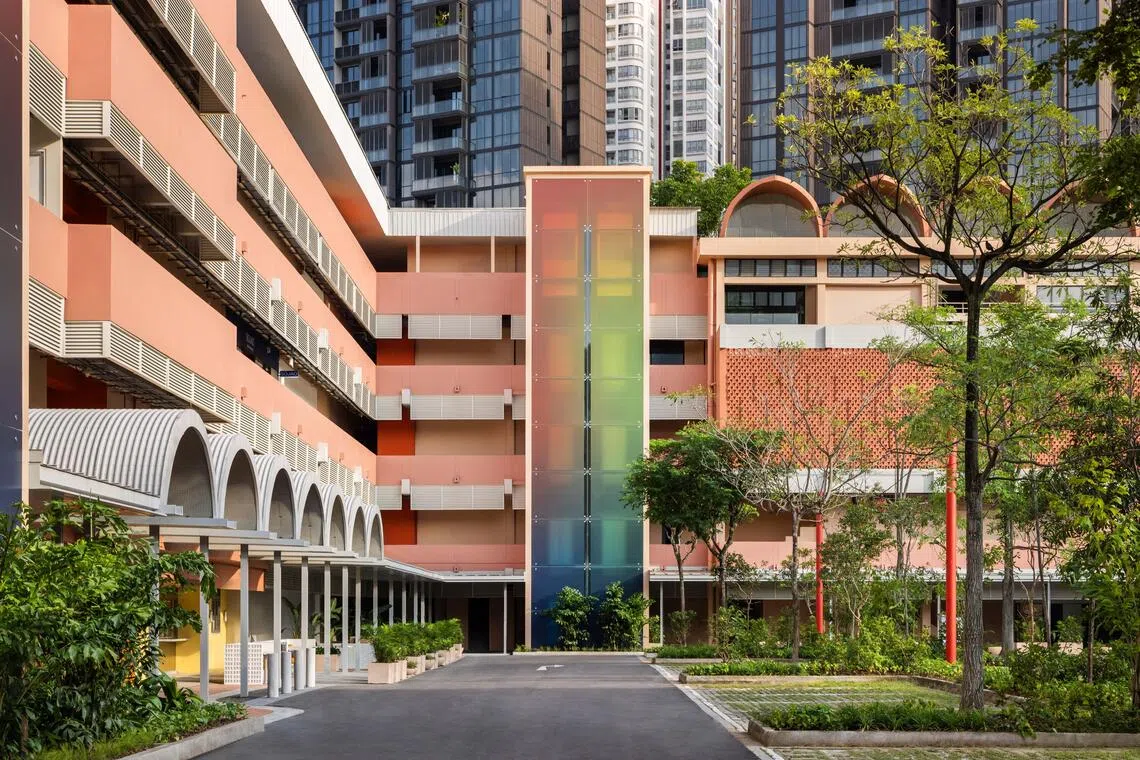
For instance, the former Nan Chiau High School campus at Kim Yam Road has been reinvented as New Bahru, which houses home-grown food, retail, art, wellness and design brands. Evening offerings include a coffee-shop-cum-taproom, cultural gatherings and live performances.
Similarly, Hong Kong’s PMQ is a former police housing complex turned creative hub, while Taipei’s Songshan Cultural and Creative Park used to be a tobacco factory.
Even so, Teo acknowledges that such spaces lack malls’ ready-made amenities, meaning that operators would have to invest in facilities and renovations.
On top of that, rents would need to be effectively subsidised to offset those costs – and that still does not guarantee the spaces would draw a night-time crowd.
“If people are not even coming out, then we don’t need to talk about rental at all,” he says.
Therefore, he also calls for efforts to improve existing businesses, such as Clarke Quay’s eateries and live performance venues, which are “not exactly doing too well”.
“If we want to focus on the night-time economy, we need to focus on what is already here,” he says.
Prof Lim adds that government support may also be needed to “help some sectors for the greater good”, especially in enabling small businesses to become more established.
Uphill effort
In August, SNBA partnered government agency Enterprise Singapore, merchants and other stakeholders to test its pitch for distinctive night-time precincts in the expat enclave of Holland Village.
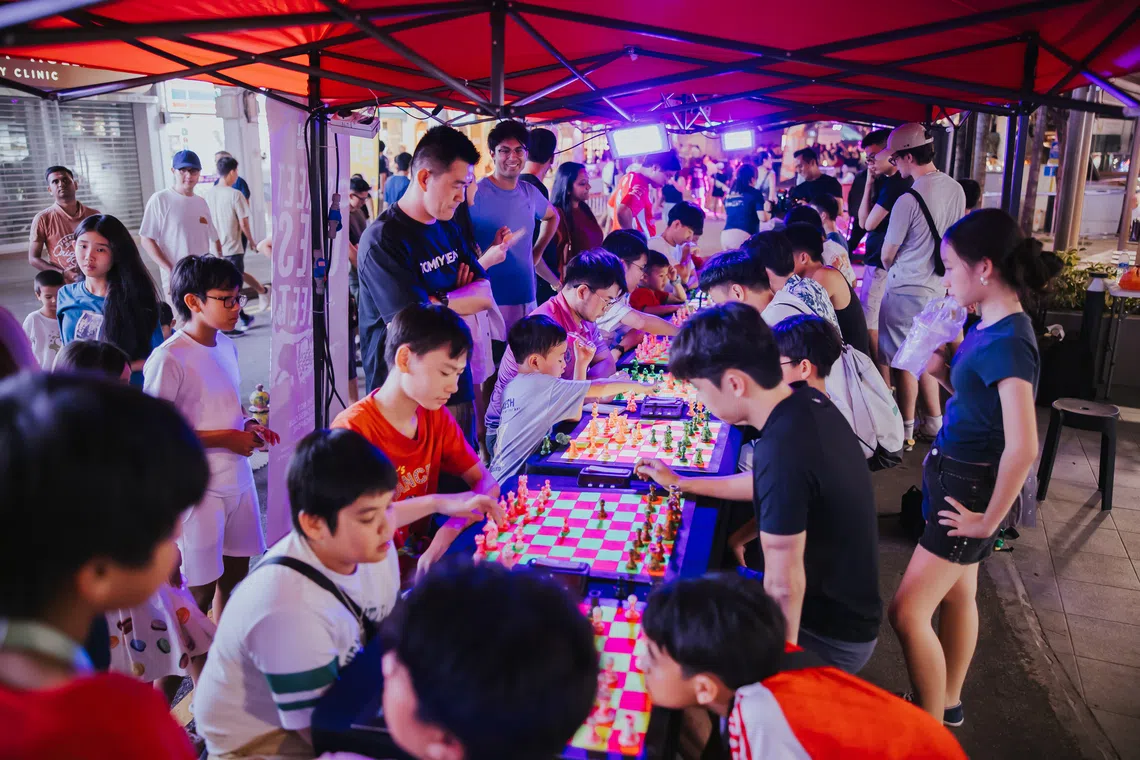
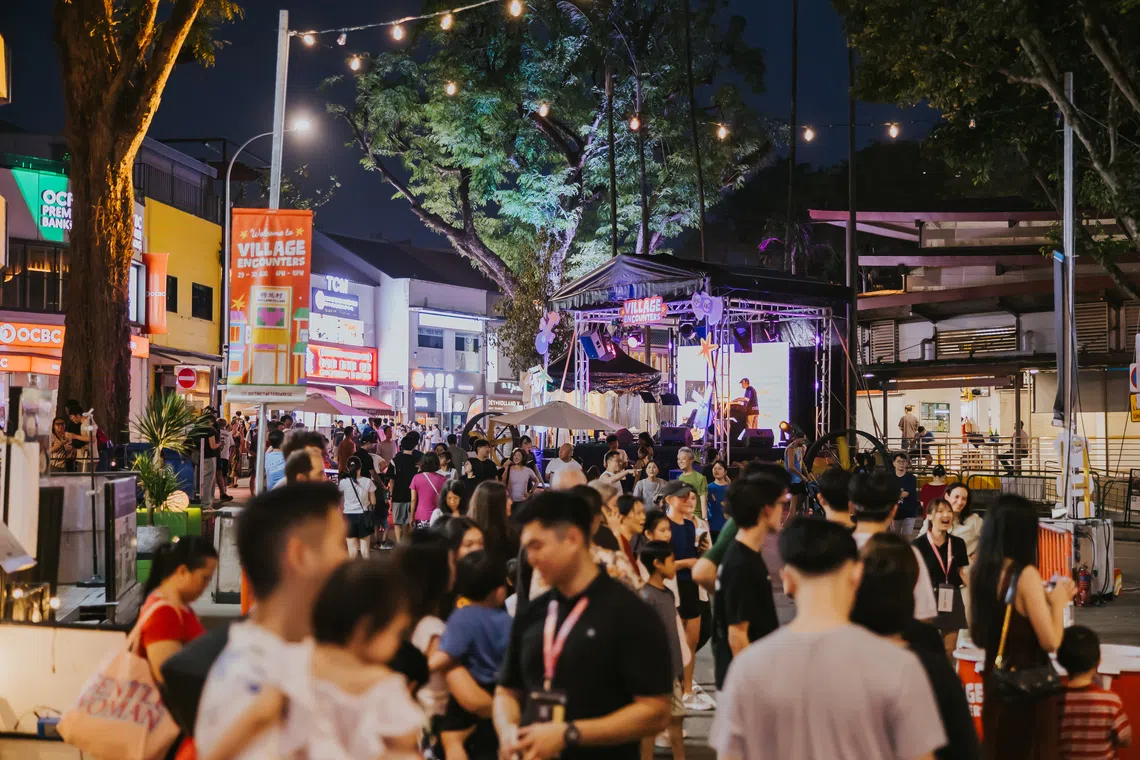
Teo from Invade put on a festival dubbed Village Encounters, which ran for a weekend from 4 to 10 pm. The event featured games, workshops and family activities, with DJs and roving street acts and other performances later in the evening.
Seeing dining and live music as ways to build on Holland Village’s neighbourhood character, SNBA plans to work with partners on at least four more projects to develop selected precincts over the next two years.
Teo says the event recorded 26,265 visits – that is 2.6 to 5.3 times the usual traffic of 5,000 to 10,000 visits on a normal weekend, based on his team’s estimate.
Village Encounters also drew people beyond Holland Village’s regular visitors. Invade’s post-event survey of attendees shows that 45.8 per cent said it was their first visit to the enclave, or that they had visited only once or twice in the past year.
More than half said they had spent over S$20 at local F&B or retail businesses. And while 91.9 per cent of the 208 respondents said they would probably or definitely return to Holland Village within three months, actual return visits were not tracked.
Business owners tell The Business Times that results have been mixed.
Despite not participating in Village Encounters, pet store Fur saw its sales rise during the festival weekend. But Donald Kng, co-founder and CEO of parent company Vetreska, remarks that he cannot link the increase to the event.
Olivier Dyens, owner of Italian restaurant La Nonna, estimates that sales rose 15 to 20 per cent during the event, with till takings covering promotional voucher redemptions.
Yet, Wala Wala Cafe Bar owner Stanley Yeo describes the sales impact at his well-known establishment as marginal, even though some visitors who came for complimentary mocktails also ordered food.
Still, he takes a longer view of the event crowd. “There is value in simply getting people back into Holland Village.”
He adds: “They may not necessarily come into Wala Wala that particular weekend, but seeing the area and the businesses here can remind them that we are still around and give them a reason to return another time.”
Loong calls the event “just a starting point” – a showcase that supports SNBA’s plans to develop more night-time precincts in 2027.
He acknowledges that getting malls, shophouse businesses, retailers, eateries and entertainment venues to work together will take time, but he believes that regular events can give them more opportunities to do so.
Bottoms up
Reviving Singapore’s nightlife is a challenge with high stakes.
Beyond the fate of individual night-time establishments, quieter nights can be a drag on the broader economy, notes NTU’s Prof Lim. He says Singapore is missing out – for now – on an opportunity to encourage longer stays and capture more visitor spending.
Visitors stayed for an average of 3.48 days in 2025, based on Singapore Tourism Board data. If that is roughly three nights, Prof Lim estimates that one more night would extend the average stay by about a third, potentially bringing in significantly more tourism receipts.
“There’s a lot of money that can be earned,” he says, especially since daytime attractions offer little for business travellers who spend sunlit hours at conferences or exhibitions.
At the same time, the Singapore dollar goes further across the border, and Johor Bahru can tempt Singaporean night owls with a plethora of late-night activities – from affordable massages to go-karting – that are harder to come by in the Republic.
The opening of the Johor Bahru-Singapore Rapid Transit System Link in 2027 adds to the pressure. An SBF study estimates that the new cross-border connection could lead to a net S$290 million increase in annual spending flowing out of Singapore and across the Causeway.
SBF’s Musa tells BT that preparations to deal with the heightened competition should begin early, particularly where businesses need time to adjust.
“The objective is not to prevent cross-border spending – greater connectivity will naturally give consumers more choice,” he says. “It is to ensure Singapore businesses can compete on their strengths and capture opportunities in a larger, more integrated market.”
On the home front, Loong points to the recent formation of an alliance co-chaired by SNBA and SBF that brings together trade associations for the restaurant, hotel and retail industries.
“We cannot work in silos anymore,” says Loong. “You’ve got to have everybody in.”
TRENDING NOW

New rules on gross floor area to free up building space for developers

JPMorgan, BlackRock, Endowus frontrunners in scheme to lift returns on S$700 billion of CPF savings

As Indonesia picks new vice-president to succeed Gibran, investors see risks and opportunities
Real income growth slows, non-PMET unemployment up: MOM sees signs of Singapore’s labour market moderating

