

Defaults set to continue as Beijing pledges to end fraud in bond market
Beijing
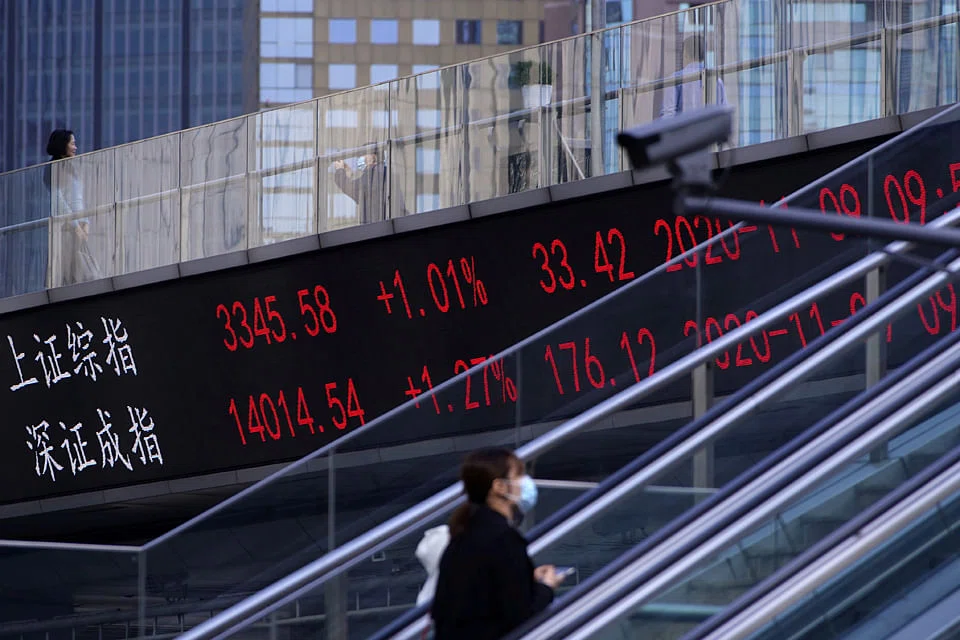
CHINA'S recent bond defaults by large state-owned enterprises (SOEs) are set to continue as Beijing warned it will crack down on fraud and show more tolerance for letting companies default on payments.
Recently, Vice-Premier Liu He, said the government would show "zero tolerance" for financial misconduct and that authorities would "severely" crack down on illegal behaviour on bond financing.
He also promised to investigate "fraudulent issuance, disclosure of false information, malicious transfer of assets and misappropriation of funds".
His comments were backed up by a former official at the National Development and Reform Commission, who told a forum in Beijing: "This is just the beginning, and the problem will continue to spread"
"We have invested in too many projects through debt financing, and many projects can't generate enough economic returns to repay the debt. It's only a matter of time for defaults to emerge."
Over the past three weeks China's bond market, the world's largest, has been rocked by a series of high-profile defaults including Yongcheng Coal and Electricity Holding Group, one of China's largest coal companies as well as Tsinghua Unigroup, backed by the prestigious Tsinghua University. The company was developing semi-conductors.
Huachen Automotive Group also missed a bond payment.
As a result, new bond issuance plans worth some 15.5 billion yuan (S$1.95 billion) were suspended and the yields on some bonds soared to 34 per cent. Down the line this could squeak credit conditions for many firms.
The defaults have prompted an investigation by the National Association of Financial Market Institutional Investors.
But despite pledges that the government will clean up the bond market, investor sentiment has been negatively impacted for the long term as the fundamentals of the market are now being questioned.
Until recently, it was tacitly assumed the government would act as guarantee for state-backed bonds as it sought to favour stability over efficiency.
This has led to bonds worth billions of yuan being channelled to inefficient loss-making projects with little oversight from investors.
"The fact that Yongcheng Coal, the biggest firm to default this month, had a AAA rating highlights the extent to which the pricing of credit risk remains heavily distorted by the assumption of state support," said Julian Evans-Pritchard, a China analyst with Capital Economics.
However, the recent defaults point to change in the government approach.
Although it has for some time publicly said it would reform its inefficient SOEs, it has always stepped in as soon as any debt issues arose, to avoid any systemic shock to the financial system.
This time round, in a bid to deleverage and plough on with its much-trumpeted SOE reform, the government seems more open to accept some instability, though how much exactly is difficult to pinpoint.
It is unlikely it would let a company like Yongcheng Coal go bankrupt and layoff its 180,000 workers.
"The credibility of local government guarantees is being questioned. Investors are wondering how local governments will manage the assets of local firms facing financial difficulty," said Logan Wright, China Director at Rhodium Group.
"Will they attempt to negotiate with bond investors or will they protect the firms' best assets and simply default on the debt?"
In November, regulators said the central government would only intervene as a last resort urging investors and local governments to bear the brunt of eventual losses in case of defaults.
This leaves investors wondering how to factor in risks from now on as more defaults are expected over the next few months.
"The declining credibility of local governments is an entirely new form of financial risk, and the market is now struggling to price it. Contagion is spreading and more firms are having their creditworthiness questioned," said Mr Wright.
He added: "Although authorities want market discipline for riskier firms, they cannot know how much credit risk might create broader contagion. No one can know this line clearly, given that there is no precedent for this risk in China's financial system."
TRENDING NOW

Grab CEO’s wife Chloe Tong on life with Anthony Tan and finding her purpose
Jacqueline Loh to step down as MAS deputy MD in senior leadership reshuffle

Why 1 in 2 young Singaporeans who said ‘no kids’ now say ‘yes please’: new study
Private home prices accelerate with 1.4% rise while HDB resale values dip further in Q3: flash data

