

8M Real Estate poised to ride wave of CBD living
The group, which owns a portfolio of mostly conservation shophouses, is changing focus for its accommodation business to longer-term stays.

Kalpana Rashiwala
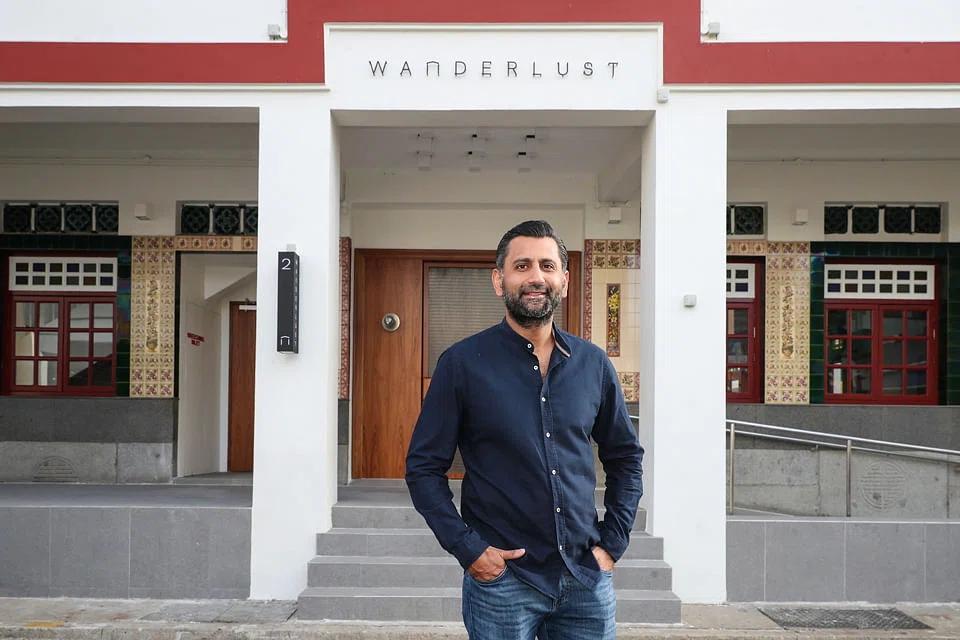
SINGAPORE-BASED property investment company 8M Real Estate (8MRE) has made a name for itself, not only for assembling a sizeable portfolio of conservation shophouses in the city-state but also for its flair as a landlord in curating food and beverage (F&B) concepts at its properties.
While rental income from F&B tenants will continue to account for a big part of the group's business, the next major growth driver and one which is already underway is the accommodation business under its 8M Collective umbrella brand and management arm.
The group terms its accommodation offering as "flexible living", with guests having the option of selecting the mix of services and amenities they wish to avail as well as the length of stay. Currently, the accommodation space within 8MRE's property portfolio is more hotel-centric with a focus on short stays. "However, going forward, we're building up an accommodation portfolio that will focus on longer-term stays, equivalent to serviced apartments," says Ashish Manchharam, founder and chief executive officer of 8M Real Estate, in a recent interview with The Business Times.
The group operates a total of 109 rooms in three properties with hotel licences, allowing a minimum of one-night stay: Ann Siang House (20 rooms), KeSa House in Keong Saik Road (60 rooms) and Wanderlust in Little India (29 rooms). The group has already made an entry into the serviced apartment market, with Base Residences at 31 Hongkong Street. Its second product in this category is set to open in a few months on the upper floors of 5 Gemmill Lane. These two properties do not have hotel licences; instead, they are approved for serviced apartment use, which stipulates a minimum stay of seven days.
8M Real Estate's plan is for two new assets, despite being granted hotel licences, to also focus on providing longer-term accommodation (similar to serviced apartments) - in line with the change in strategy. One is a corner block of four shophouses at 27-33 New Bridge Road in a secondary conservation area, where an eight-storey rear extension will be built. "We are working with WOHA as the lead architect and interior designer for this property," Mr Manchharam reveals.
The other is a row of six shophouses at 33-43 Tanjong Pagar Road.
Creating a weekend crowd
Mr Manchharam cites a couple of reasons for the change in strategy from focusing on short-term stays akin to a hotel, to longer-term stays equivalent to serviced apartments.
Hotel operations are labour intensive and the current tight labour climate here makes it challenging and expensive to operate hotels.
Second, he envisages growing demand for a serviced apartment-type offering of well-designed studios and one-bedroom apartments in convenient locations - thanks to the government's initiatives of trying to develop the concept of living in the Central Business District (CBD).
He highlights that a bigger live-in population in the CBD will also lend itself well to 8MRE's bread-and-butter business of leasing prime ground-floor spaces in conservation shophouses to F&B/lifestyle tenants - by creating a weekend crowd. "We see that potential for rental growth as it becomes a seven-day week for F&B operators; right now, it's a five-day week. That changes the dynamics," explains Mr Manchharam.
The 41-year-old recalls that it was about six or seven years ago when he started to see the opportunity for "great restaurants in shophouses".
"F&B operators, particularly if they are concept-driven, want a shopfront of their own; they don't want to be in a mall. They want to be next to like-minded operators. So that's where our curation comes in."
The completion of new office developments in the financial district in recent years has boosted the pool of office workers patronising eateries and entertainment spots in Districts 1 and 2 conservation shophouse enclaves such as Boat Quay, Amoy and Stanley streets and Tanjong Pagar Road.
Moreover, the opening of new MRT stations has boosted accessibility and been a boon for those operating out of such shophouses - whether they are in the F&B, office or accommodation space.
The art of curating shophouses extends beyond choosing the F&B operators for the ground-floor spaces to studying the locale to see what profile of occupiers would be the best fit on the upper levels.
"We find that in certain locations, the mix between F&B on the ground floor and offices on the upper floors, makes a lot of sense," notes Mr Manchharam. An example would be Amoy Street, given its proximity to the financial district and MRT stations. "And then Keong Saik Road, for example, is a very strong F&B street; but it's better for accommodation for the upper floors."
Mr Manchharam is looking forward to the upcoming Maxwell MRT station on the Thomson-East Coast Line as it is just a stone's throw from 8MRE's shophouses in Ann Siang, South Bridge, Tanjong Pagar and Keong Saik roads.
According to him, currently, F&B outlets occupy about 40 per cent of the total floor area in 8MRE's property portfolio. Offices make up another 40 per cent, with accommodation accounting for the remaining 20 per cent.
However, in the next two to three years, the share of accommodation is poised to increase; conversely, that of offices will decline.
Pursuing his passion
In 2014, Mr Manchharam left a highly successful career at property consulting group JLL, where he was regional director and head of investments, South-east Asia, to pursue his passion for conservation shophouses. He set up 8M Real Estate in the same year with some foreign institutional investors.
From the maiden acquisition of a row of five adjoining shophouses at 112-116 Amoy Street in 2014 to the purchase late last year of four properties on South Bridge Road and another three in Tanjong Pagar Road, 8M Real Estate's total acquisition cost for its property purchases has amounted to some S$600 million.
Add to that another S$50 million for refurbishment expenditure (both completed and planned), and the all-in investment would be in the region of S$650 million. Mr Manchharam estimates the valuation for the portfolio, which comprises predominantly conservation shophouses, at over S$800 million. He is targeting to grow this figure to over S$1 billion, hopefully this year, depending on opportunities.
"The Covid-19 virus outbreak may have a negative effect on the market overall," he adds. "The most challenging thing in developing this business has not been buying real estate. It has been learning to build a team and to grow the team. And it's been a steep learning curve - to go from 10 people three years ago to 35 people."
What has given him the greatest satisfaction on the job, is "being able to grow the company over five years into a fairly large and well-respected (I assume) organisation, but at the same time being able to develop a capable team that has been able to operate our portfolio and who continue to develop and understand the philosophy of what we try to do - which is being passionate to create lifestyle destinations where F&B, accommodation and office play a part depending on the location".
TRENDING NOW

He built the Vingroup empire. Now South-east Asia’s richest man is handing some key roles to his sons

Grab executives buy back shares after stock hits 3-year low on Atome deal
US dollar falters after Iran’s offer to reopen Hormuz sends oil lower
Martin Modern, Wallich Residences properties linked to money laundering case sell for S$16.3 million at auction

