Spacs still have a place for fast-growing startups: AvePoint CEO

Yong Jun Yuan
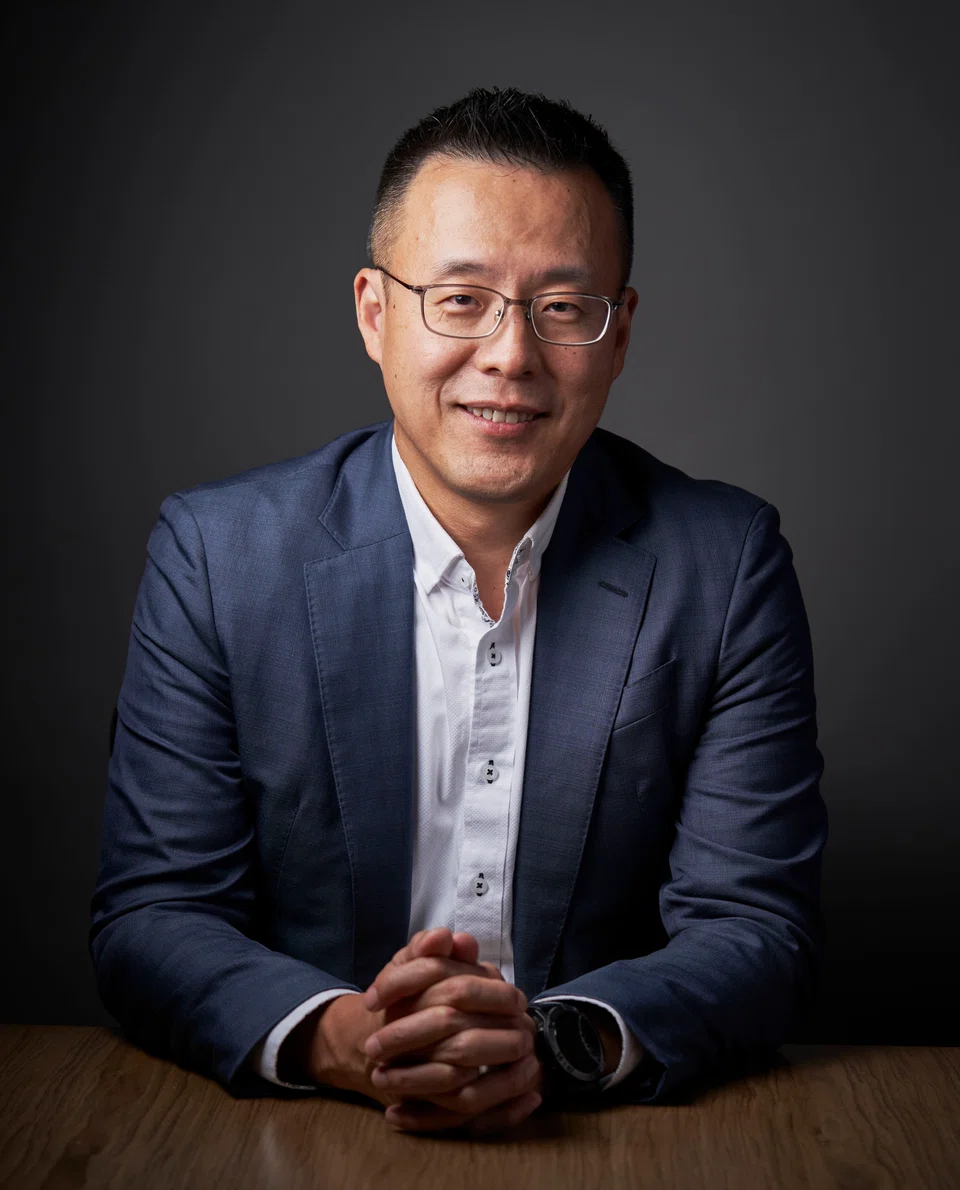
SPECIAL purpose acquisition companies (Spacs) have gained a reputation for overvaluing hyped-up startups at the point of listing, while being rather value-destructive for shareholders who stick with the process.
Yet, AvePoint chief executive Jiang Tianyi believes there is still a place for the instrument.
In his opinion, Spacs provides startups with an alternative form of listing which prioritises the company’s interests better than that of a traditional initial public offering (IPO).
Jiang would know. AvePoint – a data management solutions provider that provides digital solutions – was listed on the Nasdaq in July 2021 via a business combination with Apex Technology Acquisition Corporation, which is a Spac.
Jiang said that traditional IPOs are considered successful if the stock rises after listing and benefits those who participate.
“When the stock pops too much, it’s actually bad for the company. That means they sold their shares too cheaply (and) left money on the table,” he said.
Instead, Jiang believes that a Spac offers more certainty around the amount of capital raised for the company. The de-Spac process, in which the target company is merged with a Spac, is also completed in a relatively short period of four weeks, which allows companies to focus on running the business, he added.
During the de-Spac process, companies can seek out Private Investment in Public Equity (Pipe), which will become capital for the company, as compared to the existing funds in the Spac, which can be redeemed at par value.
Still, he noted that the Spac framework could be further improved.
“When you go public, there’s no Greenshoe, there’s no support, the de-Spacing is always poorly done,” he said. A Greenshoe option allows underwriters to buy a percentage of shares at the offering price after an IPO, which they can exercise if the stock trades at above offering price post-IPO.
Furthermore, he said investor education could go a long way to improving how Spacs are viewed. Much of the speculation and price increases around Spacs happen even before a merger is consummated, he noted.
“To me, it is just frivolous behaviour but if there’s some sort of regulation to control that, that would be good,” he said.
Companies are more likely to do better if they give realistic targets too.
Since the completion of the company’s business combination on Jul 1, 2021, its share price has fallen by 34 per cent as at Feb 8, 2024. However, it is still ahead of many of its peers.
Jiang said that the company has been able to retain more shareholder confidence by giving a two-year revenue forecast for 30 per cent growth, which it achieved in a year.
Although the company has faced some headwinds as market conditions tightened, it has continued to guide towards being a “Rule of 40” company – where the combined revenue growth rate and profit margin for a software-as-a-service company equals or exceeds 40 per cent – by 2025.
Small fish, big pond
In September last year, investment firm Sixth Street sold a 9 per cent stake in AvePoint to Temasek-backed 65 Equity Partners. The investment platform has an anchor fund which it uses to partner with growth companies ahead of an eventual listing in Singapore.
Jiang welcomed the investment by the state investment firm and said that the company is looking forward to listing in Singapore to raise its standing.
While AvePoint’s US$1.5 billion market capitalisation is considered relatively small on the Nasdaq, he said that a potential dual listing in Singapore would help raise the company’s profile among a different set of investors as one of the largest B2B software-as-a-service listings in the region.
“Just by that alone, we will be able to attract a more premium type of long-term investor versus just some hedge funds that will churn your stock willy-nilly,” he said.
“We do want to build momentum to get more blue-chip institutional investor support as we grow to become mid-cap. We think that this (dual listing) allows us to get there faster as well.”
AvePoint is headquartered in New Jersey, although it has also invested significantly in Singapore. Last year, the company announced a research and development centre here that will have about 500 employees. (*see amendment note)
“Very few multinational software companies would ever do that because of the tight labour market here. We did that in conjunction with the Ministry for Trade and Industry’s support,” he said, adding that the company is also working with the Economic Development Board and other institutes of higher learning on another artificial intelligence research lab.
Jiang said that the company may also look to raise capital as it seeks to complete larger acquisitions. The company still has some warrants on the cap table after the de-Spac as well, which he hopes to clean up with additional capital.
“That’s why I think it’s not a bad thing to continue to have optionality to raise capital as we grow,” he said.
He also believes that the company will be well-received by the local market as the business is highly resilient, with many government and regulated industries tapping on its services. Government contracts account for about a third of the company’s revenue, he said.
In the nine months ended Sep 30, 2023, the company saw revenue rise 16.9 per cent to US$197.2 million, while net loss narrowed 10.1 per cent to US$26 million.
*Clarification note: The article had earlier said that the company’s R&D centre in Singapore will have about 300 employees. It is expected to have about 500 employees instead.
TRENDING NOW
MAS allocates S$1.45 billion to five asset managers in third EQDP batch: Chee Hong Tat
‘My grandfather’s legacy’: Sherman Kwek lays out three-year plan for CDL to drive returns
He built the Vingroup empire. Now South-east Asia’s richest man is handing some key roles to his sons
‘How many will survive?’: Bubble fears arise as China’s humanoid robotics face reality check