

China steel exports seen surging to seven-year high as home demand wilts
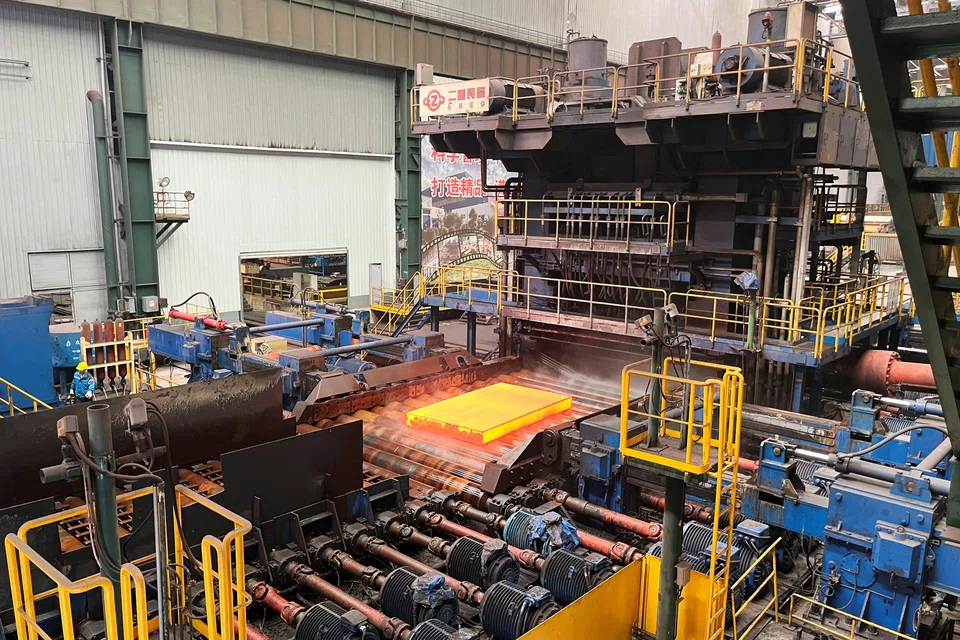
CHINA is set to export the most steel this year since 2016, say analysts, as the weakening yuan and competitive prices help the world’s biggest producer offload surplus metal due to weak demand at home.
China’s massive steel industry has been hard hit by a months-long slump in the country’s huge property sector, pushing steel prices to three-year lows in May.
But strong demand mostly from Asia and Africa is helping keep a lid on stocks and allowing mills to continue operations.
Steel exports in the first five months were up 41 per cent compared to a year ago, customs data showed, and traders said they have recently seen improved overseas buying appetite.
Exports for 2023 could easily surpass the 67.32 million metric tons shipped last year, said three analysts who expect volumes of up to 77 million metric tons.
“The most direct reason is that a weaker yuan is beneficial for exports. Also, (China’s) export prices are appealing,” said Pei Hao, a Shanghai-based senior analyst at international brokerage FIS.
The yuan has depreciated almost 5 per cent against the US dollar since the beginning of the year.
Steel exports hit 8.36 million metric tons in May, the highest since September 2016, but the shipments were worth 27.5 per cent less than the same month a year ago at US$7.7 billion, or an average of US$922 per metric ton, shows customs data.
Demand is strong from South-east Asia, the Middle East and Africa, said traders, with high energy costs in many countries making steel production less competitive with China’s prices.

A pick-up in construction of China-backed projects abroad after a three-year hiatus due to Covid travel restrictions also contributed to higher exports.
“Demand for flat and sectional steel products from Indonesia has been pretty good in the past few months driven by the building of factories for projects invested by Chinese companies,” said Li Peng, a purchase director at the International Corporation of the Third Construction, a subsidiary of state-owned China State Construction.
The strong exports in the first five months, coupled with lower steel imports over the same period, helped prevent a rise in inventory at home, even as domestic demand disappointed.
Stocks of five major steel products stood at 15.44 million metric tons on Jun 21, the lowest since mid-January, and 30 per cent lower than the same period a year ago, data from consultancy Mysteel showed.
Steel exports may fall in June but are likely to rise again in July and August, said two steel traders, noting increasing inquiries recently from South-east Asia and South Korea.
The growing shipments are hurting producers abroad, said Tomas Gutierrez, head of data at consultancy Kallanish Commodities.
“On export markets the impact is very bad. Overseas markets are already struggling and increased imports in many regions has forced down local production,” he said.
Steel output in Asia and Oceania fell 6 per cent on the year in May, according to the World Steel Association.
India is considering imposing countervailing duties on steel imports from China, after applying an anti-dumping duty on stainless steel imports last year. REUTERS
Decoding Asia newsletter: your guide to navigating Asia in a new global order. Sign up here to get Decoding Asia newsletter. Delivered to your inbox. Free.
Share with us your feedback on BT's products and services
TRENDING NOW

OCBC customers face difficulties accessing online, mobile banking services

SGX CEO Loh Boon Chye to step down; succession planning under way

Waymo founder predicts ‘landslide’ robotaxi adoption in Singapore, driven by high car costs

Vietnam’s northern provinces, not Hanoi or Ho Chi Minh City, are powering near 10% GDP growth

