Oil and gas firms likely to be spared steep impairment that ravaged them in 2020

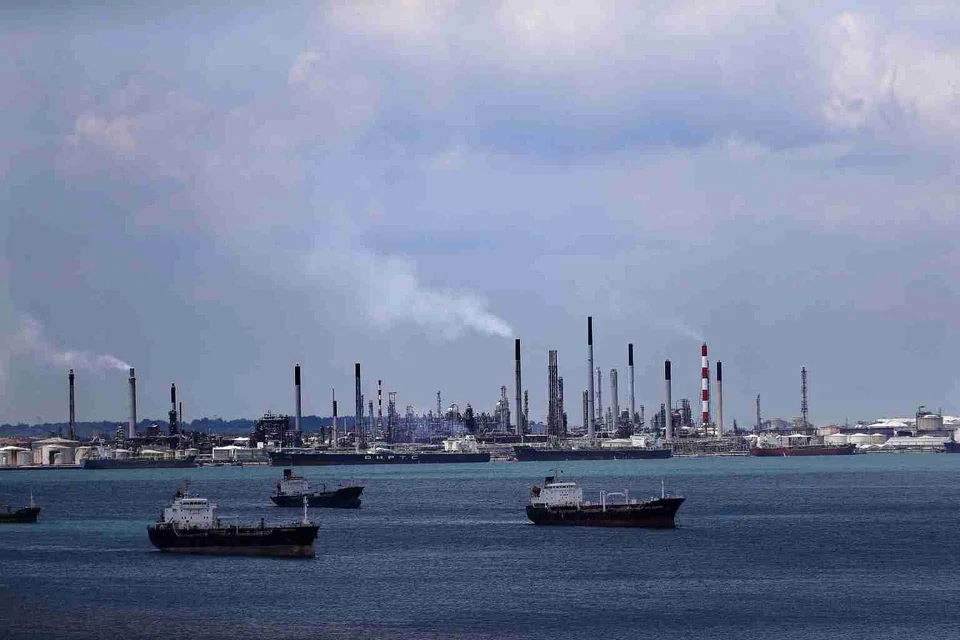
IT's too early to say if oil's robust start in 2021, led by output cuts and vaccine hopes, will bring energy stocks back in vogue soon. But the sector appears well clear of the troughs it saw in 2020.
Last week, crude's global benchmark Brent posted its biggest weekly gain in four months on a tight supply outlook after Saudi Arabia - the Opec oil cartel's biggest producer - pledged to cut oil output in February and March and raised pricing for crude sales next month to Asia. Iraq also followed suit. The surprise move led Brent prices to top US$55 a barrel - a level last seen in February 2020.
It is difficult to be too certain of oil's future direction, especially after the commodity's historic crash to sub-zero levels last year. Demand collapsed amid the pandemic, leading to a massive supply glut. But there are pockets of hope that after one of the worst-ever years for oil writedowns, firms' impaired balance sheets may be on the mend this year.
According to The Wall Street Journal, oil and gas (O&G) companies in North America and Europe wrote down roughly US$145 billion combined in the first three quarters of 2020 - the most for that nine-month period since at least 2010 and significantly more than during the last oil bust in 2015/16.
Historically, during downturns created by excess supply, companies have been able to wait it out as the market rebalances itself. But 2020's demand destruction and long-term pricing concerns forced them to take a harder look at the value of their oil assets. As cash flows diminished, painful writedowns were necessary.
Now, mass vaccination programmes are underway and sentiment is turning. There are still plenty of risks, with rising Covid-19 cases being reported across the United States, Europe and, more recently, China. The situation in China bears watching as it has been doing much of the heavy lifting, accounting for much of the recovery in oil demand. Any recovery depends on effective vaccine distribution and the ensuing reopening of factories, businesses and borders.
Based on economic trends, EY's Asia-Pacific O&G leader Sanjeev Gupta reckoned the worst may be over for Asia's O&G players.
"Demand recovery in the second half of 2020 and expectations of demand growth by five to six million barrels per day in 2021 have pushed the oil prices back to March 2020 levels, with a wide consensus among consultants, banks and brokers for Brent price to range from US$45 to US$55 per barrel in 2021. This may well be comfortable for industry players in South-east Asia to avoid making any further writedowns," he said.
On the back of that, some key players in the cyclical sector could stage a comeback. Singapore's sector stalwart Keppel Corp, the world's largest rig builder, made massive impairments of S$919 million, mainly related to its offshore and marine business, for the first nine months of 2020. The impairments were booked in the second quarter - the cruelest period for the sector last year - while there were no impairments in the ensuing quarter. With that, analysts say the conglomerate is more or less done with write-downs.
At Tuesday's close of S$5.67, Keppel's stock price is some way off pre-pandemic levels. This promises upside for investors, especially as the cyclical blue chip, like its peers in the sector, has lagged the recovery in the broader Singapore bourse.
This is also true for the oil and gas sector as a whole, as far as Asian equities are concerned. This means the sector could "disproportionately benefit" if growth solidifies, remarked HSBC Global Research.
Last November, in its business update for the third quarter ended September 2020, another industry bigwig Sembcorp Marine said new orders visibility has improved and the firm was actively bidding for new jobs following a recovery in oil prices. The firm suffered a net loss of S$192 million due to delayed execution of projects and higher costs recognised for rigs and floaters in the first half of FY2020. It was expecting losses to continue into the fourth quarter.
While the beaten-down O&G sector appears to have turned a corner, the story over the next few months will be the pace of demand recovery fuelled by the vaccine roll-out. Until then, heightened uncertainty over the pandemic risks derailing oil's recovery. Meanwhile, players will also have to contend with long-term structural shifts - chiefly the acceleration of the energy transition and their under-investment in the renewable space.