

Rupiah rout mauls Indonesia-linked Singapore stocks
10 biggest counters with substantial Indon exposure fell 8.8% from January to August

Singapore
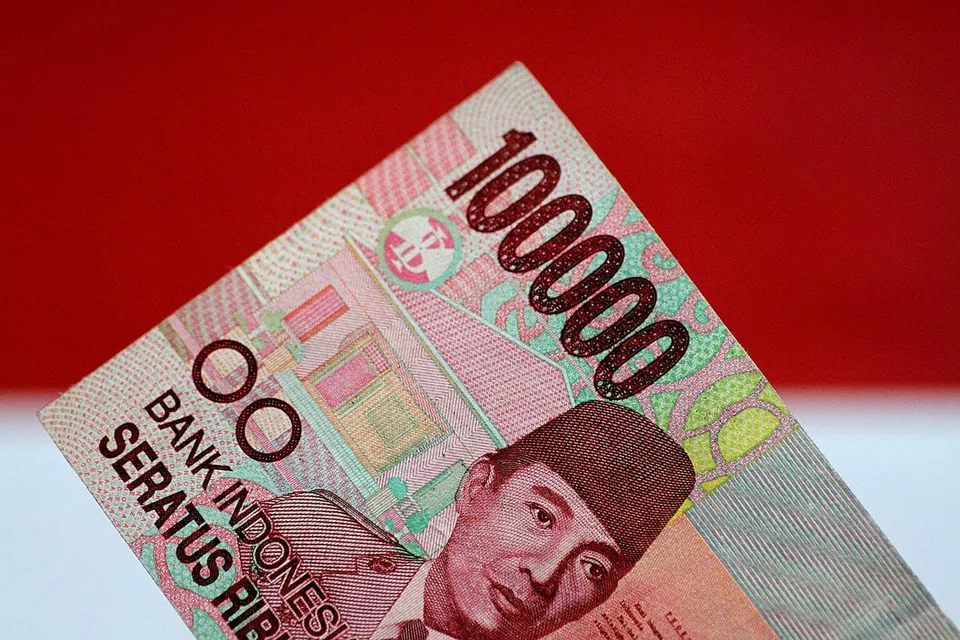
AS INDONESIA fights to shield the battered rupiah with a mix of rate hikes and market-intervention measures, Singapore-listed firms with exposure to South-east Asia's biggest economy are feeling the pinch as the currency stoops to its lowest ebb in 20 years.
On Wednesday, amid a sharp sell-off in emerging-market assets, the rupiah that has fallen over 2 per cent in recent days trudged past the 15,000 handle against the US dollar - some way off the 16,650 level it plumbed to back in 1998 but inching closer. Year to date, it has fallen 9 per cent.
DBS Group Research in a recent report: "Two pain points persist, although the severity of the sell-off is much higher than justified, purely by fundamentals or external balances."
It cited Indonesia's widening current account deficit and sizeable foreign ownership of domestic bonds, coupled with higher corporates' dollar debt.
The Indonesian authorities' have stepped up their defence of the rupiah by intervening in the domestic FX and bond markets and have raised rates four times since May.
But it has proven hard to reverse the downdraught amid a sell-off in emerging-market assets due to trade war concerns and rising US interest rates; the recent plunge in Argentina's peso and Turkish lira have piled on the pressure.
On the Singapore Exchange, certain stocks are already feeling some pain. The 10 largest capitalised stocks that derive more than 10 per cent of revenue from Indonesia have seen their average total return for the first eight months of this year fall by 8.8 per cent, going by data provided by SGX MyGateway.
This is in line with Indonesia's key equity benchmark, the Jakarta Composite Index, which saw total returns in Singapore-dollar terms fall 9.2 per cent over the period. The index has also under performed the STI, which has shed nearly 6 per cent this year.
The stock of Golden Agri-Resources (GAR) - one of three agriculture firms with over a billion in market capitalisation exposed to Indonesia - has fallen by more than 20 per cent this year.
The world's second-largest palm oil plantation company posted a net loss of US$39 million for the second quarter ended June 2018; a year ago, it was US$22 million in the black.
Weaker palm oil prices were the chief culprit, and a foreign-exchange loss of US$22.2 million further hurt its bottom line.
GAR's sales to customers within Indonesia and China are denominated in their respective local currencies, but export sales for most products and the cost of certain key purchases are quoted in US dollars. While the weakening currency should be accretive operationally to earnings, OCBC Investment Research pointed out that it also exposes the group to currency translation risks because its financials are reported in US dollar terms.
Jardine C&C, which has major Indonesia exposure through PT Astra, dived S$1.60 yesterday alone.
The hammered rupiah is also partly to blame for Lippo Mall Indonesia Retail Trust's (LMIRT) second-quarter distribution per unit - the Reit converts its rupiah distributions into Singapore dollars - which fell 34.4 per cent year on year to 0.59 Singapore cent.
LMIRT has fallen sharply this year compared to other companies with Indonesian exposure due to the rupiah's weakness and Indonesia's new tax regulations that had hurt its bottomline in the latest quarterly report. CGS CIMB Research last month cited forex weakness as an adverse downside risk for the Reit.
Japfa, an industrial agri-food company that produces and sells dairy products, protein staples and packaged food products in several fast-growing Asian countries, derived more than 80 per cent of its revenue last year from Indonesia.
The cocktail of key operating currencies - the rupiah, Chinese yuan, Vietnamese dong, Indian rupee and Myanmar kyat - combined with US dollar-linked import cost and financial reporting and a Singapore dollar share price "create an often unpredictable level of realised and translation-related volatility in reported profits", said Maybank Kim Eng Research.
Hence, forex-related risks and sensitivity to currency movements are key risks.
More pain awaits the Indonesian currency, say pundits. The third quarter is shaping out to be even rougher than the previous one. Emerging market pressure points - trade woes, geopolitics and renewed Italian and Brexit concerns - do not appear to be abating.
The emerging-market contagion could escalate with the US central bank primed for a rate hike this month; the market pricing for a rate hike in December has risen.
CMC Markets analyst Margaret Yang said: "The outlook of the Indonesian rupiah remains bearish as the central bank's effort to stabilise the currency has yielded little result so far. The trade deficit and high foreign debt is a mid- to long-term issue that is unlikely to be resolved immediately."
READ MORE: Jump in Indonesia's govt bond yields signals rate hike
TRENDING NOW

South-east Asia has lost Nvidia’s best salesman

Higher rates, weaker spending: Is the Philippines entering stagflation?

Who is Leo KoGuan, the Singapore-based billionaire backing Nvidia’s Jensen Huang?

Demand, tech capabilities position Apac and AI as Skyscanner’s next growth frontiers: CEO Bryan Batista

