

StarHub, Keppel confirm talks over potential M1 deal
Keppel says the discussions are part of its efforts to explore consolidation opportunities for M1

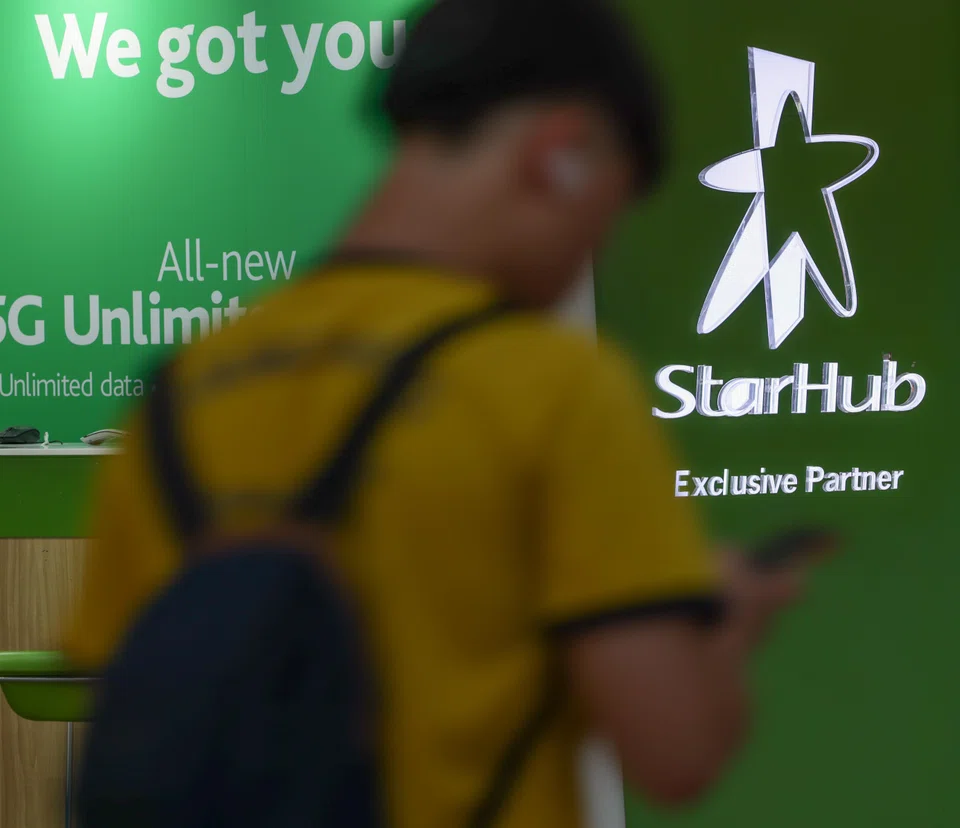
[SINGAPORE] StarHub and Keppel have confirmed that they are in talks over a potential deal involving M1, in the latest push towards consolidation in Singapore’s telecommunications sector.
In response to an earlier report by The Business Times, both companies said in separate bourse filings on Wednesday (Sep 23) that discussions are ongoing and that there is no certainty a transaction would materialise.
Keppel said it continues to explore consolidation opportunities involving M1, as it believes consolidation “is needed for Singapore’s telco sector”.
Sources told BT in an earlier report that both companies are in advanced talks over a potential M1 deal.
The talks come after Simba’s proposed S$1.4 billion acquisition of M1’s telco business fell through in May this year. Keppel has since said it remains open to opportunities to divest M1.
A separate report by trade publication TMT Finance noted that StarHub and Keppel have already appointed financial advisers, with JPMorgan advising StarHub, and DBS advising Keppel and M1.
A StarHub-M1 transaction would reduce the number of mobile network operators in Singapore from four to three, subject to regulatory approval.
StarHub and M1 were reported to have explored a potential merger in 2024, but no deal materialised then.
A potential deal would bring together two telcos with links to Temasek’s portfolio. Temasek is a controlling shareholder of both StarHub and Keppel, with a 56.1 per cent deemed interest in StarHub through Singapore Technologies Telemedia and other portfolio entities, and a 21.5 per cent total interest in Keppel, which controls M1.

Temasek is also the controlling shareholder of Singtel, giving it exposure to three of Singapore’s four mobile network operators.
A S$1.4 billion deal between Simba and M1 collapsed in May after the Infocomm Media Development Authority suspended its assessment of the transaction while investigating Simba’s unauthorised spectrum usage.
Simba on Wednesday admitted that it has exceeded its limits on its 2,300 megahertz spectrum. The telco attributed the unauthorised usage to a combination of both hardware and software issues.
In its earnings call in August, StarHub’s management did not rule out further market consolidation, amid weakening earnings due to intense price competition among Singapore telco providers.
“Operating four mobile operators in Singapore will only deliver weak returns to the industry,” said Paul Chew, head of research at Phillip Securities Research, in response to BT queries in August.
Chris Muckensturm, analyst at Bloomberg Intelligence, said in August that industry consolidation would be needed for incumbent operators to improve their mobile-service revenue.
Mobile-service revenue of StarHub fell 10.5 per cent year on year to S$245.3 million in the first half ended Jun 30, from S$274.1 million.
StarHub’s underlying net profit, excluding Ensign, fell 76.1 per cent to S$12.4 million, from S$51.9 million the year before, said Prem Jearajasingam, analyst at CGS International.
“Obvious” front-runner
Analysts have long speculated that StarHub was the “obvious” front-runner to acquire M1, even before the collapse of the Simba-M1 deal.
“We see a potential StarHub-M1 consolidation reversing the industry average revenue per user (ARPU) malaise,” wrote the RHB equity research team in a report in August.
To prepare for the potential consolidation, both StarHub and M1 have been trying to lower cost bases.
StarHub has committed to S$70 million in cost-saving initiatives. As at August, it had achieved 10 per cent of the target, its management said.
M1, on the other hand, also seeks to achieve S$70 million in annual run-rate cost savings by 2028.
In the year to date, it has achieved a run-rate cost saving of S$4 million a year and aims to hit S$10 million a year by end-2026.
In addition to lowering cost, Nikhil Eapen, CEO of StarHub, said then that the telco itself has been “driving consolidation”.
This comes on the back of the planned migration of MyRepublic mobile subscribers to the StarHub network, as well as the recent migration of customers from mobile virtual network operator (MVNO) redOne to its budget brand, eight.
Analysts said that bringing more customers to StarHub’s network would modestly improve StarHub’s negotiating position.
As larger network operators are preparing for consolidation, Eapen said he expects smaller MVNOs to be consolidated by the larger players.
“There’s a natural progression in which MVNOs will gravitate and then be absorbed and adopted by the large, well-capitalised players,” he noted during StarHub’s August earnings call.
On Wednesday, shares of StarHub closed flat at S$1.11, while shares of Keppel rose 1 per cent or S$0.11 to S$11.21.
Decoding Asia newsletter: your guide to navigating Asia in a new global order. Sign up here to get Decoding Asia newsletter. Delivered to your inbox. Free.
Copyright SPH Media. All rights reserved.
TRENDING NOW

Once staunchly pro-China, Malaysian Chinese businesses are now distancing themselves from Beijing

Looking beyond looming CEO succession, should UOB potentially pursue a transformative merger?

Could stablecoins be the future of money?

Grab CEO’s wife Chloe Tong on life with Anthony Tan and finding her purpose

