

A very dangerous suggestion
A maritime security service provider's statement, that only ships with guards on board could safely rescue refugees, is a step down a very slippery slope
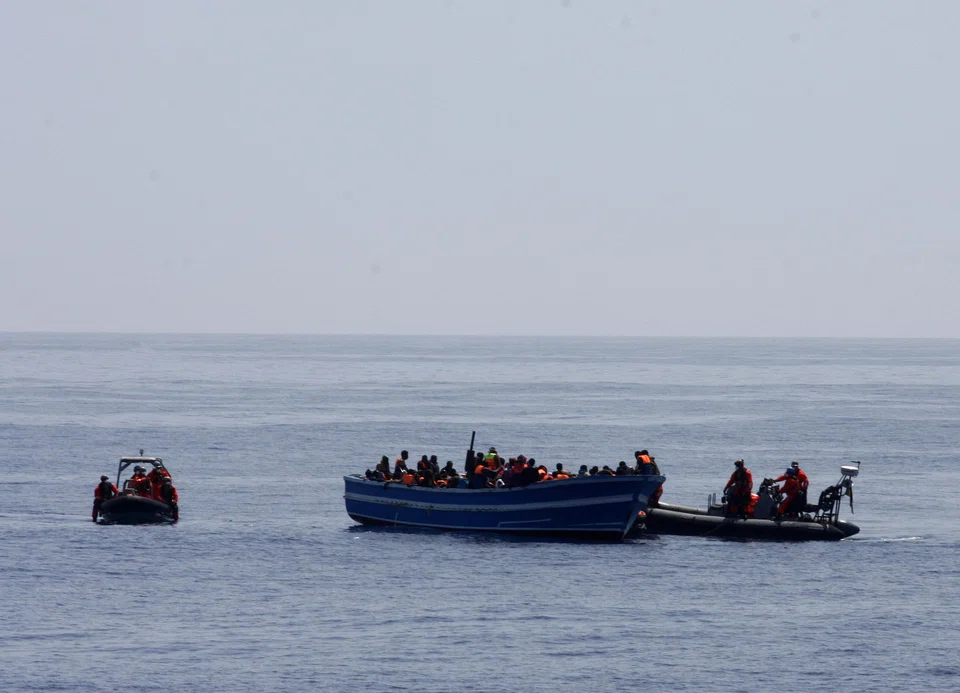
IT is not very often that a press release elicits such a strong negative response as one issued last week from Estonia-based maritime security company ESC Global Security.
It said that only commercial ships operating with security personnel onboard should assist in rescuing seaborne refugees. That is some statement and it is absolutely wrong.
But it was couched in convincing language. ESC Global Security's chief security officer Ivari Sarapuu said that the displacement of peoples from the Middle East and North Africa could present a terrorist threat to European states.
He warned: "Although merchant ships are bound by the Law of the Sea to rescue those in difficulty, they should exercise caution when taking on refugees, given the overwhelming numbers involved and the political volatility in the countries from which these people have fled."
Mr Sarapuu, the former head of training for NATO protection teams and the chief of vessel protection detachment on an EU ATALANTA warship operating off the Somali coast, believes that commercial vessels operating with minimal crew may not have the training required to ensure the vessel remains secure.
He added: "Ship safety and security must remain the number one priority. It will be difficult for a small crew onboard a ferry, tanker or bulk carrier to remain operationally effective if it has to provide humanitarian aid to hundreds of refugees. A shipboard security team, however, is able to monitor the boarding of the refugees, carry out any identification checks and ensure that their actions do not impact on ship operations."
"Qualified, properly trained and regularly tested security personnel are best placed to identify the likely number of vessels and people being encountered, contact the relevant authorities, provide medical assistance where required and maintain video and written records of the event, leaving the crew to continue operating the vessel safely."
The company's president and CEO Jaanus Rahumägi said: "The deployment of professional security guards on vessels is not limited to operations in known high risk areas. We suggest using security on vessels to avoid further escalation of potentially armed refugees carrying out crimes and acts of terrorism. With this in mind, specially trained security is strongly recommended to identify possible weapons or other prohibited items and, if necessary, to apply measures to maintain the safety of all persons onboard."
ESC quotes the UN High Commissioner for Refugees (UNHCR) as saying that 218,000 people, including migrants and refugees, crossed the Mediterranean by irregular routes in 2014 and that this trend is expected to continue throughout 2015.
It also mentioned the crisis in Rohingya, in South-east Asia, is on a similar scale, with the UNHCR estimating that a potential 200,000 people could be displaced.
The International Chamber of Shipping (ICS) was quick in responding to ESC press release.
It said: "UNCLOS (United Nations Convention on the Law of the Sea) and SOLAS are quite clear that ships are expected to rescue persons in distress at sea - there is absolutely no 'let out' clause that would allow a ship to sidestep that requirement on the grounds that a security detachment is not embarked."
ICS added: "We do not recommend that all ships transiting the Mediterranean should carry security detachments because the situation is first and foremost a humanitarian matter. Whilst it has been reported that one alleged terrorist did take a passage with mixed migrants, it is by no means a major consideration."
So what have we got here?
Basically ECS was advertising its services and many of its points have some validity. Ship operators do need to balance when to take on security services, though probably not in the Mediterranean.
However it is totally beyond the pale to say that merchant ships should not rescue refugees unless security guards are on board. That is wrong and illegal.
There is no "escape clause". All seafarers have an inescapable moral and legal duty to help anybody in distress. There is a very unfair aspect to this. Seafarers and the shipping industry are having to pick up the pieces where politics have failed and governments have not stepped in to provide adequate rescue services.
Nevertheless, the moment we allow the principle that all ships must always do what they can to rescue those in distress to be undermined we are on a very slippery slope.
TRENDING NOW

SoftBank’s Son plans US$50 billion Malaysia tech outlay: Anwar Ibrahim

Singapore expects all parties to honour commitments, says PM Wong after Indonesia cuts gas exports

Gas Supply may pursue remedies if contract breached following Indonesia’s export cuts: Tan See Leng

Why the biggest business decision about AI isn’t which model to choose

