Asian boom drives Singapore R&D in consumer goods
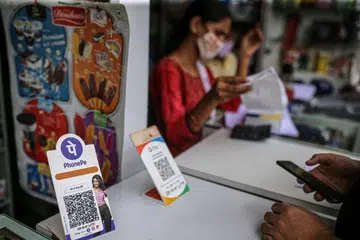
Retail sales volumes in Asia are tipped to rise by 3.3 per cent in 2020, outpacing the global average of 2.2 per cent

Annabeth Leow
Singapore
SLAMMED by a slump in global electronics, the manufacturing sector has spent the year in the red - but the fast-moving consumer goods (FMCG) segment continues to show promise.
Yet, with food and beverage (F&B) and tobacco just 5.4 per cent of Singapore's weighted factory output, it is industry research and development (R&D), not FMCG output, that could drive crucial economic contributions.
Singapore planners do not assign a specific manufacturing cluster to FMCG, which market research portal Statista defines as "goods with a useful life shorter than a year", including F&B, personal care and household products, and clothes and shoes.
But, led by Vietnam and India, retail sales volumes in Asia are tipped to rise by 3.3 per cent in 2020, according to the Economist Intelligence Unit, outpacing the global average of 2.2 per cent. Worldwide, it projects the consumer goods demand to be fuelled by soaps and cleaners, household audio and video equipment, and electrical appliances and houseware.
Despite weakening economic sentiment worldwide, Samuel Garcia, Asia-Pacific vice-president at Procter & Gamble (P&G), told The Business Times that "it's paramount for us to ensure that this growth, in this region, is disproportionate" to its size.
With Singapore's combined F&B and tobacco industry in the black in the first nine months of the year, the Ministry for Trade and Industry noted in mid-2019 that F&B manufacturing is "expected to continue to do well given firm demand conditions".
Still, Maybank Kim Eng economist Lee Ju Ye pointed to the limited profile of general manufacturing in Singapore: Between 2013 and the first half of 2019, the cluster accounted for just 4.4 per cent of all fixed asset investment, she remarked. In spite of strong growth this year, it "would not be sufficient to offset the downturn in electronics", a linchpin segment.
Instead, Singapore's appeal could come from its talent and innovation base, according to P&G's Mr Garcia. "In the past, decisions were based mostly on people costs... We are no longer a very highly manual operation. Our operations require high levels of skills and technology."
General manufacturing's share of business expenditure on R&D grew to S$136.9 million in 2017, up from S$41.6 million in 2002, government figures showed. The bulk of that spending hailed from the F&B and tobacco industry, as well as the "other manufacturing" segment, which includes items such as jewellery, sports equipment, toys, and even umbrellas.
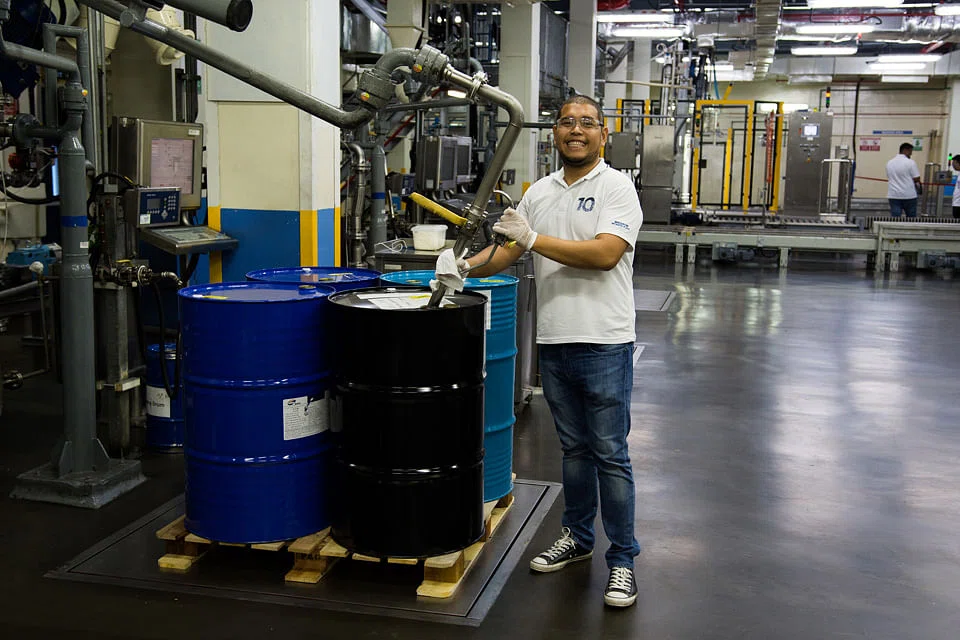
Given resilient consumer demand within the region, FMCG multinationals are making Singapore a home base for manufacturing, research, or both.
For instance, Kimberly-Clark Corp's Tuas mill churns out diapers, pull-up pants and wet wipes for 11 markets. Asia-Pacific president Achal Agarwal told BT in 2018 that two out of three Huggies baby wipes sold in the region will eventually be made in the Republic, while the company this year unveiled plans to double its exports from Singapore by end-2022.
And New York-listed healthcare company Abbott ships to customers around Asia the powdered nutrition products for adults and children - such as the Similac, Gain and Ensure brands - that are made at a US$300 million plant in Tuas South. The company also has an Asia-Pacific nutrition-focused R&D centre at Biopolis.
Meanwhile, snack maker Mondelez International's manufacturing operations here are limited to cocoa processing for plants outside Singapore, but it still opened an R&D facility for gum, candy and powdered drinks at its manufacturing centre of excellence in Jurong in 2018.
Fabienne Attal, its R&D director and site lead in Singapore, noted that the centre develops not just product formulas but production and packaging processes as well, with operations here supporting regional manufacturing in factories as far afield as Japan, China, Thailand and India.
Johnson & Johnson (J&J) doesn't manufacture in the Republic either, but Singapore still houses one of the group's three global research hubs in the region, with the responsibility to create what it called "Asian-inspired skin, hair and oral health products".
Adam Ricciardone, vice-president for consumer health R&D, even named a Singapore-based researcher, Diyana Sudarsono, as among the "local R&D talent" behind the Neutrogena Bright Boost "skin brightener" line.
The consumer health research centre in Singapore is tasked with building both innovation and partnership, said Mr Ricciardone, who heads R&D for J&J's Asia-Pacific consumer health business. He added: "Most importantly, it is to develop future generations of Asian-inspired and Asian-relevant innovations for consumers, not just here, but around the world."
Economist Tan Khay Boon, senior lecturer at SIM Global Education, told BT that made-in-Singapore consumer goods such as food and drugs have an attractive reputation for safety.
Still, he warned "the weight in this segment is still relatively small" compared with other goods-producing industries: "FMCGs can have the potential to play a bigger role in the manufacturing sector but more resources are needed to expand this segment."
READ MORE: Production lines mark the new frontier for Singapore innovation