

As growth slows, China looks to coal for quick-fire stimulus
It has added a total of 42.9 GW in the past 18 months, even as 30 countries have cut their coal fleets
Beijing
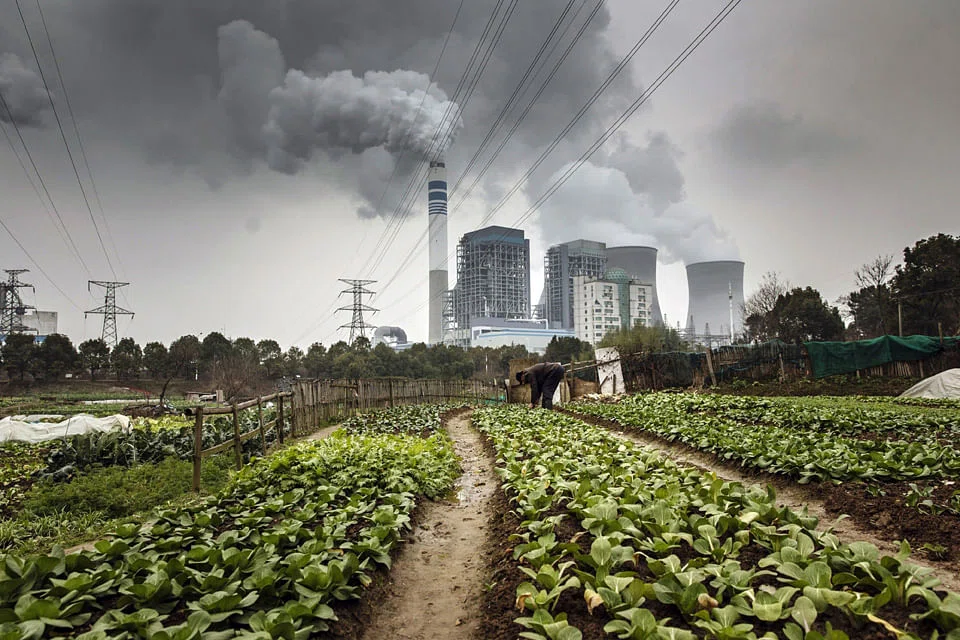
THE chimney stacks churn out a constant grey smoke, and the air reeks of burning coal.
A coal-fired power plant built by Chinese state-owned Zhenhua Oil sits in the countryside amid corn fields, 40 km from Tangshan, the steel capital of China. At full capacity, it produces 350 megawatts (MW) of power.
"The plant started production in August. But I don't really smell the coal now. You get used to it," said Cheng Shuyen, a man in his 50s who lives in a village about 200 m from the plant.
An hour's drive away, construction on two units belonging to Datang International Power has just been completed. The testing phase is nearly over and production should start soon, said a worker at the site.
In sum, Hebei province, where Tangshan is located, has added or will add 3,450 MW in 2019. This is part of a major coal push across the country.
China has added a total of 42.9 gigawatts (1 GW is equivalent to 1,000 MW) in the past 18 months, with most plants located in the western parts of the country. Coal plants that can produce another 147 GW of capacity are either under construction or suspension but are likely to be revived.
This is more than all existing coal plants in the European Union combined and almost 50 per cent higher than the 105 GW of capacity planned in the rest of the world. Even as China has added capacity in the last 18 months, 30 countries have been reducing their coal fleets significantly, including in India.
"China's proposed coal expansion is so far out of alignment with the Paris Agreement that it would put the necessary reductions in coal power out of reach, even if every other country were to completely eliminate its coal fleet," said Christine Shearer, an analyst at the NGO Global Energy Monitor, which has just published an extensive report on the re-emergence of coal plants across China based on satellite images.
Observers say this is the opposite of how China is positioning itself as a green-energy champion and a backtracking of recent commitments it has made on the international scene.
Carbon intensity - carbon dioxide (CO2) generated per unit of economic growth - was cut by 45.8 per cent from 2015 to 2018, beating the target by two years. Some forecasts say China could bring CO2 emissions to a peak by 2022, eight years ahead of schedule.
However, as growth slows and the trade war drags on, there are signs it is backing down and resorting to cheap energy to support growth, a recipe it knows well.
Pollution cuts over the winter this year are less than last year. In a recent ministerial reshuffling, the Climate department moved from being controlled by the state planner to the Ministry of Environment.
Premier Li Keqiang said last month that coal will remain a major component of the country's energy mix.
China argues the newly added capacity is cleaner than older coal-fired plants and will pollute less, but its current coal-fired plants are running at 50 per cent capacity, against about 70 per cent in Japan.
Most of the newly added capacity will be underutilised and could even hinder the development of the renewable industry, as developers will push the grid to connect to coal rather than wind or solar.
Ted Nace, another writer of the Global Energy Monitor report, said: "It's an easy way to get some stimulus and step away from the 'green revolution'. It seems like the coal and local heavy industry have asserted themselves in Beijing."
Ambitious proposals to cap CO2 and fossil fuel use are no longer expected to be included in the 2021-25 five-year plan, which is being drafted.
The China Electricity Council - the influential body representing the country's power industry - has recommended adopting a 1,300GW "cap" for coal power capacity by 2030, 290GW higher than the current capacity. This means adding two large coal plants per month for the next 12 years. Although this is just a proposal and does not mean it will be adopted by the government, it does show that the coal industry is gaining traction in Beijing.
"There are different points of view in the decision process. The coal lobby is one of them. The tariffs imposed by the US are seen as wanting to keep China down," said Aidar Turner, chair of the Energy Transitions Commission, a non-governmental organisation that promotes zero carbon growth by 2050.
"China has reverted to what it knows - which is coal. It's a national security asset," he added.
TRENDING NOW

South-east Asia has lost Nvidia’s best salesman

Higher rates, weaker spending: Is the Philippines entering stagflation?
Who is Leo KoGuan, the Singapore-based billionaire backing Nvidia’s Jensen Huang?

Demand, tech capabilities position Apac and AI as Skyscanner’s next growth frontiers: CEO Bryan Batista

