

Trade woes have opened doors for Singapore, says ExxonMobil
Company's new chemical head says the Republic is poised to benefit from regional growth

Annabeth Leow
Singapore
GLOBAL trade woes may have forced ExxonMobil to tweak its supply chains - but this has not been to the detriment of Singapore, a senior exec has said.
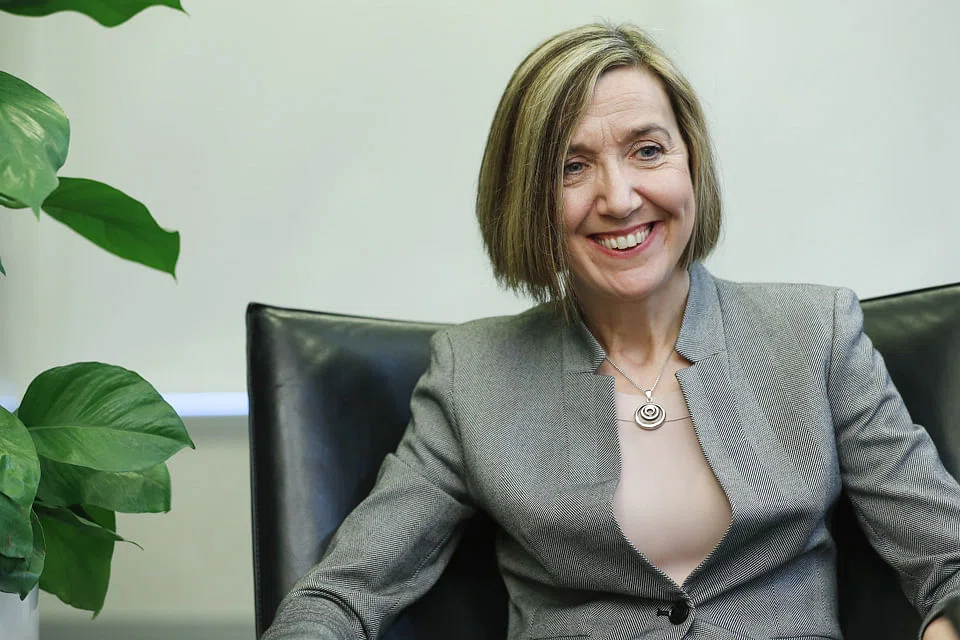
Karen McKee, president of ExxonMobil Chemical Company, said: "If anything, it's provided opportunity for Singapore, because we benefit here in Singapore from the free-trade construct within Asia."
The company veteran, who stepped into her new role on Monday, spoke to BT while in town for the opening of two chemical plants on Jurong Island.
ExxonMobil expects 4 per cent annual growth in chemical products over the next decade, with three-quarters of demand pegged to come from Asia. "We view Singapore as a very good hub to serve some of that growth from," she said.
The group aims to double its global chemicals earnings between 2017 and 2025. Its chemicals division made US$3.35 billion last year, down 25.8 per cent year on year, with about half the profit outside the US. ExxonMobil said the decline came on weaker margins as capacity rose.
On the potential impact of the new Singapore plants on ExxonMobil's global business, Ms McKee said: "Obviously, our business model is such that we have to qualify a new plant with our customers before we can fill it and utilise it; but we have plans to fill all of our assets that we build."
The facilities were completed in 2017, adding resin production capacity of 90,000 tonnes a year and butyl capacity of 140,000 tonnes a year. The resin plant, which makes glue for consumer products, was fired up in 2017; the butyl plant, which will make halobutyl rubber for tyres, is expected to start commercial operations in the second half of this year.
The halobutyl rubber industry made the news last April, when China mooted introducing anti-dumping restrictions on imports from Singapore, among other markets.
Ms McKee, who said ExxonMobil "can't support ungrounded unilateral tariffs", added: "Of course, we're in the context of a difficult trade environment between China and the US." But she stressed that "anti-dumping measures are founded upon having done harm within a market, and it's very difficult to do harm if you're not yet selling product". The Chinese dumping probe began when the Singapore plant was not yet active.
"So we're continuing to work through the Chinese government on remedies to this dispute," she said.
Asked whether new output from Singapore could affect ExxonMobil's headway into the Chinese market, she replied: "We are a global business and we have plants in three other geographies, so we can re-point our supply chains to serve different markets. It's not always the most efficient way to go about our business, but we are able to do so."
Singapore's chemicals cluster, which includes petroleum, petrochemicals and speciality chemicals, contributed some S$100.4 billion in output last year - about 28 per cent of overall manufacturing output.
READ MORE: Climb mountains, but leave no one behind: Chan Chun Sing
TRENDING NOW

KKR founders among investors buying 42% of Peter Lim’s Valencia; club valued at US$1.4 billion

Singapore’s central gas buyer affirms Indonesia’s role as ‘important partner’ amid export review warning

Why the biggest business decision about AI isn’t which model to choose

NEA issues notices to 10 Singapore-based companies, including Wilmar and APP, over haze

