

China's central bank not seeking yuan depreciation
Currency has lost more than 5% since mid-June and 7% since mid-April; downward pressures to continue as headwinds build
Beijing
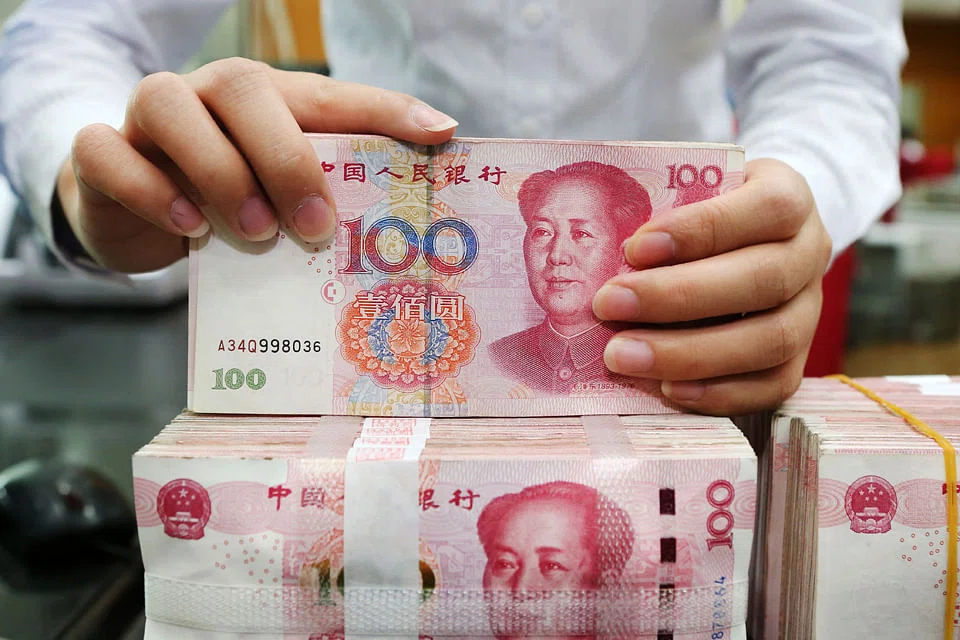
AS the yuan weakens amid the escalating trade row with its main trading partner, the Chinese government is unlikely to let its currency depreciate much more, analysts said.
The yuan has lost more than 5 per cent since mid-June and 7 per cent since mid-April and downward pressures are to continue as headwinds build in the Chinese economy.
The world's second-largest economy has yet to factor in the imposed tariffs on a set of goods by the US that could knock up to 0.3 percentage points off its GDP growth.
It is also facing tougher conditions at home with an ongoing campaign to deleverage and contain financial risks built up from decades of careless lending by banks.
On Friday, the yuan dropped below 6.8 to the US dollar as it fell for the seventh consecutive week.
Though there are no signs the People's Bank of China (PBOC), the central bank, has sold reserves to offset the drop, analysts say it could well implement more supportive measures soon to avoid any destabilisation of its currency.
The slump did not go unnoticed in the US, with President Donald Trump saying in a CNBC interview that the currency was "dropping like a rock". He said he was now considering taxing all of China's imports to the US, worth some US$500 billion.
However, analysts say the fall is market driven and is the result of China's recent more accommodative policies with investors weary of negative impacts of trade tensions on China's economy.
So far, the central bank has seemed to acknowledge the drop, but it could well intervene to support the yuan and avoid massive outflows, analysts say.
Though a softer yuan will allow exporters to cushion some the effects from the import tariffs, they feel the stability of the yuan will remain the priority for the government which is unlikely resort to a devaluation to support its economy.
They add the yuan could remain around the "6.7 to the dollar" range in the medium term though it has more room for depreciation as the Fed hikes rates in the US, narrowing interest rate differentials between the two countries.
DBS says the currency could fall as low as 6.97 to the dollar by the end of the year, which would result in a 12 per cent drop.
Bloomberg analysts estimate the Chinese currency is still over-valued by 6.6 per cent.
"The PBOC has a couple of good reasons to want to limit further declines: first, as it learned in 2015, any perception that the currency is on a one-way path could trigger a destabilising jump in capital outflows," said Julian Evans-Pritchard, an economist with Capital Economics.
"Second, China wants other countries' backing in the trade dispute. It doesn't want them to feel it is undercutting their exporters."
In August 2015, a surprise devaluation by the central bank rattled markets and caused huge sums of money to flee China
PBOC governor Yi Gang said earlier this month that he favoured a stable currency, while a government spokesman said on Monday that China has "no desire to boost its exports through competitive devaluation".
The PBOC has ample reserves to defend its currency as it did three years ago when its sold over US$1 trillion. Today, it still holds US$3.1 trillion in reserves.
Analysts say it could also continue to loosen fiscal and monetary policies further as indicated by several statements issued after ministerial-level meetings held this month.
"We believe that, if authorities were to become uncomfortable with RMB depreciation, there is scope for a much longer run of substantially lower-than-projected fixes," Nomura economists said in a note this week.
China operates a managed floating exchange rate. Inside China, the yuan can trade 2 per cent either side of a daily fixed-rate.
Other tools the central bank could use include: letting the state-owned China Investment Corporation invest in its domestic markets, restricting outflows as it did after 2015, or reigniting trade negotiations.






