Green energy drive: Singapore plans trial import of Malaysian electricity

Sharon See
Singapore
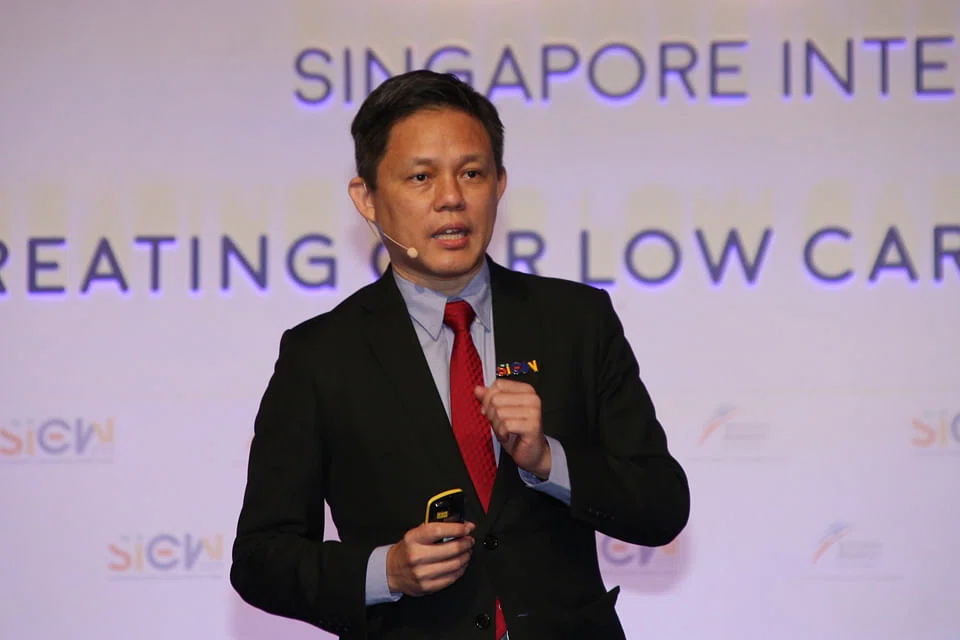
SINGAPORE is hoping to import electricity from Malaysia through a two-year trial, and has plans to eventually tap green energy from the region, Trade and Industry Minister Chan Chun Sing said on Monday.
"This will allow the region to share the clean-energy sources that different countries may have, and we'll start this with Malaysia. Once the concept takes off, we'll be able to extend this to other players," he said in his opening remarks at the Singapore International Energy Week (SIEW) 2020.
For a start, Singapore plans to import 100 megawatts (MW) of electricity from Malaysia over two years, said Mr Chan. He added that the trial will enable the authorities to assess how technical challenges can be overcome.
The amount will make up about 1.5 per cent of Singapore's peak electricity demand, and is not expected to have a significant impact on wholesale electricity prices in the city-state because it is a relatively small quantity, a spokesperson from the Energy Market Authority (EMA) said in response to queries.
The spokesperson said a renewable energy source is preferred, and that potential importers will need to specify the source of their supply in their proposals. EMA is planning to issue a request for proposal by March 2021.
The trial will be conducted using the Singapore-Malaysia electrical network interconnection, an existing undersea cable used to transmit electricity between the two countries, EMA's spokesperson said.
This interconnector, now primarily used for mutual support between the two countries' power systems, is being upgraded, the spokesperson added.
Meanwhile, the government is setting aside about S$50 million to fund low-carbon energy research, and is test-bedding efforts in hydrogen and carbon-capture utilisation and storage (CCUS), Mr Chan said.
"We'll be working to see how we can combine the use of hydrogen with our existing LNG (liquefied natural gas) mix, for us to have an even cleaner energy mix for Singapore," he said. LNG, the cleanest fossil fuel, provides for 95 per cent of Singapore's electricity generation.
The Republic is aiming to accelerate its solar adoption, potentially achieving 1.5 gigawatt-peak (GWp) of solar deployment by 2025, he said. This would be equivalent to 2 per cent of Singapore's total electricity demand.
This additional milestone to the target of two GWp by 2030 allows the authorities to "front-load the production" of solar power, he added. In the second quarter of 2020, Singapore's solar deployment was 390 megawatt-peak.
At the same time, Singapore is looking to develop better energy storage systems to address the intermittent nature of solar energy, he said.
To that end, EMA and Keppel Offshore and Marine have jointly awarded a research grant to a consortium led by Envision Digital on energy storage systems for the deployment of Singapore's first stacked energy storage system on Keppel's Floating Living Lab; the facility could reduce land footprint by up to 40 per cent.
These plans are part of the Republic's plans for powering green and designing sustainable market structures, which, together with the goal of living green, form its broader vision of being a "bright green spark" for the world, said the minister.
The five-day SIEW 2020 is taking place through a mix of virtual and physical sessions; it is the first time since SIEW's 2008 debut that this hybrid format has been adopted, made necessary by the Covid-19 pandemic.
It is also one of the first events in Singapore to pilot the use of Covid-19 antigen rapid tests for its over 200 participants at Marina Bay Sands, as the city-state starts its transition towards a Phase Three economic reopening.
READ MORE: Singapore-Denmark tie-up spurs innovation for greater good