

NTUC working on retirement, re-hiring ages of 65 and 70
Labour chief says that once agreed on by tripartite workgroup, changes will be phased in
Singapore
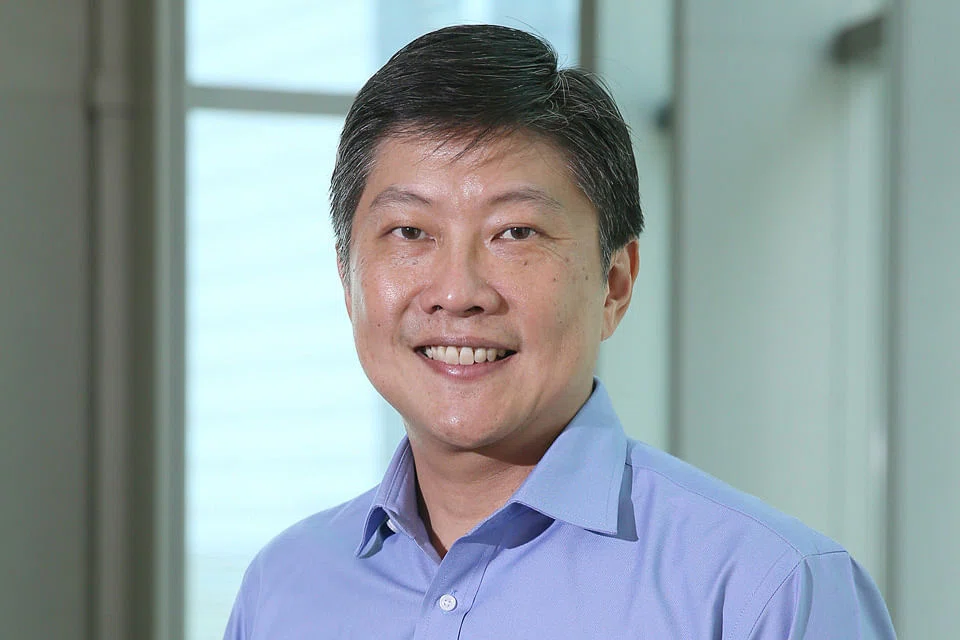
THE tripartite workgroup set up to address issues for Singapore's ageing workforce is now in the advanced stages of determining the new retirement and re-employment ages, NTUC Secretary-General Ng Chee Meng said on Monday.
Mr Ng, who was speaking at a media briefing on his joint Labour Movement May Day 2019 message with National Trades Union Congress (NTUC) President Mary Liew, said that NTUC hopes the ages can be raised to 65 and 70 respectively.
NTUC is part of the Tripartite Workgroup on Older Workers, which includes members from the Singapore National Employers Federation and the ministries of Manpower, Education and Health.
Mr Ng, who is advisor to the workgroup, said NTUC is conscious of concerns about the impact on business costs, and will help older workers upskill and reskill so that they can contribute productively if they wish to continue working.
"We still need a little more time to iron out some of the details, but once a consensus has been reached, we will ensure that changes are implemented in a phased approach so that all stakeholders have adequate time to adapt," he said.
"We will continue to work with our tripartite partners to ensure that we put the best policy forward - one which can serve our workers and businesses in a sustainable manner."
Manpower Minister Josephine Teo told Parliament in March that the tripartite workgroup had reached a consensus to raise the retirement and re-employment ages beyond the current 62 and 67 respectively. The group has been looking at this and other issues since May 2018, and Mrs Teo said the consensus on raising the ages was a "significant milestone."
Mr Ng and Ms Liew's joint May Day message emphasised the need for workers to be trained in tandem as Workers 4.0 in order to keep up with companies' Industry 4.0 business transformations as well as to secure better work prospects.
It described a Worker 4.0 as one who is "adept in navigating change and possesses adaptive, technology and technical skills."
Mr Ng shared that NTUC is encouraging companies to set up Company Training Committees (CTCs) to this end, and will have a dedicated group of training specialists work with union leaders and industrial relations officers to implement the CTCs.
The committees will help employers to design and better match workers' training to the companies' needs. The goal is to accelerate acceptance and adoption of new technologies, and help actualise transformation benefits more quickly.
"Our strategy to help our workers up-skill is through our Company Training Committees, because this is really the best way forward to ensure that workers can have better wages, better welfare and better work prospects," said Mr Ng. "The longer term strategy must be to enable our workers to ride on new technologies, to forge better work prospects."
The unions are already working with 18 companies including the PSA (see amendment note) and SIA Engineering to establish CTCs, and NTUC is in talks with "a few tens of companies" to set up more. It aims to have CTCs in 1000 companies over the next three years, impacting about 330,000 workers.
The message noted that while the Labour Movement's purpose remains to help workers secure better wages, welfare and work prospects, it is also innovating to better represent the new Singapore worker, beyond the rank-and-file worker to the professionals, managers and executives (PMEs) as well.
For instance, two new affiliate associations were formed in the last year - the Tech Talent Assembly to strengthen reach to infocomm technology professionals and facilitate their upskilling, and the National Instructors and Coaches Association to safeguard the interests of full-time freelance instructors.
"We have to innovate and reinvent ourselves, because the Singapore worker is changing and the new worker is coming to the front," Mr Ng said. "Whether you're a PME or rank-and-file, NTUC wants to be relevant to you and be able to represent you, not just in the traditional areas of protection, but in terms of training, career progression and placements."
Amendment note: A previous version of this article incorrectly stated the name of PSA Corporation. The article has been revised to reflect the correct name.






