Singapore 'can be conduit for capital, trade, technology into Africa'
Singapore
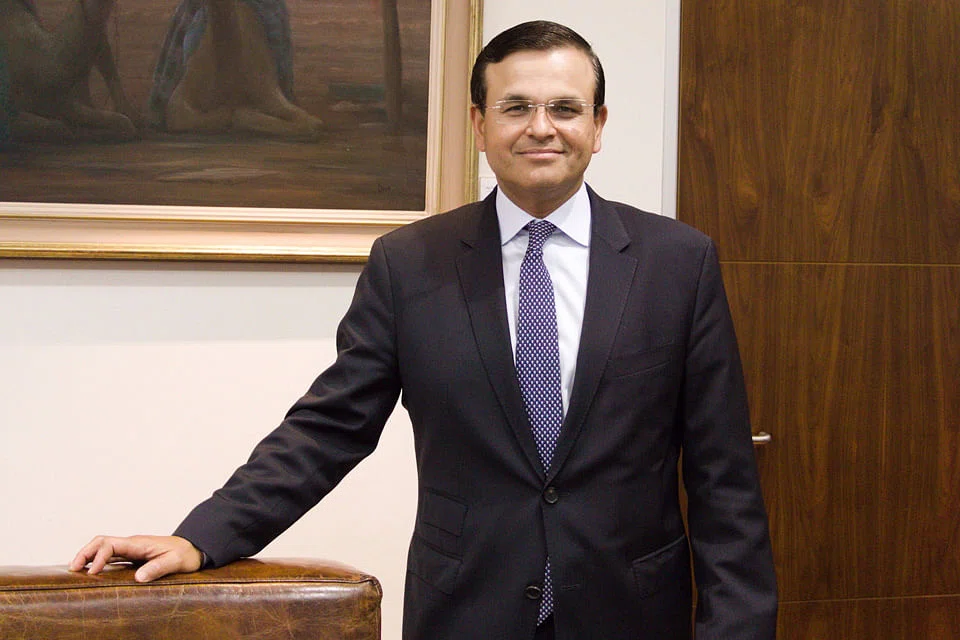
SINGAPORE can play a pivotal role in helping Africa access critically needed capital, says the regional chief executive for Africa and the Middle East for Standard Chartered Bank.
Sunil Kaushal, describing the continent as "capital deficient", said Singapore's role can be that of a "big conduit for capital, trade and technology flows into Africa".
Singapore can also be a one-stop shop for African businesses looking to access Asean markets, said the Dubai-based Mr Kaushal in a recent interview.
Financing required to meet Africa's infrastructure needs is estimated at between US$130 billion and US$170 billion a year, but the gap or capital deficit is estimated at US$108 billion, says the African Development Bank.
Some of the top markets in Africa that StanChart handles are Ghana, South Africa, Mauritius, Kenya and Nigeria.
"For Africans, the attractiveness of Singapore is one, English speaking, two, there is rule of law and it's a large capital centre," said Mr Kaushal.
As a major wealth-management centre, Singapore is accumulating funds from mature economies, wealthy individuals and family offices, all of which are looking for investments. He suggested that a portion of these funds be allocated to Africa.
Of course investors have to think long-term, he said, and it doesn't come naturally for Singapore investors to think of Africa as a place to park their funds. The investment arena there is now dominated by companies from India and China, and increasingly, Japan, he said.
China has more than 10,000 companies operating in Africa, and India, about half that number. Asean combined has fewer than 250, he said.
Bilateral trade between Africa and Asia in 2016 was US$346 billion, up from US$246 billion in 2005.
China, India, Japan, Taiwan and South Korea are Africa's top five Asian trading partners.
Singapore-Africa bilateral trade and investments has grown at a compounded annual growth rate of 5.2 per cent since 2005, and hit S$11.5 billion in 2015, going by official data.
At the end of 2014, Singapore's cumulative direct investments into Africa stood at S$22.1 billion. There are 60 Singapore companies operating across more than 50 countries in Africa.
One development that gets Mr Kaushal excited is that of Africa working towards a common market, which will be followed by intra-African trade.
"If you get this trade bloc right and you get the payment infrastructure right, then Asian countries accessing Africa will suddenly have an open market," he said.
Intra-European trade accounts for more than 69 per cent of the region's total trade; in Asia, the figure is 59 per cent, but in Africa, intra-African trade makes up only 18 per cent of the continent's total trade, he noted.
Forty-nine of Africa's 55 countries have signed the framework for the African Continental Free Trade Agreement to create a single continental market for goods and services, with free and unfettered movement of business, people and investment.
As urbanisation takes place and with the rise of a segment of young emerging-affluent people, investments are being made in health care, education, information, communications and technology, he said.
Other sectors like banking and insurance, power, logistics and agri-processing continue to grow and all need investments, he added.
There are already Singapore schools in the Middle East, for example, and he sees no reason why they cannot expand to Africa.
"Education is one area where people spend money without holding back."
Among the big Asean companies already in Africa is Singapore's Olam International, one of the world's largest food traders. It is in 15 countries in west Africa, engaged in sourcing, processing and marketing a wide range of products.
SGX-listed Wilmar, the world's largest producer of consumer pack edible oil, is in Ghana, Ivory Coast, South Africa and Uganda.
Indonesia's Indorama has invested in a US$2 billion Nigerian petrochemical plant.
Africa and Middle East contribute about 22 per cent to StanChart's revenue and profit, said Mr Kaushal.