

Special pens for voters to mark their ballots at upcoming General Election
Prospective candidates will get to complete the necessary paperwork online if they choose to

Lee U-Wen

Singapore
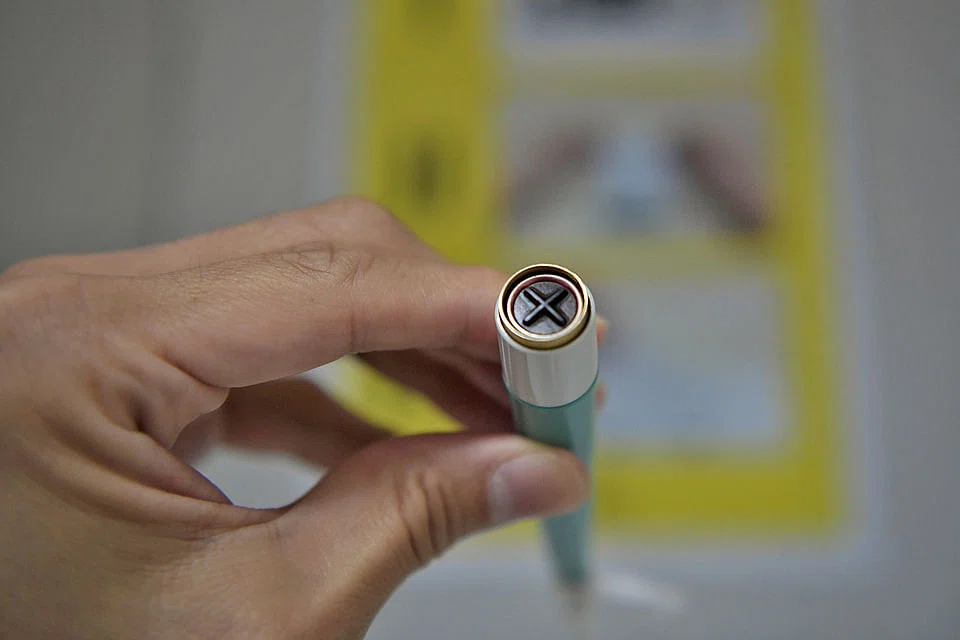
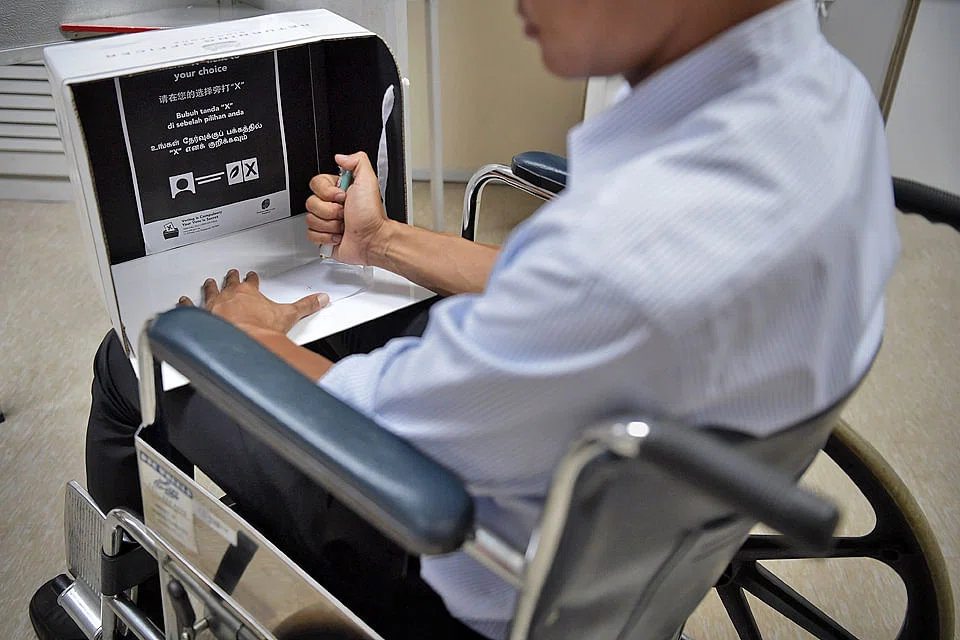
THE nearly 2.6 million citizens eligible to vote at the next general election in Singapore will, for the first time, use a "self-inking" pen that automatically stamps a cross on their ballot papers.
These pens make use of Japanese technology and have been used at elections in countries such as South Korea, the Elections Department (ELD) said as it gave local reporters a sneak peek into some of the new features of the upcoming polls.
The pens require minimal pressure by voters to mark the all-important "X" on the ballot paper to indicate their chosen political party.
The public will get the chance to test the pens at roadshows to be organised by the ELD. These roadshows will be held at community centres and clubs; no dates have been fixed yet, but the ELD said they will likely conduct these over several weekends after the Electoral Boundaries Review Committee's (EBRC) report is released.
The ELD, a department under the Prime Minister's Office, on Friday announced a number of new features that tap technology to make the overall election process easier for both candidates and voters.
Voters can log in to the SingPass website or its mobile app on their smartphones to check their personal particulars such as their voting eligibility, electoral division, polling district and voter serial number.
To better protect this confidential data, voters will require the SingPass two-factor authentication (2FA). The ELD is encouraging those without this 2FA - especially those residing abroad - to register for it early, as it typically takes about five days to process.
After Nomination Day, voters can access an electronic poll card using the SingPass app or ELD's voter services website.
Hard copies of the poll cards will still be mailed to all voters before Polling Day, but those who forget to bring this physical copy to the polling stations can also make use of the electronic version.
Meanwhile, a new electronic registration system will speed up the queues when citizens turn up at the polling stations, as officials will just scan identity cards instead of having to manually check every name against a hard-copy register.
The ELD will also use mechanical counting machines to tally all the ballot papers at the various counting centres at the end of voting on Polling Day.
Prospective candidates will be able to complete most of the necessary paperwork online, without their having to go to the ELD's office to pick up hard copies of the documents.
Before Nomination Day, they can pay their election deposits and get an electronic receipt, which saves them from having to make a trip to the Accountant-General's Department.
They can also apply for a political donation certificate and appoint election agents online, as well as apply for a minority community certificate (for group representation constituencies).
Candidates can choose to draft their nomination papers online, and the details of their proposers, seconders and assentors can then be checked to ensure they are all listed in the updated Register of Electors.
But the ELD stressed that candidates must still print out all nomination papers and get all the necessary signatures, and bring these along with them for submission on Nomination Day.
The department said in a statement: "ELD will hold engagement sessions for political party representatives to try out the new digital services for candidates and provide feedback.
"(They) will also be shown the new election equipment."
All eyes are now on when the EBRC - a committee appointed by the Prime Minister - will release its report showing the latest electoral boundaries in Singapore.
The committee was convened in August this year, ahead of the general election that must be held by April 2021.
In the last three elections - in 2006, 2011 and 2015 - the time frame between the announcement of the committee's formation and Polling Day has ranged from two to six months.






