What is heritage worth to you?
Efforts that use a numeric measure of the worth of ageing sites help create a more informed decision-making process regarding their maintenance or restoration.
IF you were attending the National Day Rally, the Miss Singapore contest, a concert by the Bee Gees, or your university convocation ceremony back in the 1960s/70s, chances are you would make a trip to Singapore's first and largest National Theatre along Fort Canning Park.
Today, most young citizens would not have heard of the long-gone National Theatre. The little but unique Singapore heritage has gradually given way to growth and development over the decades. More recently, parts of Bukit Brown Cemetery have also made way for the Pan-Island Expressway (PIE), and the Ellison Building is also to be affected by the construction of the North-South Corridor.
Many have increasingly realised the importance of protecting Singapore's heritage amid economic development. Yet the disheartening question to the government remains. Which site is the next to go? The Golden Mile Complex? The People's Park Complex?
Like societies all over the world, Singaporeans value heritage sites as manifestations of tradition, culture, institutional systems, social structures, history and the nation's memories.
Yet, we should not ignore the multi-fold benefits when heritage sites are replaced with modern infrastructure. The roads that have taken their place have shortened our travel time in the vicinities and even beyond by reducing congestion elsewhere. There are also positive spillover effects on the economy and on societal well-being at large.
Maintaining or restoring ageing heritage sites also requires financial resources, which could be otherwise be spent on education, taking care of the vulnerable, and other allegedly more pressing objectives. Prioritising heritage preservation could potentially obstruct not only development and urbanism, but also crowd out other policy goals.
Onerous trade-offs
These onerous trade-offs between heritage preservation and economic development are not unique to Singapore but is especially a struggle for our land-scarce and young city-state.
Given the high opportunity costs, the question is really to what extent should we preserve our heritage? How do we decide what to give up?
Resolving this quandary is more of an art than a science. After all, the intangible value society places on heritage cannot be compared to a higher monetary income or tangible time-savings. Heritage is priceless.
Or is it?
Most economists would prefer to call intangible goods, such as heritage, non-marketable rather than priceless; intangible goods do not have an easily observable value, but it is certainly not of infinite value.
If we can somehow place a monetary value on heritage, it would allow us to weigh this value against other policy objectives, and help us decide how much to sacrifice and to spend on preserving heritage.
In numerous previous studies, economists have valued museums and monuments, as well as all sorts of non-market goods ranging from the Great Barrier Reef, ecosystem services, and even life and love. But before dismissing this seemingly reductionist notion, we must first understand the premise in which societal preferences are measured.
To illustrate, if one reduces plastic bag use by 100 a year to save the natural environment, it is reasonable to say that the value this individual places on the environment is at least the inconvenience cost of not using the 100 bags.
Putting these preferences into monetary values is then only an issue of technicality utilising various statistical tools.
For example, if we can observe the differences in property prices of two estates identical in every aspect, except that one is close to the Botanical Gardens and the other far away, then this price differential is the value people place on the Botanical Gardens and are willing to pay extra for. Of course, perfectly identical estates do not exist, but differences in attributes can be controlled for.
Another method economists have employed to value museums and parks is to collect data on the money, time and effort incurred to visit the site. These costs are a proxy for the satisfaction that the individual receives by visiting the site.
Alternatively, by surveying the general public and asking them on the maximum dollar amount they are willing to donate to keep say, the Haw Par Villa, in existence, we will be able to gather information on how much they value it.
Recall that when the 856-year-old Notre Dame cathedral was engulfed in flames on April 15, 2019, poignant onlookers from all over the world started pledging donations for its restoration efforts. It is therefore indicative that these donors value the cathedral and are willing to diminish their wealth by some amount to see the cathedral restored.
For Singapore, it would be informative if policymakers could uncover how much each of our heritage sites is worth in accordance to societal preferences.
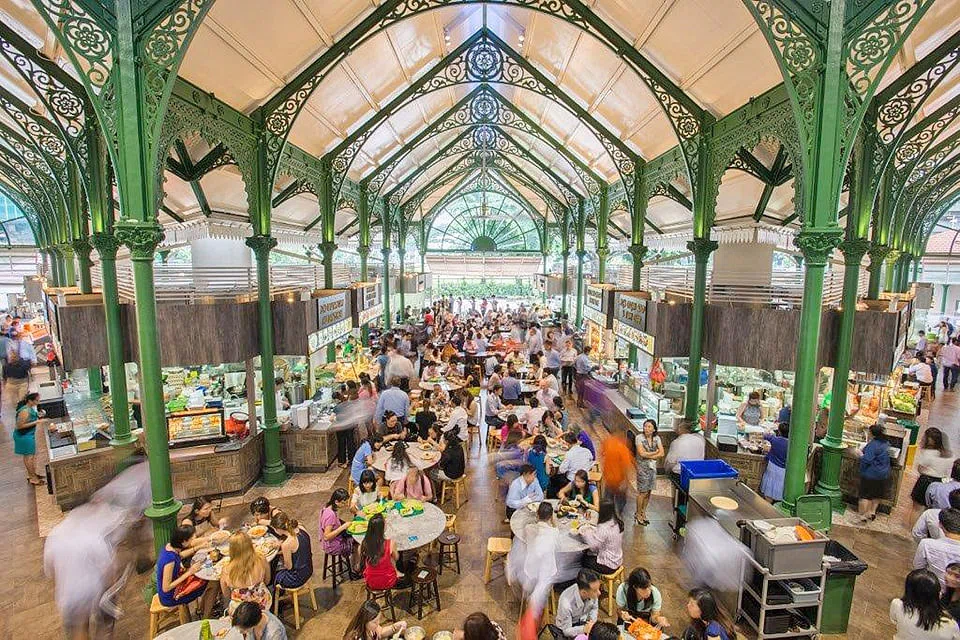
In this attempt, an exploratory study done at Nanyang Technological University elicited the economic values of Haw Par Villa, the former Tanjong Pagar railway station, and Lau Pa Sat. A survey was conducted on about 300 respondents, and controlling for the obvious confounds and heterogeneous effects, we found that an average individual is willing to donate S$4.10, S$11.85 and S$10.40 per year to preserve these heritage sites respectively. The numbers are then aggregated over the population and across future generations.
Respondents reportedly value these heritage sites for different reasons: to visit, for national identity, for passing on to future generations, for education, and others. A breakdown of the monetary values tells us that most of Lau Pa Sat's value comes from patrons who frequent there, while that of the former Tanjong Pagar Railway Station comes from its education purposes.
Most valued by society
The study also ranked eight heritage sites on an interval scale, by asking questions on whether respondents prefer to donate a dollar to site A or site B. Repeating such questions across all sites, we found that the Botanical Gardens is most valued by society, followed by other sites including the Fort Canning Command Centre and the Peranakan Museum.
These efforts, which use a numeric measure of heritage sites' worth, help create a more informed decision-making process. If one site is worth twice that of another, funds can be better justified for preserving the site society values more. If the site is worth less than its redevelopment options, it would be unwise to over-invest in its preservation.
The question that comes to mind is whether these monetary values are credible. The lasting debate among economists generally agrees that these methods are acceptable and fairly reasonable. Professor Euston Quah, a Singapore expert on such non-market valuation matters, had always argued that a number is better than none at all, for it provides some guidance to policy makers to make informed judgements between commercial and non-commercial goods.
Numbers might not be precise and should be adjusted for possible biases. It is also crucial that decision-makers are well aware of the limitations when presented with these values.
Before any decisions are made, policymakers should always bear in mind that destruction of heritage sites are irreversible, and that societal values in itself are dependent on the level of public awareness.
Using monetary values as a denomination for comparison provides clarity and serves as practical guidance. Such economic valuation techniques have been used by the National Lottery Heritage Fund in the United Kingdom, the Australian Heritage Council and the New Zealand Ministry of Culture and Heritage.
With rising civil activism, perhaps it is time Singapore considers economic valuation as a viable supplement to our consultative approach in heritage preservation.
Share with us your feedback on BT's products and services