

China to increase support for economy in 2023
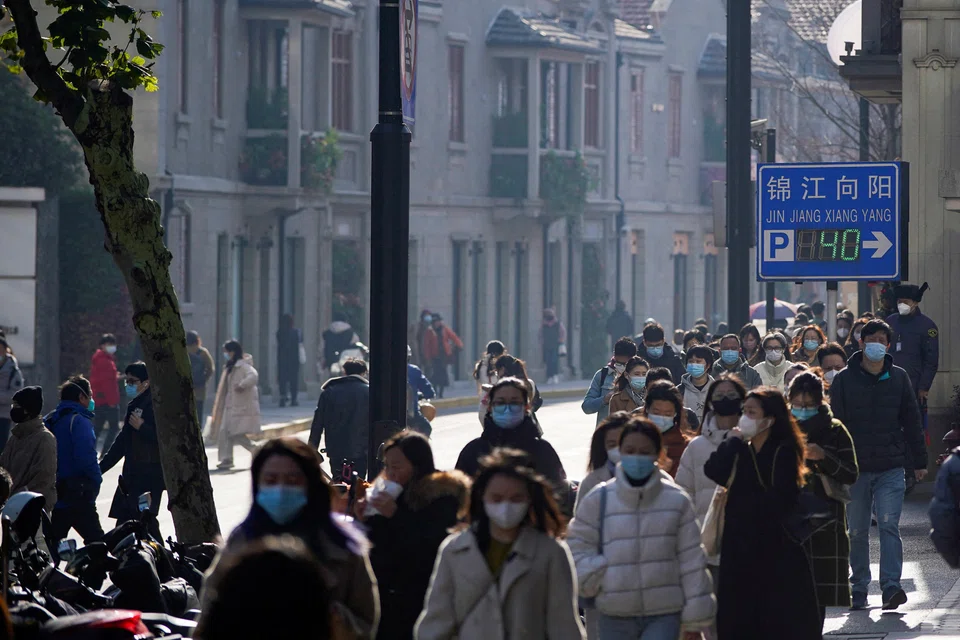
CHINA will focus on stabilising the economy in 2023, and step up policy adjustments to ensure key economic targets are hit.
This was announced on Friday (Dec 16), in a statement issued after the Central Economic Work Conference, an annual agenda-setting meeting of Chinese leaders and policymakers. The closed-door two-day meeting was convened to chart the economy’s course in 2023. It was watched closely by investors amid expectations that Beijing would ramp up support measures.
The statement, published by the official news agency Xinhua, said the government will implement a proactive fiscal policy and a prudent monetary policy next year.
It said that fiscal policy will be stepped up and become more efficient while maintaining the necessary intensity of spending. Monetary policy, meanwhile, will be precise and forceful, keeping liquidity reasonably ample.
“Next year, we will prioritise stability and strive for progress,” Xinhua cited the statement as saying. The statement also said that China should better coordinate epidemic prevention and control, and economic and social development.
Chinese policymakers have moved to address two key drags on the economy: the zero-Covid policy and a property sector downturn. But analysts believe it will be a while before these efforts bear fruit. The economy grew just 3 per cent in the first three quarters of this year, and is expected to stay around that rate for the full year, well below the official target of around 5.5 per cent.
China faces multiple headwinds following last week’s abrupt move to relax zero-Covid measures. This came after historic protests against President Xi Jinping’s policies aimed at reducing infections among the populace. The subsequent surge in infections has hit businesses and consumers, and has placed pressure on a fragile healthcare system. And this all comes amid a weakening global economy, which has hurt Chinese exports.
Xinhua said that China’s economy also faces pressure from shrinking demand, supply shocks and weakening expectations. It lost more steam in November, as factory output slowed and retail sales extended declines, hobbled by the widespread virus curbs and surge in cases. Both measures missed forecasts, and clocked their worst readings in six months.
The statement said that the government will take steps to expand domestic demand, prioritise consumption recovery, and achieve major economic targets in 2023.


Government advisers told Reuters last month that they would recommend the adoption of 2023 growth targets between 4.5 per cent and 5.5 per cent. Meanwhile, a central bank adviser said that China should set a target no lower than 5 per cent. Following this, proposals that China should aim for growth around 5 per cent next year gained steam in the run-up to the Central Economic Work Conference.
Although key economic targets were expected to be endorsed at the meeting, they will not be announced publicly until China’s annual parliament meeting, usually held in March.
On housing, the statement said that top leaders reiterated China’s principle of “homes are for living in, not for speculation”. They pledged to support strong housing demand, it added. REUTERS
Decoding Asia newsletter: your guide to navigating Asia in a new global order. Sign up here to get Decoding Asia newsletter. Delivered to your inbox. Free.
Share with us your feedback on BT's products and services
TRENDING NOW

Once staunchly pro-China, Malaysian Chinese businesses are now distancing themselves from Beijing

Stocks to watch: HPL, Aims Apac Reit, Zico, Advanced Systems Automation, ComfortDelGro
‘How many will survive?’: Bubble fears arise as China’s humanoid robotics face reality check
Smaller board lots can’t fix a market run by three banks

