

Continued innovation the key to Singapore-US infrastructure tie-up
With S-E Asia the No 1 destination for US foreign direct investment in Asia, forming this partnership bodes well for the parties
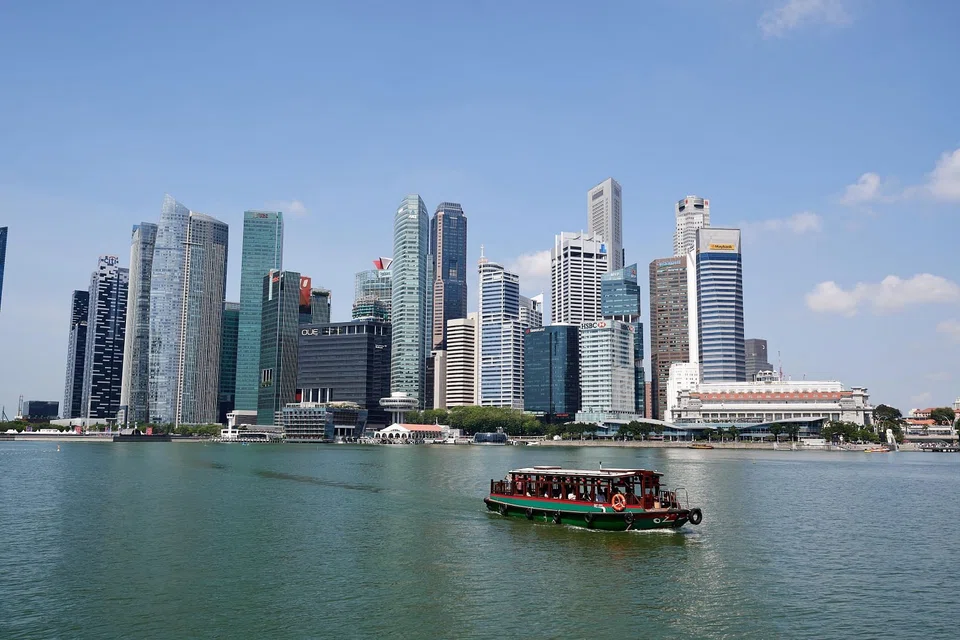
SINGAPORE'S plan to work with the United States on infrastructure projects across South-east Asia will strengthen the economic corridor, but the success of this tie-up will depend upon continued innovation.
The memorandum of understanding signed last week will see the two countries' infrastructure agencies work together to facilitate private sector deals across the region in areas such as energy, water, waste, transportation and urban development.
The commercial opportunity for both sides is potentially significant and wide-ranging. Already, Asean is the US's fourth largest export market; trade with Asean supports more than half a million American jobs; there are nearly 4,700 American companies in the region; and South-east Asia is the No 1 destination for US foreign direct investment in Asia.
Singapore benefits from the flow-through of this regional activity through trade, corporate hubbing and ancillary professional services activities around these firms.
Moving forward, Asean presents the US with a low-cost production option, a growing consumer base, and strong trade and investment ties.
But Asean is not without challenges. To illustrate the point: for all the recent speculation of a new wave of supply chain diversion to South-east Asia, we have yet to see capital investment shift to the region in any meaningful way.
This is because foreign companies will not commit unless they're confident that production orders will be met and remain stable, and that South-east Asia improves its production technology, efficiency and regional integration.
Underpinning all of this is a need to improve the region's infrastructure. South-east Asia's infrastructure gaps and funding constraints are well documented and probably best summarised by the Asian Development Bank's (ADB) estimate that developing Asia needs US$27 trillion of investment over the next 10 years. The ADB says the public sector will be able to cover less than half the cost.
The US is not alone in wanting Asean to improve its infrastructure in order to make it a viable lower-end production option. Despite being in a protectionist era, China, Europe and Japan have similar infrastructure programmes in place with the region.
To their credit, governments in the region are beginning to seek out the private sector. For example, Indonesia has spent US$300 billion over the past four years to upgrade the country's power plants, ports and land transport facilities, and President Joko Widodo recently announced a further U$S169 billion in spending in 2019. And Vietnam announced during its recent economic forum that it will be actively seeking private investment for its infrastructure projects.
But a lot more is needed if Asean is going to come anywhere close to bridging its infrastructure gap and potential.
So if there is a clear strategic imperative for the US's investment in Asean, why does it need Singapore as a partner? Why not just go at it alone and direct?
The tie-up largely reflects Singapore's reputation as a regional connector of capital supply and demand.
Historically, two-thirds of South-east Asia's infrastructure financing has been arranged out of Singapore.
Its experience in public and private placements, deeper capital markets and project finance means it can connect international investors with projects in the region, and makes it a crucial financial centre for end-to-end financing support.
Seen through this prism, the agreement with the US makes absolute sense.
However, Singapore cannot rest on its laurels but instead needs to continuously offer value to partners like the US, China and Japan. One way it can do this is by providing a ready-made framework for selecting viable and bankable projects.
Here, Infrastructure Asia - a new infrastructure-focused body set up by the Singapore government to assist in facilitating and aligning Singapore-based expertise and capabilities with regional project requirements - has the potential to add real value.
Sharing best practices
An alternate channel is through the Asean Smart Cities Networks (ASCN). A brainchild of the Singapore government during its 2018 Asean chairmanship, the ASCN was developed in response to the likely infrastructure strains that will occur from the expected 90 million people migrating to Asean's urban areas between now and 2030.
The ASCN is a platform for each of the region's countries to share Smart City best practices, link member cities with private investment, and secure funding from multilateral funding institutions, including China's Asian Infrastructure Investment Board. It makes sense for the US to channel investment activity through this construct.
This is a good start but the pilot is limited to 26 cities across South-east Asia. One way Singapore can further innovate will be to widen this to more satellite cities across the region as well as widen the focus beyond "smart" projects to sustainable infrastructure development projects generally.
Beyond project selection and financing, Singapore can continue to add further value as projects move from the financing phase to construction. With any large project, it is inevitable that there will be disagreements. In fact, the World Bank has proposed the use of its existing International Centre for Investment Dispute Resolution to provide this important role for Asean's infrastructure buildout. Singapore, with its sophisticated legal system, can also have a role in dispute resolution.
These are just three examples; there are many other areas in infrastructure development where Singapore can take a leadership role across the region including the development of local currency capital markets, the mobilisation of institutional funding into infrastructure; and the development of green financing procurement and markets.
Singapore and the US have a strong and steady relationship and the way to galvanise it is to get behind a common cause. The sustainable development of South-east Asia's infrastructure, and the role both countries can play in it, offers a great opportunity.
Forming this partnership is a strong start but the litmus test will ultimately be based on the projects it brings to life. This is where the hard work begins, and to succeed, Singapore will need to keep the project finance innovation going.
TRENDING NOW

OCBC customers face difficulties accessing online, mobile banking services

SGX CEO Loh Boon Chye to step down; succession planning under way

Waymo founder predicts ‘landslide’ robotaxi adoption in Singapore, driven by high car costs

Vietnam’s northern provinces, not Hanoi or Ho Chi Minh City, are powering near 10% GDP growth

