
Co-living player The Assembly Place eyes pole position, overseas expansion
Samuel Oh
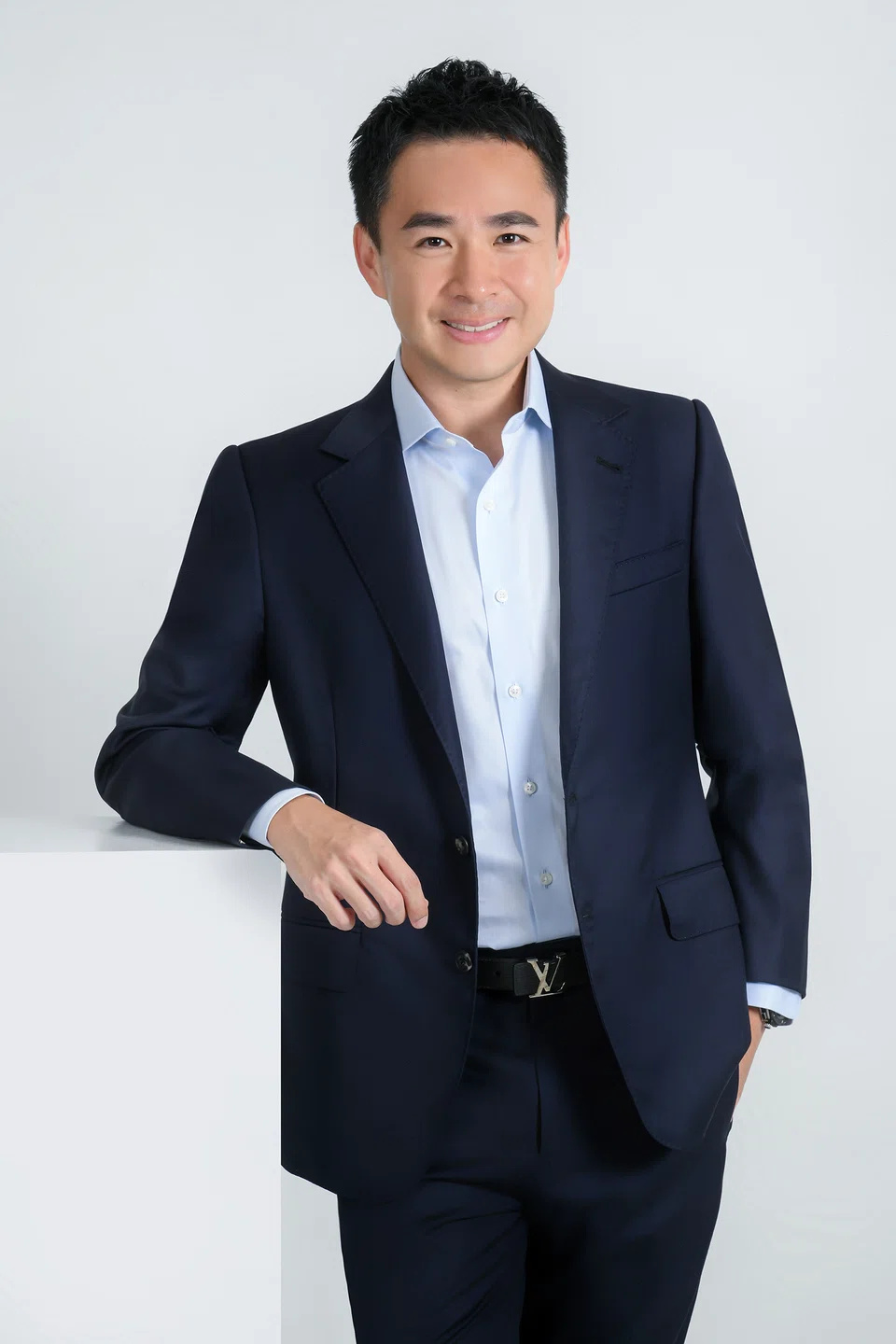
HOMEGROWN co-living player The Assembly Place (TAP) is not sitting on its laurels, even after having racked up exponential growth in the last five years.
Started in 2019 with just six rooms in a landed home, the startup surpassed 1,800 rooms in 102 assets by end-2023, and manages S$500 million in assets. In 2021, it was managing 550 rooms in 16 assets worth S$250 million.
Net revenue shot from S$282,851 in 2019 to S$15.6 million in 2023; earnings before interest, taxes, depreciation and amortisation (Ebitda) have been positive since 2020, with the latest figure at S$1.18 million in 2023.
Founder and chief executive officer Eugene Lim started TAP as a “social experiment” to see if co-living could work here.
It helped that he had been in real estate for more than 17 years, amassing plenty of connections, he tells The Business Times (BT). “There was a lot of goodwill built” that drew investors to him.
The next hurdle was to convince investors that co-living had a future. As the concept was fresh, he had to invest time and effort explaining what it was, and pointing out that it was not just about renting out rooms.
A co-living space is where “like-minded individuals gather to foster a lively and harmonious community”, and they do this amid facilities and shared spaces where they live, work, play and socialise.
Post-pandemic, there was more demand for renting following construction delays and elevated rents in other housing types. These helped to convince investors that there was a market to tap.
Currently, 50 per cent of TAP’s assets are on straight leases, and the rest, on an asset-light strategy of management contracts. Lease periods are on a “5+5”-year arrangement.
Being asset-light enabled the company to achieve higher-than-usual rental yield. TAP’s portfolio has garnered between 4 and 5.5 per cent yield; an asset in the eastern part of Singapore even hit 6.7 per cent, Lim says.
Locals now make up 5 per cent of the business, down from 30 per cent in the 2020-to-2021 pandemic period. The proportion of foreigners has risen from 70 per cent to 95 per cent.
Watchful for new sources of revenue, TAP has moved into student housing. It now owns a 10 per cent equity stake in a 426-bed student accommodation development at Telok Kurau, acquired in November 2022.
TAP is the development manager and operator on a 5+5-year lease for the project, on land acquired for S$40 million by Apricot Capital.
Lim says about 35 per cent of TAP’s (co-living) members are students, most of whom are on short-term courses. These young tenants may not be able to afford the rentals at TAP’s premises catering to working adults, who may pay – depending on property type – S$1,500 to S$2,000 a month for a room without an attached bathroom, and between S$2,000 and S$2,800 for rooms with such an en suite amenity.
With just over a third of TAP members being students, he realised there was a market for them. Student housing in Singapore mostly consists of bunks beds and minimal facilities, with the market not being as mature as those overseas, in the United Kingdom, for example.
Lim hopes to fill the gap, and envisions the campus functioning as a well-contained “capsule system”.
He is also looking to fortify his business. In the co-living market, barriers to entry in the early stages are low. “Anyone can come into the space. It is like a warring state because there is no big dominant player,” he says.
Today, the market is consolidating, and big players are muscling in.
Competition has come hard and fast from operators such as LHN’s Coliwoo and Bespoke Habitat. Others such as lyf are backed by real-estate giant CapitaLand Investment’s lodging unit, The Ascott.
The market is saturated with some 20 players. But landlords are more educated these days and prefer to work with top operators for security and branding, Lim says.
Bigger operators are also able to give better rates due to economies of scale; smaller operators may face cash-flow issues.
The market has accepted co-living as a housing option, he says, plugging the lack of short-term leases in Singapore.
Last December, the government released two plots of land in Zion Road and Upper Thomson to pilot long-stay serviced apartments. Around 535 units are planned.
“We can never be like the big boys, and we continue to be flexible in terms of our strategy,” Lim says.
Unlike some competitors who take up only condominium units, TAP operates in landed houses, purpose-built spaces, shophouses, hotels, hostels, serviced apartments and condos.
In March 2022, it acquired fellow operator Commontown, adding 110 rooms to its portfolio. TAP itself has been approached by “smaller operators”, Lim says.
“We like the idea of growing independently. Culture and DNA are important, and TAP is just starting out.”
A merger is like a marriage, he quips: “You have to ensure it works, or you might end up in separation.”
In November 2021, TAP raised S$5.55 million in seed funding led by Oxley Holdings’ Eric Low, who was the cornerstone investor.
A pre-Series A round in end-February or March aims to raise S$3 million to S$5 million; plans have been made for another S$15 million to S$20 million in Series A funding for overseas expansion.
In terms of project pipeline, the company has secured a contract to manage the third and fourth levels of Serene Centre, a commercial building in Bukit Timah acquired by Apricot Capital. Renovation is due to complete around the first quarter of 2025.
The upper floors will be converted for serviced-apartment use. TAP will also manage the retail units on the first and second floors.
TAP’s foray into retail also includes an upcoming project in the Lavender area, where it will manage the first and second levels of a retail mall and 90 co-living rooms.
It has also bagged a contract from MOH Holdings to run lodging facilities for foreign healthcare workers. Partnering with TS Group, the three sites are on a 10-year lease and will feature co-living concepts to house 1,180 healthcare professionals.
With this addition, TAP claims to be the largest co-living operator in Singapore with nearly 3,000 rooms; it aims to hit 4,000 rooms by end-2024. The plan is to further scale up the business in the next three to five years with a target of 10,000 to 15,000 keys, Lim says.
“I believe that if TAP can build a critical mass and become the market leader in Singapore, that’s when we will be ready to bring the brand overseas.”
TAP is building a 66-room purpose-built co-living space in Kuala Lumpur, Malaysia, expected to be completed by April. It is also eyeing some ageing assets in downtown KL, and looking at 250 to 300 more rooms by the end of 2024.
Lim is also studying three to five cities for overseas expansion in countries such as Vietnam, Japan and Australia.



