Tighter loan limits could feed demand for smaller flats, raise rentals further, curb overall buying
Published Fri, Sep 30, 2022 · 02:50 PM
    • Since buyers of HDB flats who use HDB housing loans will only be able to borrow a smaller loan quantum now, some could downsize to smaller flats.
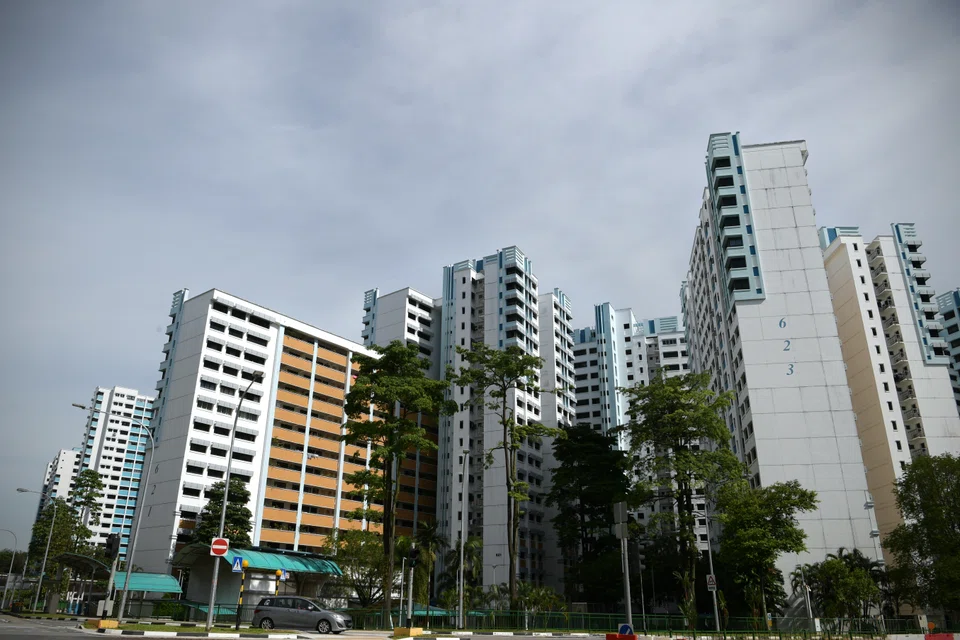
    • Since buyers of HDB flats who use HDB housing loans will only be able to borrow a smaller loan quantum now, some could downsize to smaller flats. PHOTO: BT FILE

    TIGHTER limits on property loans announced late last night will shrink homebuyers’ purchasing power and pinch on affordability, market analysts observed. And this could feed into greater demand for smaller flats – specifically resale 4-room Housing Development Board (HDB) flats – while also leading to higher rental rates and a slowdown in demand for private property.

    As Wong Xian Yang, head of research, Singapore at Cushman and Wakefield summed up: “In all, the new measures increase market frictions and should slow resale HDB price growth. However, given resilient underlying housing demand, low unemployment rates and an anticipated shift in demand from the private market, HDB price growth could still remain positive in the fourth quarter of 2022, albeit at a much slower pace as compared to previous quarters.”

    Catherine He, director and head of research, Singapore at Colliers, said: “Apart from cooling the HDB resale market directly, these measures will indirectly cool the private residential market, as it will shrink the pool of HDB upgraders profiting from higher HDB prices. As such, mass market projects could be most impacted, as this segment is most dependent on upgraders. Cash-rich buyers such as high-net-worth individuals will be less affected as they require less leverage.”


    He noted that as the tighter loan limits applied not only to residential property, “non-residential property likely to be most affected by the latest measures would be commercial properties purchase by individuals for investment – these include shophouses, strata office and retail units, as well as smaller industrial properties”.

    To ensure prudent borrowing and moderate demand, the government hiked the medium-term interest rate floor used to compute the Total Debt Servicing Ratio (TDSR) and Mortgage Servicing Ratio (MSR) for property by 0.5 percentage points from today. It is now at 4 and 5 per cent for residential and non-residential properties respectively. 

    For public housing flats, an interest rate floor of 3 per cent will be used for computing the eligible loan amount available to borrowers seeking HDB loans for public housing, while the Loan-to-Value (LTV) limit for HDB housing loans will be cut from 85 per cent to 80 per cent. 

    Further, there is now a wait-out period of 15 months for private residential property owners as well as former private property owners to buy a non-subsidised HDB resale flat. Prior to today, private property owners were able to buy a non-subsidised HDB resale flat on the open market provided they sell their private properties within 6 months of the HDB flat purchase.

    The wait-out period will not apply to seniors aged 55 and above who are moving from their private property to a 4-room or smaller resale flat.

    Noting that the latest measures are more targeted at the public housing market, analysts were not surprised at the increase in interest rate floor.

    “The calibration of the medium-term stress test interest rate is widely expected, as mortgage rates have already exceeded 3 per cent in recent months and are likely to exceed the pre-measure stress test rate of 3.5 per cent going into 2023, vanquishing any meaningful buffer to safeguard borrowers’ ability to service property loans in a rising rate environment,” Lam Chern Woon, Edmund Tie’s head of research and consulting pointed out.

    Based on CBRE’s calculations, assuming a 20- and 30-year loan term, a 0.5 percentage point increase of interest rate floor for TDSR will reduce the maximum allowable loan and affordable property price by 4.3 and 5.9 per cent respectively, regardless of LTV levels and income.

    In the private property market where S$2 million prices are increasingly common, even in the suburban segment, affordability will undoubtedly be impacted, Edmund Tie’s Lam said.  

    “A S$1.5 million loan with a 30-year tenure would now require a higher monthly income of about S$13,000, compared to the earlier S$12,200, assuming no other debt obligations. A household with a monthly income of about $12,200 would now only be eligible for up to S$1.41 million loan to support a S$1.88 million property purchase, versus S$2 million previously.”

    This increase in the interest rate floor “probably reflects the Monetary Authority of Singapore’s view at this juncture that rates may peak in the coming months and not come close to their medium-term floor rate of 4 per cent”, said Huttons Asia’s senior research director Lee Sze Teck.

    There are signs that the HDB resale market may be overheated given the record prices observed across many towns and more million-dollar flats being transacted, said Christine Sun, senior vice-president of research and analytics at OrangeTee & Tie. 

    “Over the past month, about 1 to 2 flats have been sold for a million dollars every other day,” she said, adding that the latest measures were likely taken to tame HDB resale flat prices by reducing competition from private homeowners, and making it easier for first-timers to purchase their homes. 

    HDB data shows that prices of larger resale flats such as 5-room flats and executive flats have been rising much faster than smaller flats over the past year, she said, probably because they are mostly bought by private property downgraders who can afford to pay higher prices.

    The curbs could also weigh on the market for new executive condominiums (ECs), said Ismail Gafoor, chief executive officer of PropNex Realty. “The 0.5 percentage point increase in the medium-term interest rate may potentially weigh heavier on the sale of new ECs as EC buyers are subjected to a stricter MSR of 30 per cent, as opposed to 55 per cent for private home buyers under the TDSR.”

    Gafoor added that for ECs, buyers with a monthly household income of S$16,000 will be able to borrow about S$909,300 under the revised medium-term interest rate of 4 per cent – nearly S$50,000 less than the previous S$958,800 loan amount. The EC buyer would then only be able to buy an EC unit that is priced at S$1.212 million, compared with S$1.278 million under the previous framework.

    Since buyers of HDB flats who use HDB housing loans will only be able to borrow a smaller loan quantum now, some could downsize to smaller flats, said Nicholas Mak, head of research & consultancy at ERA Singapore, adding that 4-room HDB flats will become even more popular. 

    “A typical family consisting of parents, children and possibly a maid would need a family-sized flat with at least 3 bedrooms, and 4-room HDB flats are the smallest ones with 3-bedrooms.”

    The fact that the wait-out period does not apply to seniors moving from their private property to a 4-room or smaller HDB resale flat, will also help trigger a rise in the values of HDB 4-room resale flats, noted Leonard Tay, Knight Frank Singapore’s head of research.

    This is especially so as many of such flats can be found in mature estates with good locations, and were built earlier when the size of HDB 4-room units were larger at 100-110 square metres. 

    With the 15-month wait-out period in place, private property downgraders who still wish to purchase an HDB resale flat may need to rent a unit in the interim, pushing the current residential rental prices even higher. 

    Given that more completions are coming through in 2023, Tricia Song, CBRE’s head of research for South-east Asia said the wait-out period may help support both private and public housing rental markets.

    “As of Q2 2022, 17,394 private homes are due to be completed in 2023, the highest number of completions in a single year since 2016,” she said. “Residential rents are at a record high now and with this announcement, may continue to move up and remain elevated into 2023.”

    With the wait-out period removing one option of alternative accommodation for en bloc sellers, collective sale price expectations could potentially be driven up as well, further deterring developers, after the recent increased land betterment charges, said Song, adding that this will ultimately reduce private home supply in the medium to longer term.

    New home sales momentum is expected to slow, along with price growth, in the next 6-12 months. Huttons’ Lee reckoned that new private residential sales transactions will clock in at around 8,000 units in 2022, lower than his initial forecast of up to 9,000 units.

    However, he believes prices are unlikely to be affected, since most of the existing launches in the market have sold 80 per cent or more of their units, and maintains his forecast of a private residential property price increase of up to 8 per cent in 2022.

    OrangeTee & Tie’s Sun thinks price growth may even move into negative territory in Q4. “We anticipate that price growth may be between 0 and -2 per cent for Q4 2022,” she said, adding that sales volume may see a more immediate impact and may fall by over 10 per cent, especially for larger flats. 

    On the whole, the property market is now closer to an inflection point, amid slowing economic growth, rising living costs and interest rates, said Edmund Tie’s Lam. “The final straw that breaks the housing camel’s back would be an outright recession impacting employment and income, or further cooling measures.”

    In a statement, the Real Estate Developers’ Association of Singapore said it shares the government’s stance on ensuring prudent borrowing, “which supports a sustainable property market that grows in tandem with economic fundamentals”, adding that the TDSR and MSR calibrations are measured.