‘We are here for the long-term’: TE Capital taps over 70 years of real estate experience to forge ahead
Jessie Lim
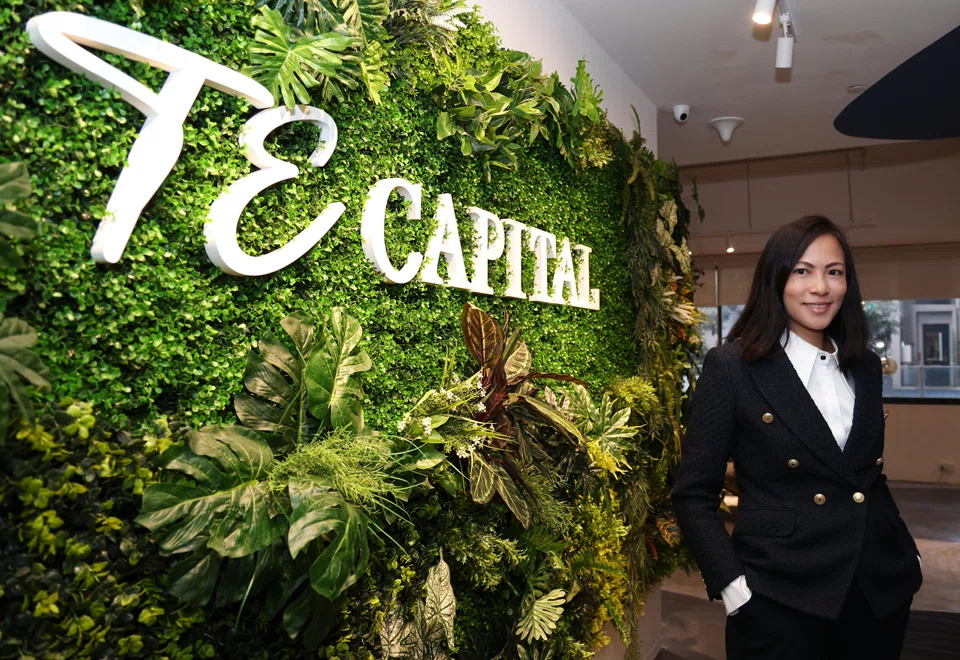
SHORTLY after she co-founded real estate investment firm TE Capital in 2019, Emilia Teo found herself negotiating the firm’s first deal at the height of the Covid-19 pandemic.
Teo was eyeing 350 Queen Street, a freehold office building in Melbourne’s Central Business District (CBD), even as Australia was about to impose stay-at-home restrictions as the number of infections soared.
“There was uncertainty around how long the pandemic would last and impact office leasing demand,” says Teo. “We had to get comfort around what was the potential vacancy we may have. We took a position that we had to have a buffer by way of a price discount.”
Together with Singaporean property developer Roxy-Pacific Holdings, TE Capital acquired the 20-storey office building, which is a five-minute walk from the Melbourne Central station, for A$145 million (S$140.8 million) in 2020.
The purchase was transacted at about 25 to 30 per cent lower than similar buildings in the CBD area.
“At that point in time, we bought it at a rate of about A$6,600 psm. Most of the buildings were A$9,000 to A$10,000 psm in the CBD,” says Teo.
Some challenges arose such as having to get a separate title deed for 350 Queen Street and figuring out whether or not part of the building had to be demolished to comply with planning regulations.
“We saw there was an opportunity to buy below market value. If you can work through the complexity, that’s where you can get that uplift in value,” she says.
Today, TE Capital manages or owns 34 properties in Singapore, Japan, Australia and the United States with over S$3 billion in assets under management.
These include residential developments such as Wilshire Residences and View at Kismis. TE Capital has a portfolio of prime office buildings in both Singapore and Australia – including Solitaire on Cecil and the newly acquired VisionCrest Commercial. In Tokyo, Japan, TE Capital has several multi-family assets.
The firm was founded by Teo and her brother, Terence, who are third-generation family members of Tong Eng Group, one of Singapore’s oldest property developers.
“We wanted to go into a different kind of business model, where you can be asset-light and generate fees,” she says. “Since we have this expertise, why not leverage on that? That allows us to branch out into different areas, and you have more capital to explore different themes.”
When hunting for deals, Teo looks for assets that provide “more value-add returns” in Singapore and Australia; while TE Capital’s multi-family assets in Japan target “core plus-type returns”.
Australia’s real estate market is “easy to access, transparent and has strong governance”, Teo says. However, there were also “push factors” behind TE Capital’s entry into Australia, she adds.
“Back then, Singapore had quite a lot of challenges around development, especially for residential, but we saw there was a lot of capital flow from Singapore and from Hong Kong.”
TE Capital is currently exploring opportunities in Australia’s build-to-rent and retirement living sectors.
“Generally, there is a severe housing shortage in Australia underpinned by lower new supply; due to slower construction because of rising construction rates and difficulties in obtaining bank financing.”
Japan remains an attractive destination for TE Capital as interest rates are likely to stay low, and the multi-family sector remains “very stable and resilient”, she says.
Back on home ground, TE Capital has been buying up freehold strata office buildings. In January 2024, it completed its purchase of VisionCrest Commercial in Orchard, which it bought together with LaSalle Investment Management for about S$450 million from Union Investment.
Teo says: “We find that in Orchard, most of the assets are very tightly held. It’s not easy to get hold of an asset like this. We like that there’s the Orchard Road rejuvenation story.”
Since the Urban Redevelopment Authority limited sub-division of commercial developments in the CBD, supply of strata offices has become very limited and yet demand from family offices is growing, she says.
“For us, this is a space that not many institutional players or fund managers know how to operate in, and it’s probably not the usual model for a developer as well. So that’s where we saw there was an opportunity to fill the gap.”
When asked whether TE Capital has plans to explore other asset classes, Teo says the firm is open to hotels and the logistics sector “if the deal makes sense”.
“We have the expertise of turning things around. We do the hard work of doing asset enhancement, and we have the team as well.”
As TE Capital looks ahead, trust will remain a key cornerstone to how the firm operates.
“It’s not about short-term gains. But rather, you build their trust, you give clients advice even if it may not benefit you right away. Maybe today if I bring a deal to a family office and they may not say yes, but it’s about them being able to see that we do the right things. As you keep doing the right things, eventually the capital will come,” Teo said.
Sustainability is also a focus for TE Capital, which has been looking at how it can reduce the carbon footprint and energy efficiency of its developments.
“Since we are here for the long term, we want to make sure we have a long-term positive impact,” Teo said.
“We see ourselves as stewards of our investors’ capital. In everything we do, it’s about being accountable, trustworthy and open. We’ve been in the family business for 70 over years; and in this business, we want to be there for the long term.”